
Open this photo in gallery:
Erik Brown, centre, with a group of foreign divers and U.S. soldiers, gather at the Tham Luang cave area on July 6, 2018.LILLIAN SUWANRUMPHA/Getty Images
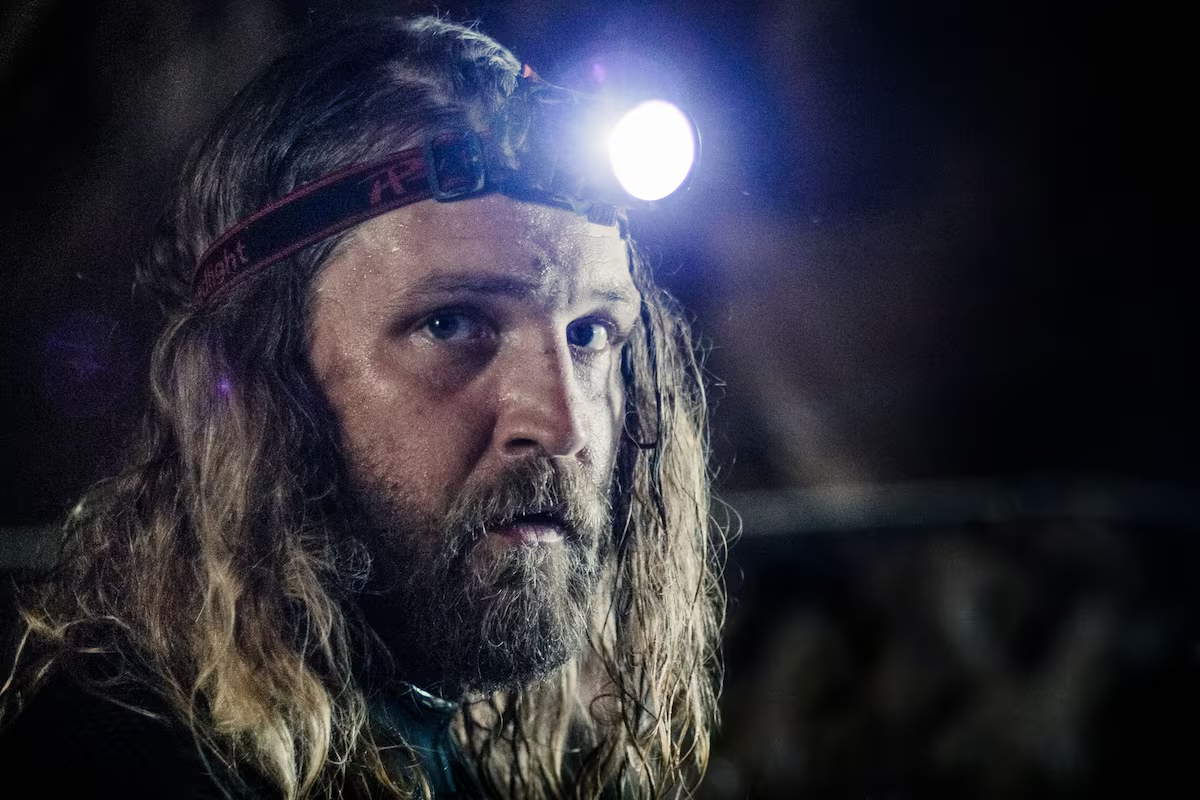
Canadian scuba diver Erik Brown was not about to call himself a hero after risking his life to help rescue 12 boy soccer players and their coach, who became trapped in a cave in Thailand as it flooded during a monsoon in 2018. But many people around the world view him as one.
Going in with a team of rescuers after the monsoon ended and before another torrential rainstorm would strike, Mr. Brown spent 63 hours over nine days and seven missions in the Tham Luang Nang Non cave complex in the country’s northernmost province. In what he described as “zero visibility,” he navigated a treacherous four-kilometre underwater route while laying cables, carrying equipment and fighting rushing currents and other obstacles. Working with a hastily assembled team of international divers and two Australian doctor-divers, he helped relay the boys and their coach, who could not swim and were anesthetized to prevent them from panicking and removing their full face masks and breathing gear. Tethered along an overhead guide rope, all 13 of those who were trapped were transported face-down to safety. Their survival prompted rejoicing among a worldwide audience who had followed the rescue through news stories.
“I won’t lie. In my head, I was [thinking] there [was] very little chance it was going to work. … But it did,” Mr. Brown told CBC.
Mr. Brown died on Sept. 15 at the age of 44, his brother, Kirk Brown, told The Globe and Mail.
Journalist Andrea Warner ‘changed the way we write about music’
For his contribution to the Thai rescue, Mr. Brown received several honours, including Canada’s Medal of Bravery (2019); the Royal Canadian Humane Association’s Bronze Medal for Bravery (2018) and admission to Thailand’s Most Admirable Order of the Direkgunabhorn, First Class (2020). He and the other rescuers were fêted at official celebrations in Thailand. But Mr. Brown, who lived in Thailand at the time and felt obligated to help, took the praise in stride, according to Kirk.
“He didn’t feel what he did was heroic,” Kirk said. “He was really good at what he did. He was probably one of the only people that could do it. … So, he went and did it.”
Open this photo in gallery:
Divers including Brown, second from right, head to Tham Luang Nang Non cave to continue the rescue operation on July 3, 2018.Linh Pham/Getty Images
Erik Richard Brown was born in Vancouver on July 13, 1982, and grew up on a hobby farm in its suburb of Langley, B.C., where his family raised cows and chickens. He was the younger of two sons of Richard Brown and Dorothy Brown (née Butchart). His father, a Vancouver firefighter, died of cancer when Erik was nine. Dorothy Brown, now retired, worked as a flight attendant and took the family on dozens of international trips.
“[Erik] always had that exploration bug,” Kirk said.
While growing up in Langley, Erik developed a love for sports and competed for his high-school volleyball and basketball teams, while also playing minor hockey. He went on to earn a business degree from the University of Victoria and then ventured to Australia, where he worked odd jobs and surfed. During a trip to the Great Barrier Reef in 2004, he completed an entry-level recreational scuba-diving course on a whim and, as he told Diver magazine in 2020, “got hooked.” Three months later, he became a certified divemaster, qualified to lead and guide other divers on tours and assist instructors.
“At the end of that trip, I ended up dislocating my shoulder and having to come back to Canada for surgery,” he told Diver. “Surfing was no longer an option, so I tried to think of ways I could stay travelling and stay in the water, and that led me back into diving. I flew to the Philippines after my surgery and became an instructor.”
Mr. Brown went on to train technical and recreational divers, instructors and their trainers, while co-owning dive centres in Thailand and Egypt. He also explored the waters off Iceland, South Africa and elsewhere, produced and appeared in underwater photos and videos, and promoted Hollis-branded scuba-diving equipment internationally.
“For many years, Erik was literally the face of Hollis,” said fellow diver and instructor Greg DeSatnick, who co-owned an internationally renowned dive centre in Egypt with him.
Before the Thai cave rescue, Mr. Brown had undertaken notable rescue missions and shipwreck explorations. During the 2010s, he saved a client trapped in a narrow section of an underwater canyon off the coast of Egypt by removing the diver’s other equipment while keeping his breathing apparatus in his mouth, Mr. DeSatnick said. The manoeuvre was “essentially unheard of” and Mr. Brown “did it flawlessly,” Mr. DeSatnick added.
In 2013, Mr. Brown joined a team of technical divers who placed a memorial plaque on the wreck of the Second World War U.S. Coast Guard cutter USCGC Alexander Hamilton off Iceland.
Dolores Huerta, influential labour leader and civil rights icon, dies at 96
As his career unfolded, Mr. Brown developed a passion for cave diving, taking annual trips to Mexico and Florida.
“Caves are where I find myself most relaxed,” he told Diver. “It is the diving I reserve for myself.”
In 2018, however, he put his skills to work for others, flying from his base on the Thai island of Koh Tao to the flooded cave complex. Initially expecting to play a supporting role in an operation involving 9,000 international volunteers, he soon joined the evacuation effort because of his cave-diving expertise.
Mr. Brown headed a transfer station and administered a ketamine-based general anesthetic to the players and coach. The anesthetic lasted about 45 minutes and had to be readministered periodically along the route, he told Diver in 2020 and attendees at the Diving Equipment Marketing Association conference and trade show in Las Vegas later in 2018.
“We had small medical stations set up and would inject the kids if needed,” Mr. Brown told Diver. He and the other divers involved in the rescue had received a crash course on how to do the injections.
“I don’t think I need to explain that this is outside my normal skill set,” Mr. Brown added, indicating that he had been nervous about administering the anesthetic.
Mr. Brown played himself in the 2019 film The Cave, a Thai drama about the rescue, and he became a public speaker, discussing his role in the complex operation at diving conferences, trade shows and other events in various countries. Publicity surrounding Mr. Brown’s exploits boosted his profile considerably.
Open this photo in gallery:
Brown played himself in the movie The Cave.FREDRIK DIVALL/AFP/Getty Images
But Mr. Brown was already well-known in the global diving community before the Thai rescue as a respected diver, instructor and dive-centre operator, Mr. DeSatnick said. Teaching under the Technical Diving International certification program, he helped develop the next generation of professional divers.
Technical diving extends beyond recreational diving, enabling longer, deeper and more complex dives, Mr. DeSatnick said. It requires specialized training, careful gas management and knowledge of sophisticated equipment such as closed-circuit rebreathers, which recycle breathing gas to extend dive times. These skills allow divers to explore underwater cave systems and deep shipwrecks extensively. Mr. Brown developed and tested innovative techniques, procedures and philosophies before introducing them to his students, Mr. DeSatnick said.
“He was just extremely epic,” Mr. DeSatnick said. “He was a game-changer for the technical-diving world.”
Mr. Brown was also a life-changer according to Kirk Brown, Mr. DeSatnick, other colleagues, friends and family members, who paid tribute to him on Facebook.
“He was pretty much everything to everyone,” said Kirk, who was one of his brother’s technical-diving students. “If he was your friend, he was your best friend. If he was your roommate, he was your favourite roommate with the most stories. If he was your teacher, he’s probably the one that taught you the most.
“For me, he was all of those things.”
Mr. Brown’s family has not disclosed the cause of his death or where he died. He leaves his mother, brother and a godson, Erik Ratchinsky, who was named after him.
You can find more obituaries from The Globe and Mail here.
To submit a memory about someone we have recently profiled on the Obituaries page, e-mail us at obit@globeandmail.com.