
Open this photo in gallery:
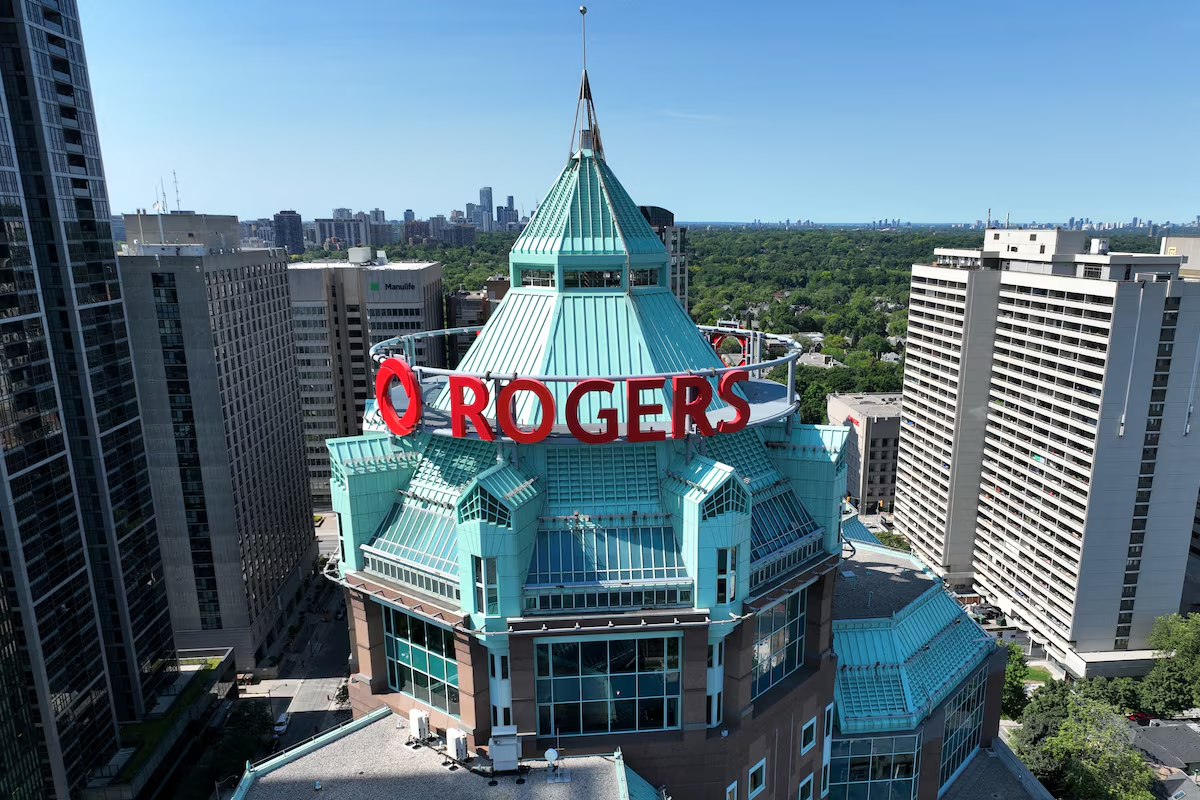
Rogers Communications ended the third quarter with $41.8-billion in long-term debt.Chris Helgren/Reuters
Rogers Communications Inc. RCI-B-T reported a jump in free cash flow in its third quarter but posted flat revenue and lower new subscription numbers, as it works toward a minority sale of its sports holdings.
The company reported $1.3-billion in free cash flow, up 65 per cent from last year and beating analyst expectations.
The free cash flow followed 46 per cent lower capital expenditures in the quarter. Earlier this year, the company said it planned to cut capital spending for the year by 30 per cent overall, in part by selling or deferring some infrastructure projects. The higher free cash flow was also the result of cable, wireless and real estate sales totalling $274-million in the quarter.
Executives said the lower capital expenditure reflects the company’s long-term strategy to grow free cash flow in order to improve its debt leverage ratio and strengthen its balance sheet. The company ended the quarter with $41.8-billion in long-term debt.
Canada’s telecom shares are in a slump. What’s behind the stock slide?
“We have substantially changed our capital trajectory and free cash flow profile to better navigate our regulatory and competitive telecom landscape,” Rogers chief financial officer Glenn Brandt said in a call with analysts Friday morning.
Revenue was up 1 per cent, with a 9-per-cent bump in its sports and media division, boosted by strong Toronto Blue Jays performance and the earlier start of the NHL regular season.
The company reiterated its plans to sell a minority stake in its recently consolidated sports holdings in the first half of 2027, but did not provide any further updates.
Earlier this month, Rogers acquired the final stake in Maple Leaf Sports & Entertainment, formerly owned by Kilmer Sports Inc. The move gives it full ownership of MLSE’s four major sports teams – the Toronto Maple Leafs, Toronto Raptors, Toronto FC and the Toronto Argonauts – and Scotiabank Arena. The telecom plans to divest of up to 30 per cent of its combined sports and media portfolio.
Over all, the Toronto-based telecom, sports and media company “reported an update which we characterize as slightly positive,” Jerome Dubreuil, a Desjardins analyst, said in a note to investors Friday, pointing to the strong free cash flow, while noting “weak” subscriber additions.
The company added 17,000 net new postpaid mobile phone subscribers, down from 111,000 last year and below analyst expectations of 56,000.
Open this photo in gallery:
Rogers acquired the final stake in Maple Leaf Sports & Entertainment earlier this month.Chris Young/The Canadian Press
Analysts said the subscriber figures reflect the company’s strategy to focus on selling higher value products instead of chasing a greater number of lower-paying customers. Meanwhile, Canadian population growth was flat in the quarter, meaning fewer new customers to compete over.
“In wireless, we stayed focused on financials versus chasing subscriber volume in what is typically a busy back-to-school quarter,” Rogers chief executive officer Tony Staffieri told analysts on the call.
Improving overall average revenue per user (ARPU) – an industry metric that reflects how much the company earns from a customer – and free cash flow “is more important than tiny changes in volume growth,” Vince Valentini, a Toronto-Dominion Cowen analyst, said in a note to investors.
For the company’s overall base of mobile phone subscribers, ARPU declined by about 2.6 per cent in the period.
Will betting big on sports pay off for Rogers Communications?
Speaking to analysts, Mr. Brandt said the drop was in part the result of a new policy which bans telecoms from charging certain setup fees.
“We continue to look to find ways to either eliminate or reduce those costs,” Mr. Brandt said. Where the company can’t eliminate them, he said, it will “try and offset them.”
When asked about finding efficiencies in the business, Mr. Brandt said the company has also had a “substantial reduction in costs” as a result of “more resourcing of our call centre work offshore.”
Rogers reported a 91-per-cent loss in net income in the quarter, the result of an accounting change last quarter. Rogers recorded a $5-billion non-cash gain in the same quarter last year related to its holdings in Maple Leaf Sports and Entertainment, and that was not repeated this year.
The company reported adjusted net income of $701-million, down 3 per cent from last year.
Cable revenue was flat compared with last year, though its margins improved.