
Open this photo in gallery:
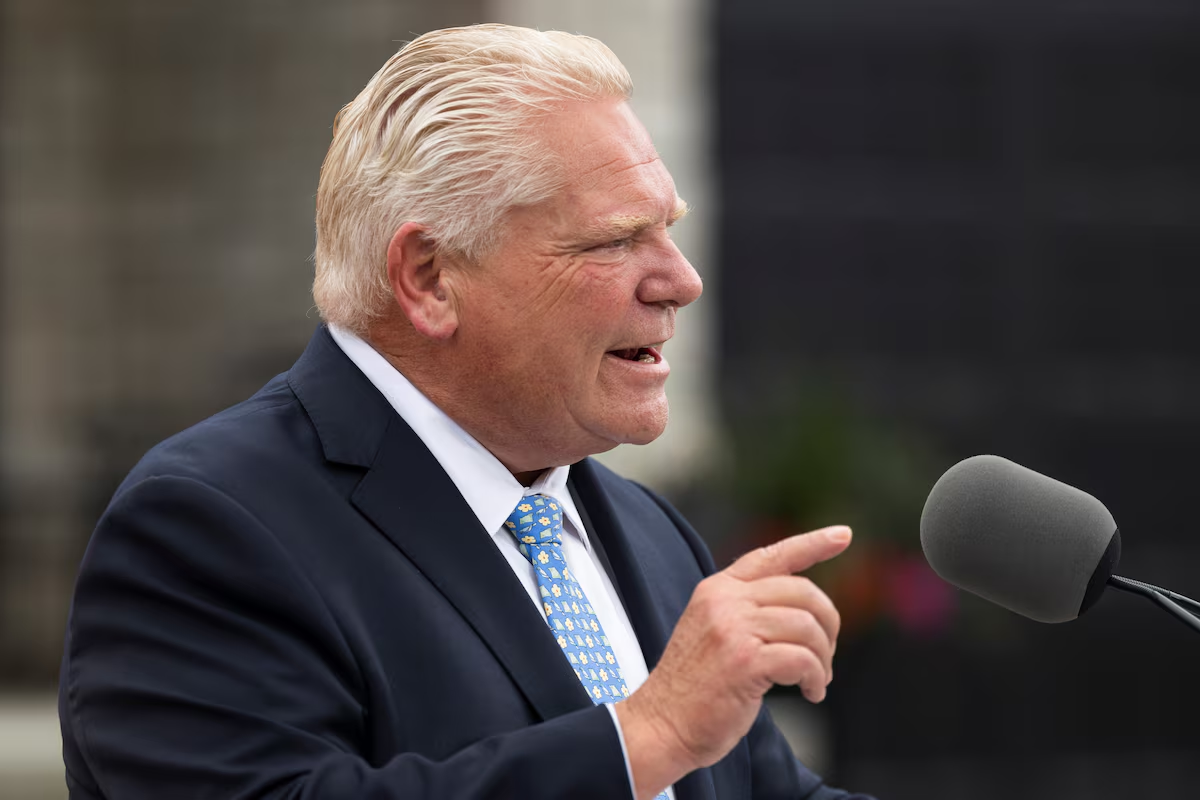
Ontario Premier Doug Ford speaks to media at a housing development in Hamilton, on Aug. 24.Nick Iwanyshyn/The Canadian Press
Some environmentalist critics are accusing Ontario Premier Doug Ford of attempting to use the trade crisis with the United States to undermine the fight against climate change.
The Premier has repeatedly urged Ottawa in recent days to scrap federal tailpipe emissions rules for Canadian-made cars and allow exemptions for tariff-stricken industries, such as steel, from industrial carbon pricing.
Mr. Ford said the moves are needed to help as the auto and steel sectors reel from the U.S. levies that threaten their survival, with the two policies costing them hundreds of millions of dollars. But critics accuse him of having other motives.
“It seems like he is just using the trade war, so to speak, to try and get rid of, or weaken whatever standard it is that is going to come in‚” said Sam Hersh, clean transportation program manager for the advocacy group Environmental Defence, referring to Mr. Ford’s comments on tailpipe standards.
Mike Schreiner, the MPP for Guelph and Ontario’s Green Party Leader, said the Premier’s requests would undermine the rationale behind his own government’s recent multibillion-dollar investments in both electric-vehicle battery plants and cleaner electric-powered furnaces for steelmakers.
Opinion: Premiers now lead the charge in the trade war. Ottawa must recognize that
“He attacks Trump and goes after Trump. But then he essentially wants to implement the same policies that Trump has,” Mr. Schreiner said, arguing that Ontario should instead be seeking to attract global investment in renewable energy and green technology.
Adding fuel to the fire is confusion over what Mr. Ford actually meant. His public remarks have diverged from the way the demands were outlined in a letter he sent to Prime Minister Mark Carney on Aug. 21, before trade talks with the U.S. collapsed. Mr. Ford’s office did not respond to a request on Friday to clarify his remarks or respond to the criticism.
Speaking to reporters last week, Mr. Ford said he was calling for “eliminating federal greenhouse-gas emissions standards for Canadian-made vehicles” – taken literally, a drastic step and something the auto industry says it has not advocated for.
But in his Aug. 21 letter, Mr. Ford told Mr. Carney that if he agrees to a deal that maintains U.S. tariffs, he should heed Ontario’s long-standing calls for “common-sense automotive greenhouse gas emissions standards that provide regulatory relief and help close the competitiveness gap with the United States.”
In his remarks, Mr. Ford said he wanted Ottawa to exempt “tariff-impacted sectors from federal emissions performance standards” – by which he meant the federally required but provincially run industrial carbon-pricing system. In his letter, he said Ontario was “considering” such a move and called on Mr. Carney to “accelerate these efforts.” Changes to Ontario’s system must align with Ottawa’s rules.
Escalation tactics in trade negotiations with the U.S. prove to be a minefield
The federal government would not say whether it would entertain Mr. Ford’s ideas. Mr. Carney has already faced some criticism from environmentalists for dropping a series of green policies championed by his predecessor, Justin Trudeau.
Brian Kingston, president and chief executive officer of the Canadian Vehicle Manufacturers’ Association, said the car industry supports keeping the existing tailpipe rules in place. But it has been calling for a pause before Ottawa goes ahead with a plan to tighten those rules, which it announced when it scrapped its mandated target for EV sales.
“We are hurting, the costs are mounting, the last thing we should be doing is putting on additional pressure through regulations on the industry that diverge from the U.S.,” Mr. Kingston said.
The steel industry has also not publicly gone so far as to call for a complete exemption from the industrial carbon price, even as the 50-per-cent tariffs on its U.S. exports have slashed the amount of steel it ships to its biggest foreign market in half.
John Cuddihy, vice-president for climate and environment for the Canadian Steel Producers Association, said steelmakers recognize the importance of carbon-pricing systems but would also welcome discussion of potential relief. One option would see Ontario implement a mechanism similar to that in Alberta’s industrial carbon-price regime, which allows companies in financial trouble to apply for a break.
“We’re committed to working with the provincial and federal governments to continue to ensure that we advance our climate objectives, while remaining competitive including in the face of U.S. tariffs,” Mr. Cuddihy said.