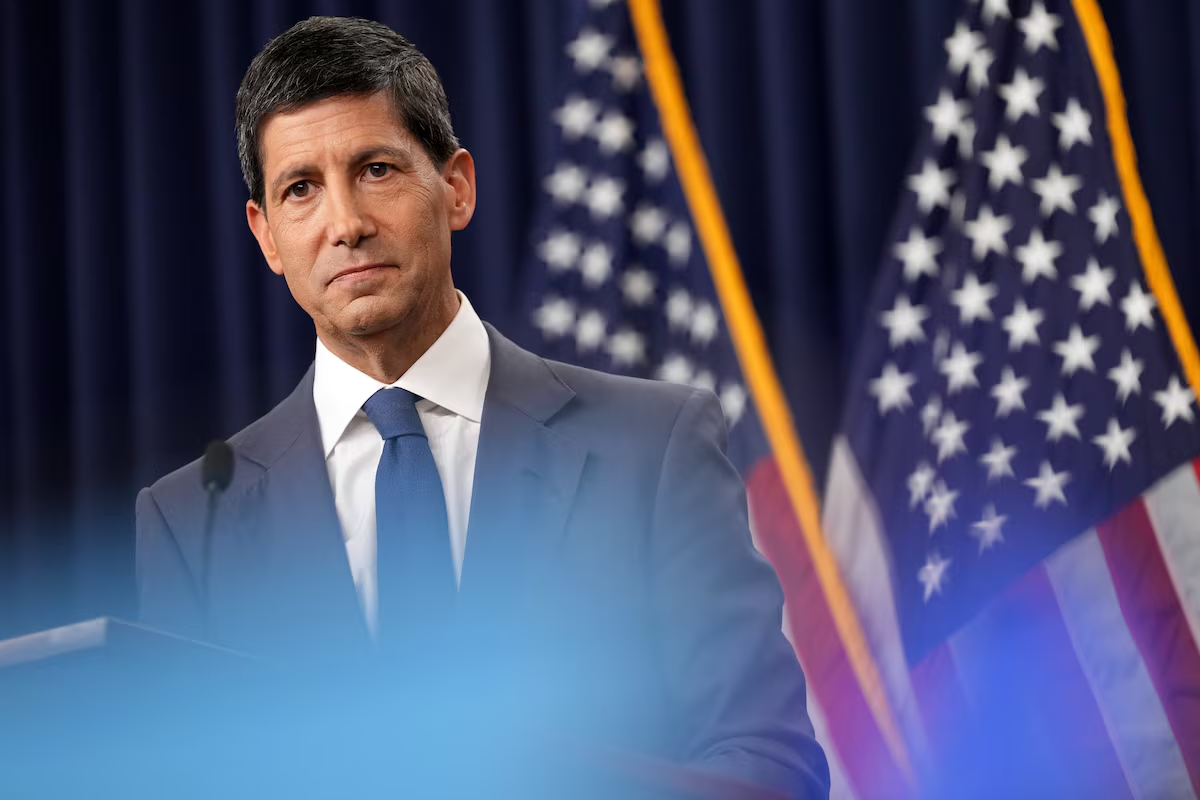

Open this photo in gallery:
Some investors say a return to a terse Fed under Kevin Warsh may present an opportunity for actively managed investment strategies that are able to navigate the new uncertainty.Mark Schiefelbein/The Associated Press
In one sense, a highly anticipated meeting this week of the U.S. Federal Open Market Committee and a press conference by Federal Reserve Chair Kevin Warsh produced few surprises. Most economists expected the U.S. central bank to keep rates unchanged, and it did, despite three dissenting votes for a rate hike.
In another sense, the week gave financial markets an unusual shot of uncertainty. Investors scrambled to make sense of a meeting that provided far less information than they have grown to expect. Douglas Porter, chief economist at BMO, said in a note that Mr. Warsh’s spoken commitment to controlling inflation was “accompanied by no real indication that any actions were on offer anytime soon.”
Some investors, however, say a return to a terse Fed may present an opportunity for actively managed investment strategies that are better able to navigate the new uncertainty.
Ever since former Fed chairs Alan Greenspan and Ben Bernanke ended their terms, “the market has been spoon-fed,” said Ryan Goulding, portfolio manager and head of interest rates at Leith Wheeler Investment Counsel. “Before that, the entire history of the Fed … the market had to make their own call, had to look at the data and decide on their own.”
“There’s not going to be a cheat sheet, and that’s what the Fed presser has been, that’s what forward guidance has been. That’s what the dots have been,” he added, referring to a quarterly plot of individual officials’ interest-rate predictions.
After the meeting, U.S. two-year government bond yields – which are sensitive to market expectations of interest-rate moves – fell as traders unwound some bets on a hike.
The bond market isn’t buying what Warsh is selling
At the other end of the yield curve, 10-year and 30-year yields rose as worries the Fed might fall behind on inflation reduced demand for fixed-income investments that could see their returns eroded. Bond yields rise as prices fall, and the U.S. 30-year yield climbed to its highest level in nearly two decades, above 5.25 per cent.
“That’s the market saying, ‘Look, if we don’t know, if we have less predictability, then … I’m getting a premium for that,’” said Pierre-Benoît Gauthier, vice-president of investment strategy at IG Wealth Management. He called the reaction to the Fed meeting “tightening without hiking.”
While the Fed’s detailed communications had helped to stabilize markets after the 2008 global financial crisis, Mr. Gauthier said meetings had since turned into “theatre,” with traders betting around clearly telegraphed outcomes.
“For Fed moves to work, they need to be shocking,” he said.
“If you have a 25-basis-point rate hike or cut that’s seen six weeks in advance by the market, it’s not going to have a huge impact. But if it’s a surprise, then it’s going to have an impact, and that’s the power that Warsh is looking to bring back to the Fed.”
Some investors say that less clarity is likely to make financial markets more volatile, which could create new opportunities for those poised to take advantage.
“Removing anything that brings market efficiency, like removing information from the market, rewards active traders and smart traders,” Mr. Gauthier said.
“If you make your own notion in this dark forest about what’s going to happen and you end up being right, you’re going to get rewarded for it. Whereas, if you make sense of something that everybody else has already made sense of, then you get no reward for it.”
There is a problem with bank stocks. They’re doing too well
At the same time, there is a cost to volatility. Michael Gregory, BMO deputy chief economist, said in a note that the risk of the Fed not acting to rein in inflation “might have nudged up in the market’s mind, denting Fed credibility.”
Mr. Goulding said that it would take time for market participants to adjust to the new information regime. The reaction in yields indicated persistent views that the Fed will need to raise rates to combat inflation.
But he said this overlooked longer-term indicators such as the 10-year breakeven inflation rate – an indicator of market expectations of average inflation over the next 10 years – which has retreated to pre-Iran war levels.
Other economic indicators, including falling savings rates, may also make higher interest rates less likely and could even support the case for a cut.
“This forces investors to do what they should have always been doing. And what our approach has always been is look at the data, do your own homework,” Mr. Goulding said.
He said one overlooked data point is the makeup of the Federal Open Market Committee. The three Fed officials who indicated support for a rate increase will be rotated out at the end of their one-year terms on Dec. 31, and are set to be replaced by less hawkish officials. That could further raise the odds of an interest-rate cut next year, he said.