
Open this photo in gallery:
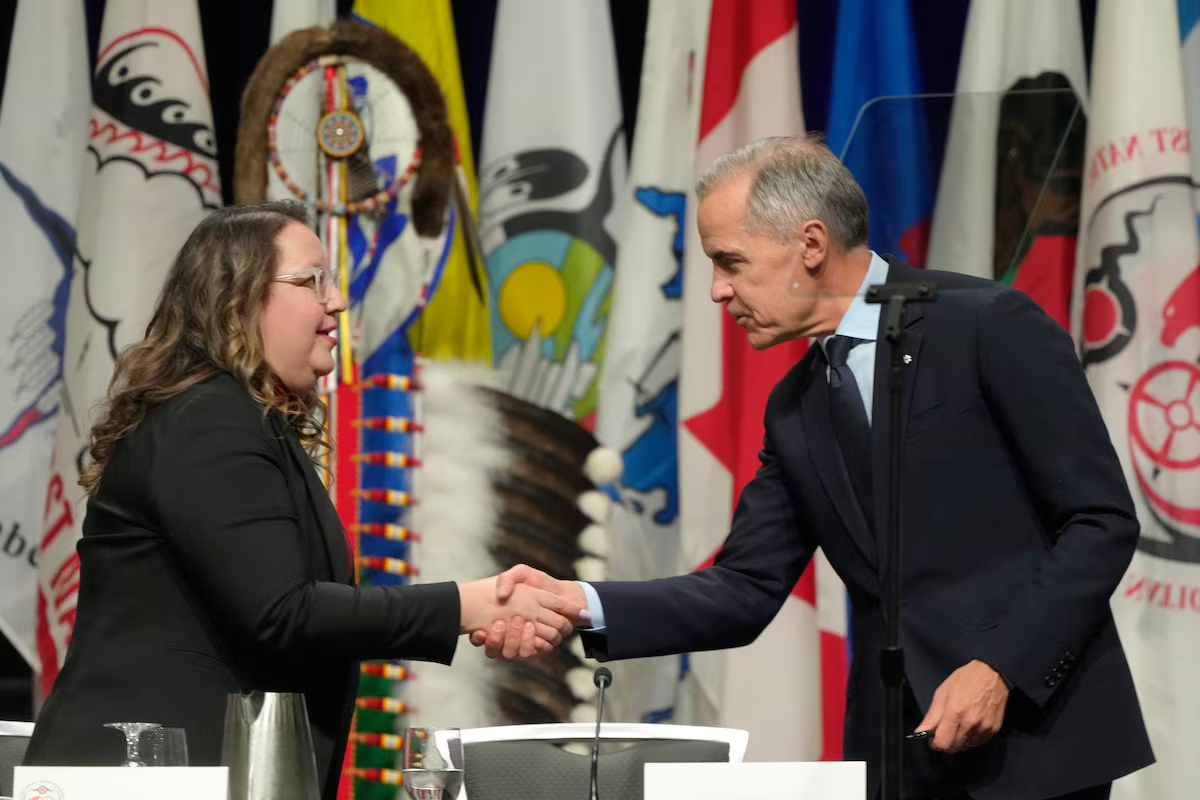
Prime Minister Mark Carney shakes hands with AFN National Chief Cindy Woodhouse Nepinak on Dec. 2, 2025. Nepinak and her predecessors have for years been calling for First Nations representation at meetings between the prime minister and the premiers.Adrian Wyld/The Canadian Press
Assembly of First Nations regional chiefs will join premiers and Prime Minister Mark Carney for a rare meeting in late October – the first such meeting between chiefs and first ministers in decades.
A source shared details of a Wednesday planning meeting held by the Assembly of First Nations on the condition they not be named because they were not authorized to discuss it.
The premiers, Carney and First Nations representatives are set to meet in Ottawa on Oct. 26, just as tensions are rising over the federal and provincial governments’ major projects agenda.
National Chief Cindy Woodhouse Nepinak has invited premiers and Carney to a daylong ceremony ahead of the October meeting. She told The Canadian Press last week that First Nations leaders want to bring their own cultural practices to that meeting and she hopes all premiers accept the invitation.
The meeting was promised by Carney earlier this year.
AFN criticizes federal push to set timelines for major project approvals
Woodhouse Nepinak and her predecessors have for years been calling for First Nations representation at meetings between the prime minister and the premiers. Those calls got louder last year when the federal and provincial governments started discussing among themselves ways to fast-track major infrastructure projects.
Woodhouse Nepinak has said the meeting will be a “big test” of Canada’s ability to reconcile economic growth with First Nations rights.
Topics up for discussion at the meeting include long-term political governance – including rights and treaties, jurisdiction, health care, policing and land – economic partnerships and prosperity, the source told The Canadian Press.
There will be 28 seats in the main meeting room – one for the prime minister, one for the national chief, 13 for provincial and territorial leaders and 13 for First Nations representatives. The First Nations representatives in the main meeting room will mostly be regional chiefs from the Assembly of First Nations.
An additional 44 First Nations leaders are invited to attend, including one youth representative and representatives from Treaties 6, 7 and 8. The Assembly of First Nations is calling for those 44 entry passes to be interchangeable so they can accommodate a larger number of leaders.
While the meeting will be livestreamed, it’s not clear if that livestream will be available for public viewing, as the AFN has requested.
The location of the meeting has not yet been made public. The AFN and the federal government will only say it will be somewhere in Ottawa.
Group representing First Nations in B.C. calls on Carney, Smith to halt West Coast pipeline
The AFN is a national advocacy body that takes its direction from some 630 First Nations chiefs through special and annual general assemblies. It is not a rights-holding institution but it represents rights-holding chiefs.
Carney and his cabinet met with First Nations chiefs last July in Gatineau, Que. It was a tightly controlled meeting and chiefs were asked to send their questions about the major project agenda in advance.
Media were barred from the meeting site and First Nations leaders, including Woodhouse Nepinak, had to engage with reporters outside in the summer heat.
The AFN called for the entire meeting to be made public and Woodhouse Nepinak later apologized for having to hold a press conference outside the meeting location.
In early August, the Privy Council Office told The Canadian Press it was working with the Assembly of First Nations, modern treaty groups and self-governing First Nations on planning the meeting with first ministers.
“The meeting aims to advance nation-to-nation and government-to-government relations and will provide an opportunity to work together to address priorities of shared interest,” spokesperson Pierre Cuguen wrote in an e-mailed statement.
Cuguen said at the time discussions about representation at the meeting were ongoing.