
Open this photo in gallery:
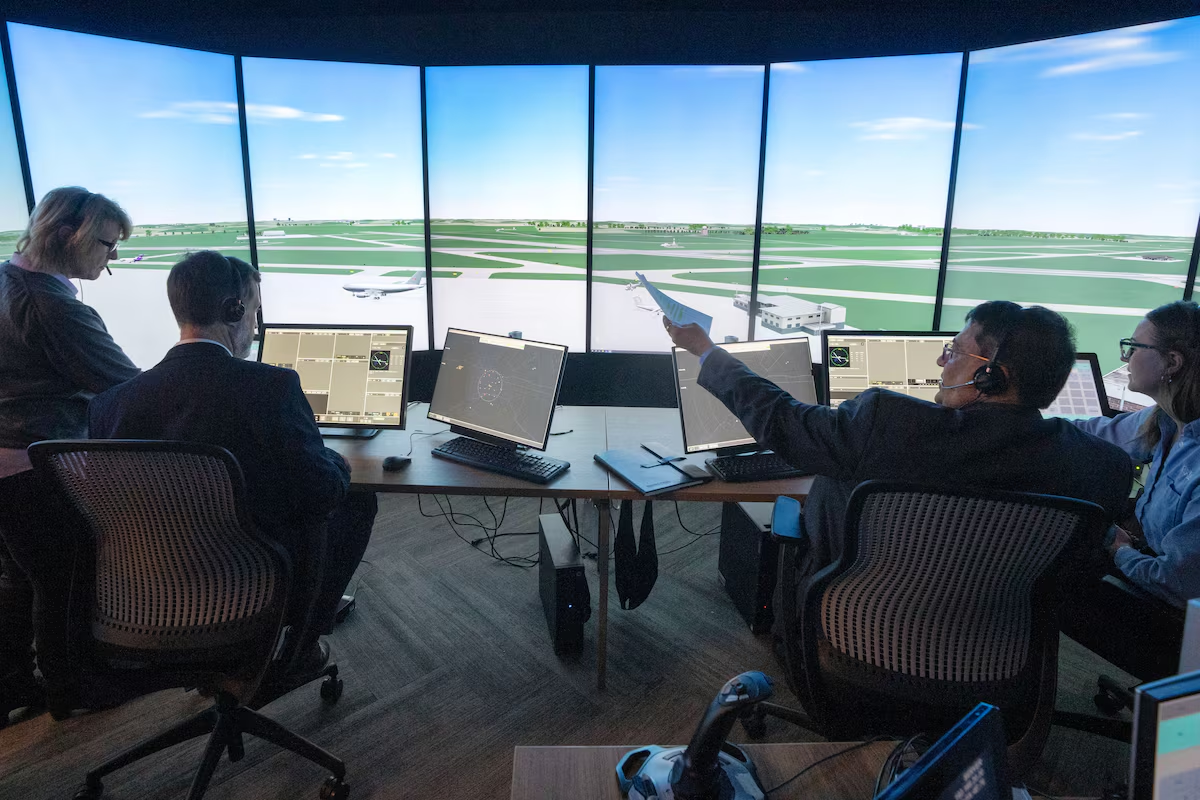
Instructors demonstrate the use of an air traffic control simulator at CAE’s Montreal training facility last year.Ryan Remiorz/The Canadian Press
CAE Inc. CAE-T hiked its earnings forecast for the year as chief executive Matthew Bromberg reaps early rewards from an effort to sharpen operations and shift resources toward core priorities after a lengthy expansion.
The Montreal-based company, which trains military and commercial pilots and builds simulators, said in an earnings report late Wednesday that it expects adjusted earnings per share of between $1.28 and $1.35 for the fiscal year ending March 31, 2027. That’s up from a previous forecast of $1.21 to $1.28.
CAE also boosted its outlook for adjusted segment operating income margins for the year. Forecasts for revenue and cash conversion rate were unchanged.
“Eighteen months into the role, I’m often asked if I can see the change occurring in the organization and the answer is yes,” Mr. Bromberg told analysts on a call to discuss the results Thursday. “We’re becoming more focused on our end markets. We’re becoming more focused on profitable growth and more focused on cash flow generation. And the results are starting to be clear.”
Mr. Bromberg, a former submarine commander in the U.S. Navy who also worked at defence giant Northrop Grumman Corp., took over last year from long-time CEO Marc Parent. He’s now working to boost profits and cash flows after a 15-year expansion left the company on solid footing but unable to generate high returns from some of its assets.
Browning West, a major CAE investor, has said Mr. Bromberg should be able to double the company’s earnings per share over the next three to four years. The CEO said Thursday he’s more than halfway through key milestones on a transformation plan that includes revamping the civil training network to reduce infrastructure and real-estate costs, and selling non-core assets.
Open this photo in gallery:
Mr. Bromberg, left, leads Prime Minister Mark Carney on a tour of CAE facilities in Montreal earlier this year.Christinne Muschi/The Canadian Press
CAE announced last month it struck a deal to sell its Flightscape aviation software business to Geneva-based technology firm SITA for US$500-million including debt. Mr. Bromberg said the company is on track to sell several smaller assets as well, but did not provide details.
This past spring, the CEO said war in the Middle East was hurting CAE’s operating profit, forcing the company to cancel pilot training sessions in the region because no one wanted to leave their bunkers. At the time, he said the company was working on the assumption the conflict would wind down by September and fuel prices and airline capacity will return to normal not long after.
The conflict remains unresolved and U.S. President Donald Trump appears in no rush to end it, suggesting America has already won. “We don’t need a deal with Iran,” he wrote on social media Thursday. “Those days have long since passed.”
In comments accompanying its earnings release, CAE said its actions, including redeploying training activities to other sites, have been effective at mitigating the direct operational impact from the conflict. But it warned that if the war intensifies and regional conditions deteriorate, its business could come under more pressure.
Bombardier hikes cash forecast as questions mount over capital deployment
CAE reported a net income of $58.6-million or $0.18 per share for its latest quarter ended Sept. 30, down about 21 per cent from the same period the previous year. Revenue slipped 2.6 per cent to $1.2-billion. Earnings came in at $0.33 per share on an adjusted basis, beating the consensus analyst forecast of $0.26. Free cash flow was $180-million, much higher than the $17-million analysts had expected.
Mr. Bromberg and his team are “executing well,” Bank of Montreal analyst Fadi Chamoun said in a research note. The ”results reinforce our conviction in the upside potential for the shares.”