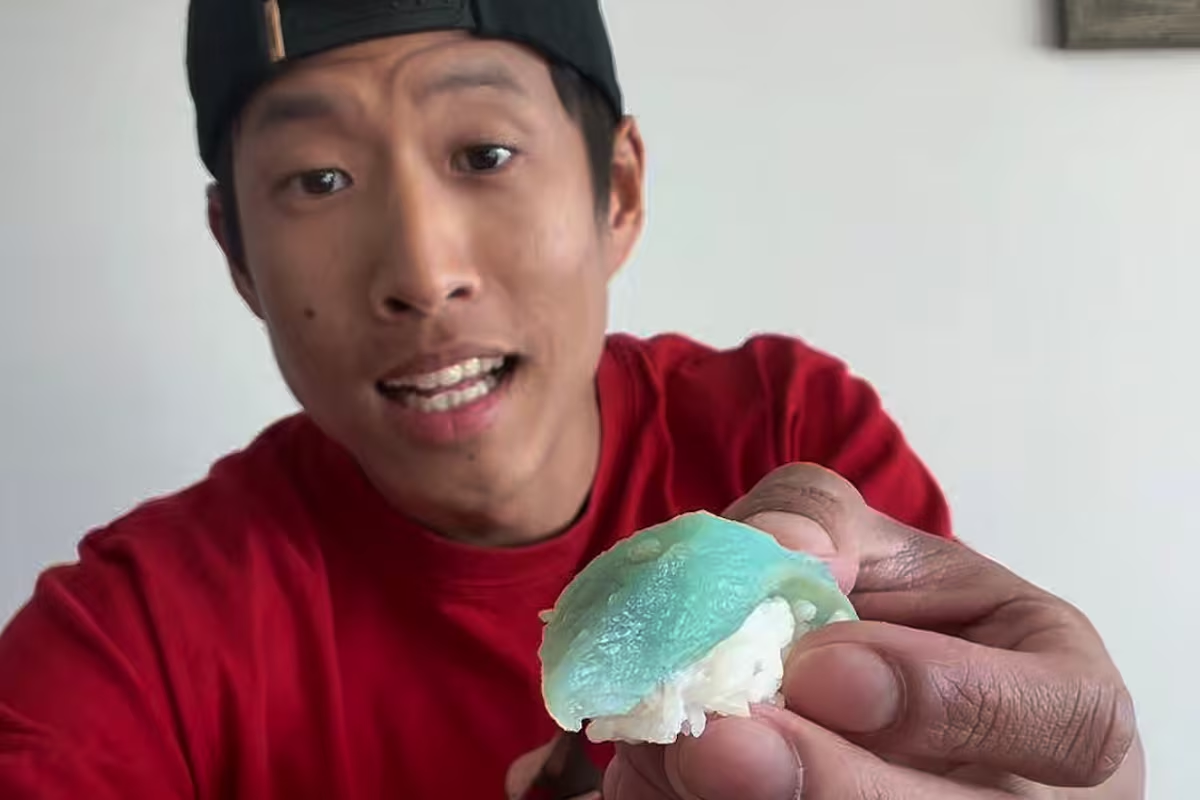

Open this photo in gallery:
Influencer Justin Park took to social media to share his exhilaration with B.C.’s natural bounty.Supplied
After a purple starfish is barbecued, its yellow gonads look a bit like scrambled eggs and they taste a little like them too, except with a bit of a bitter “pop.”
That’s one of the many revelations social media influencer Justin Park relayed during his quest to fish and forage for dozens of different species of flora and fauna from across British Columbia.
Some of the tapas the amateur chef has profiled for his tens of thousands of online followers include globally renowned favourites such as spot prawns and Dungeness crab. But his creations often skew more obscure and eye-popping, such as making crostini with acorn and oak weevils, fashioning fruit roll-ups out of salal berries and pickling bull kelp.
The 30-year-old from Honolulu said he gave himself just under a year to see how much of B.C. he could find and eat after free-diving for fish and shellfish around Victoria, where the U.S. naval veteran recently completed a two-and-a-half-year contract working on submarines for the Royal Canadian Navy. The challenge is now over, but he said he is still editing videos chronicling the up to 70 different species he ate during that period.
Anecdotally, it appears more and more North Americans are finding and fixing their own meals from the wild as an antidote to a variety of modern ills: Inflating grocery store prices, the ecological and health harms of industrial agricultural systems and the tiny screens monopolizing our free time.
Data are scarce on people who are using snorkels or shovels in order to secure their next meal. Results from the last census, in 2021, show only three per cent of Canadian households reported hunting close to home, with that number reaching as high as seven per cent for those living outside larger cities. In B.C., the province has issued 13-per-cent more fishing licences to residents over the past decade ending in 2023, the last year for which data is available.
Tom Cervenka, a Vancouver computer programmer who sells field guides to berry and mushroom picking in various provinces, said he believes the COVID-19 pandemic and our increasing dependence on social media created an uptick in Canadians becoming more interested in self-sufficiency.
“How can I look after myself without relying on food distribution chains that could fail conceivably?” said Mr. Cervenka, who also leads mushroom tours of Pacific Spirit Regional Park, which surrounds the University of British Columbia’s sprawling campus.
Mr. Park said he took to social media to share his exhilaration with the province’s natural bounty, as well as to challenge people to get outside their comfort zones and consider trying to catch and prepare their own meals – as long as they obey the rules and avoid species in peril.
“I was just so excited to discover these things: I didn’t know you could just dig in the sand and catch a Dungeness crab and go home with a $30 crab,” Mr. Park said during a recent phone interview from Ecuador, where he travelled this summer.
“I was just like blown away by how much food there was, not only in the sea, but on land as well.”
Still, he is keen to get people to pivot from the popular meats of crab, salmon and halibut and embrace lesser-known foods that Indigenous people have consumed for millennia.
Dr. Jennifer Grenz, a member of the Lytton First Nation and a food systems scientist with UBC’s Department of Forest Resources Management, said it is great that Mr. Park is sharing how to access the abundance Western Canada has to offer.
She added that an increasing number of Indigenous influencers are posting their own videos online to share traditional knowledge, referencing chef and educator Jared Qwustenuxun Williams, who also refers to himself as the Indigenous Forest Punk.
Among the traditional practices seeing a resurgence are “sea gardens,” which First Nations often built by piling rock walls along intertidal zones to trap sediment and make a healthy habitat for shellfish, Dr. Grenz said.
Open this photo in gallery:
Mr. Park said he is still editing videos chronicling the up to 70 different species he ate during his time in B.C.Supplied
“Humans are inherently lazy, right?” she added of the common misconception that Indigenous peoples were constantly hunting and gathering to survive, explaining that this method of sustainable aquaculture offered minimal effort and maximum returns.
Dr. Grenz, author of Medicine Wheel for the Planet: A Journey Toward Personal and Ecological Healing, said the erasure of traditional knowledge was rammed home when she was called into the principal’s office after her twin daughters got in trouble during a class hike. The pair were showing their classmates how to pick and eat salmon berries when their teacher found out and “flipped out.”
The school explained that teaching people to eat wild berries was against its rules.
“I’m like, ‘well, they know their plant identification, they’re teaching them: This is food. They’re just teaching their friends to find food out in the places they go all the time,’ ” she said. “And then that’s when I was like, ‘do you want this to be a news story or do you want to apologize to them?’”
“They apologized to them.”