
Listen to this article
Estimated 3 minutes
The audio version of this article is generated by AI-based technology. Mispronunciations can occur. We are working with our partners to continually review and improve the results.
In the wake of a particularly destructive wildfire season in British Columbia, front-line crews are welcoming new federal funding for water bombers.
But some of those on the front lines say Ottawa needs to take a more active role in addressing the growing threat of wildfire.
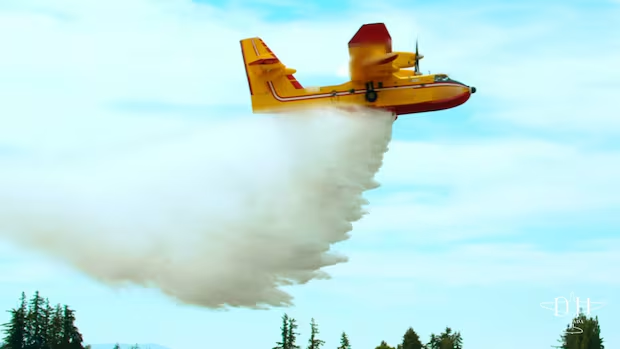
Last week’s federal budget pledged up to $2.5 billion in financing to help De Havilland Canada ramp up production of Canadair water bombers.
The Finance Ministry said the funding will help establish a second assembly line in Alberta, doubling production to 20 aircraft per year.
WATCH | Call for more funding for on the ground wildfire fighters:
Wildfire fighters welcome federal waterbomber funding but say more support needed on the ground
Riley Moskaluk has been battling wildfires in B.C. since 2016, and says aerial attack is a critical component wildfire response.
“Typically when they’re most effective is before the fire has got gotten quite large,” he said.
“If you’re able to get that extremely fast support and you know they can deliver a ton of water on a small fire very quickly, that’s definitely their most effective role.”
But he says aircraft are just one piece of the puzzle and can be sidelined by high winds or poor visibility — problems that cropped up numerous times during B.C.’s 2026 fire season.
“I think investing in the people on the ground is probably the best thing we could do long term,” Moskaluk said.
Managing wildfire operations is a provincial responsibility. But Moskaluk is among those who say if the federal government is getting involved, it should find a way to help fund front-line work.
While the job can be rewarding, he said the hard physical work and potentially toxic exposures — combined with weaker retirement and health benefits than most municipal and structural firefighters — means there’s high turnover in the industry.

B.C. Wildfire Service crews work the west flank of the Bald Range wildfire near Summerland, B.C., on Aug. 25, 2026. (B.C. Wildfire Service)
That can have serious operational impacts, according to Sebastian Kollos, a wildland firefighter and vice president of the B.C. General Employees Union.
“If you don’t have the experience, you can start to make mistakes and, and those mistakes can unfortunately lead to people losing their houses,” he said.
“It’s kind of an intangible that people don’t consider.”
Chad Thomas, a 25-year veteran wildland firefighter and the director of Aboriginal Land Protection Services, said Ottawa could also help by funding prescribed and cultural burns and other fire mitigation efforts in remote and First Nations communities.
He also argued for the creation of a national accreditation program for contract firefighters, like those working for First Nation organizations, that would allow crews to work seamlessly across provinces.
Thomas said the lack of national standards means local resources and Canadian contractors are being overlooked in favour of international support teams.
“We had about 16,000 firefighters across the country between First Nation contractors and contractors that were ready to respond to Ontario and British Columbia this year,” he said.
“There’s just so much capacity that’s there that’s not being utilized.”
Wildfires destroyed or damaged more than 500 structures in B.C. in 2026. The province saw 1,474 wildfires scorch more than 4,700 square kilometres.