
Open this photo in gallery:
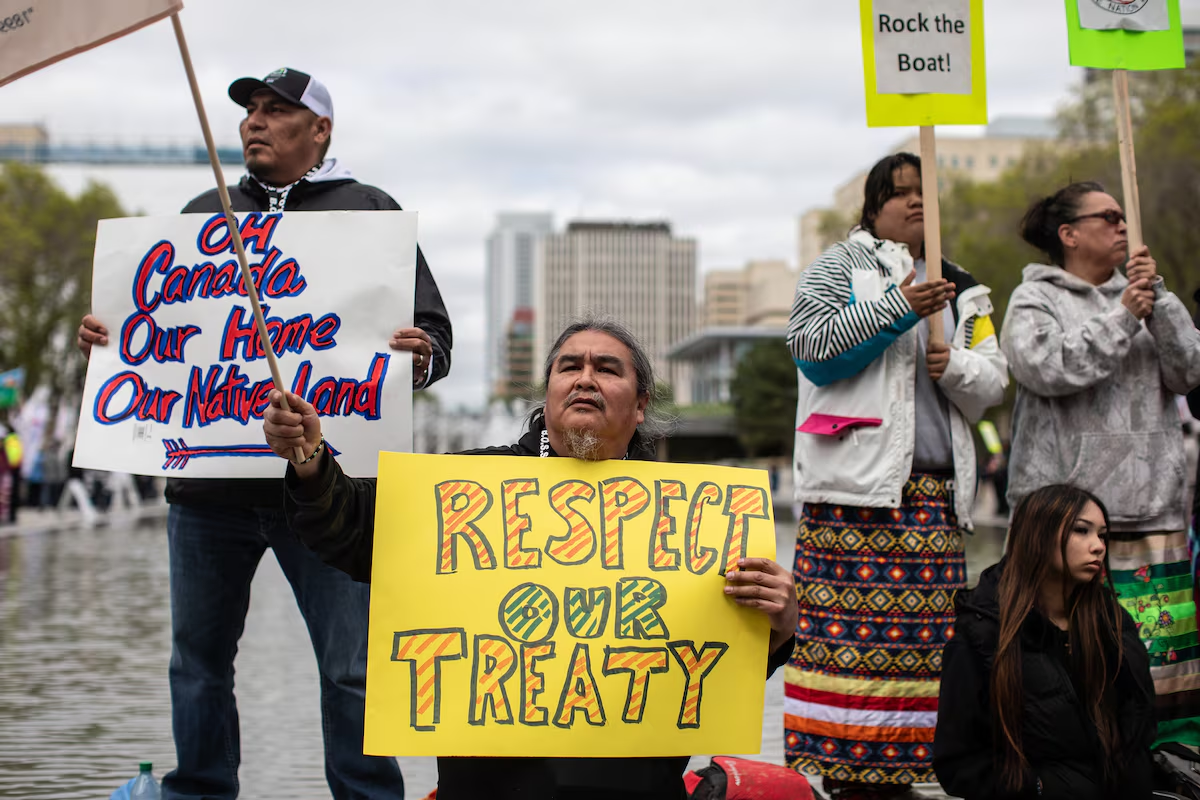
People take part in a demonstration opposing Alberta separation in Edmonton, Alta., in May. Results from voting locations in First Nations across the province were overwhelmingly opposed to separation.JASON FRANSON/The Globe and Mail
Elections Alberta ran short of ballots in several First Nations during the provincial referendum on Monday, prompting criticism of how the agency administered the vote.
Residents voted on 10 questions, including whether Alberta should remain part of Canada or trigger a subsequent secession vote and others related to immigration and constitutional issues in the referendum, which the province had been planning for months.
The question of separation was of particular interest to First Nations, who have spoken out against it for months and launched legal challenges arguing that it went against treaty rights.
In some communities the ballot shortage led to long waits at polling locations, according to a statement from Siksika Nation, a southern Alberta First Nation with nearly 8,000 members.
“It is unacceptable that First Nations communities continue to encounter barriers to participating fully in Alberta’s democratic processes,” Siksika Chief Samuel Crowfoot said in a statement. “Our people have fought too long for their democratic rights to be treated as an afterthought. The right to vote must be supported by meaningful and equitable access to the ballot box.”
Alberta voters reject push for separation referendum
Elections Alberta spokeswoman Michelle Gurney said in an e-mailed statement that the agency delivered extra ballots to five First Nations – three of which received multiple shipments.
Samson Cree Nation, Louis Bull Tribe and Ermineskin Cree Nation received three separate ballot deliveries, she said.
Whitefish First Nation and a voting location serving Siksika Nation and Blood Tribe needed at least one extra delivery.
The agency predicted the number of ballots needed at each of the province’s 1,400 polling stations based on past voter registry data. It sent 1.5 times as many ballots as it deemed necessary, Ms. Gurney said.
“This means we have seen higher turnout at these locations than we have in the past,” she said. “This is a good news story, showing higher voter engagement in these locations.”
Five takeaways from Alberta’s separation referendum
But some First Nations leaders saw the miscalculation as a failure to appreciate Indigenous engagement in an issue that so squarely encroaches on treaty rights.
“This shouldn’t have come as a surprise because it was the First Nations people who were most vocal and most against the referendum from the beginning,” said Jay Telegdi, senior manager of intergovernmental affairs for Athabasca Chipewyan First Nation.
First Nations in Alberta have challenged the legality of provincial separation in court, arguing that it would violate treaties with the Crown and breach the government’s duty to consult Indigenous peoples on matters affecting their rights.
Two Alberta judges ruled that First Nations must be considered in the decision to call a referendum on provincial independence. In a December decision, Court of King’s Bench Justice Colin Feasby ruled that “First Nations, as founding partners in the creation of Alberta, cannot be ignored or bypassed as Alberta contemplates its future whether that is as part of Canada or not.”
Last week, a number of First Nations raised concerns that their members were not given the opportunity to vote in advanced polls, which were meant to be available from Oct. 13 through to Oct. 17, because of staff shortages.
Results from voting locations in First Nations across the province were overwhelmingly opposed to separation.
Carney hails Alberta’s rejection of separation, but other referendum questions muddy the waters
At the Tallcree First Nation band office, a total of 102 voters cast ballots with not a single one favouring independence. And at one location on the Alexis Nakota Sioux Nation, just seven of 363 voters selected separation.
Elections Alberta did not make an overall turnout figure for First Nations available.
In the lead up to the referendum, many First Nations held information sessions and rallies to encourage voting. Some issued social media posts imploring members to vote in favour of remaining in Canada.
“First Nations and Albertan voters turned out in huge numbers and stood up for our shared past, present and future in Canada and rejected a divisive proposal that would bring needless upheaval, conflict and uncertainty for everyone,” Assembly of First Nations National Chief Cindy Woodhouse Nepinak said in a press release. “The results of this vote speak volumes: We are stronger together.”
With a report from Matthew Scace