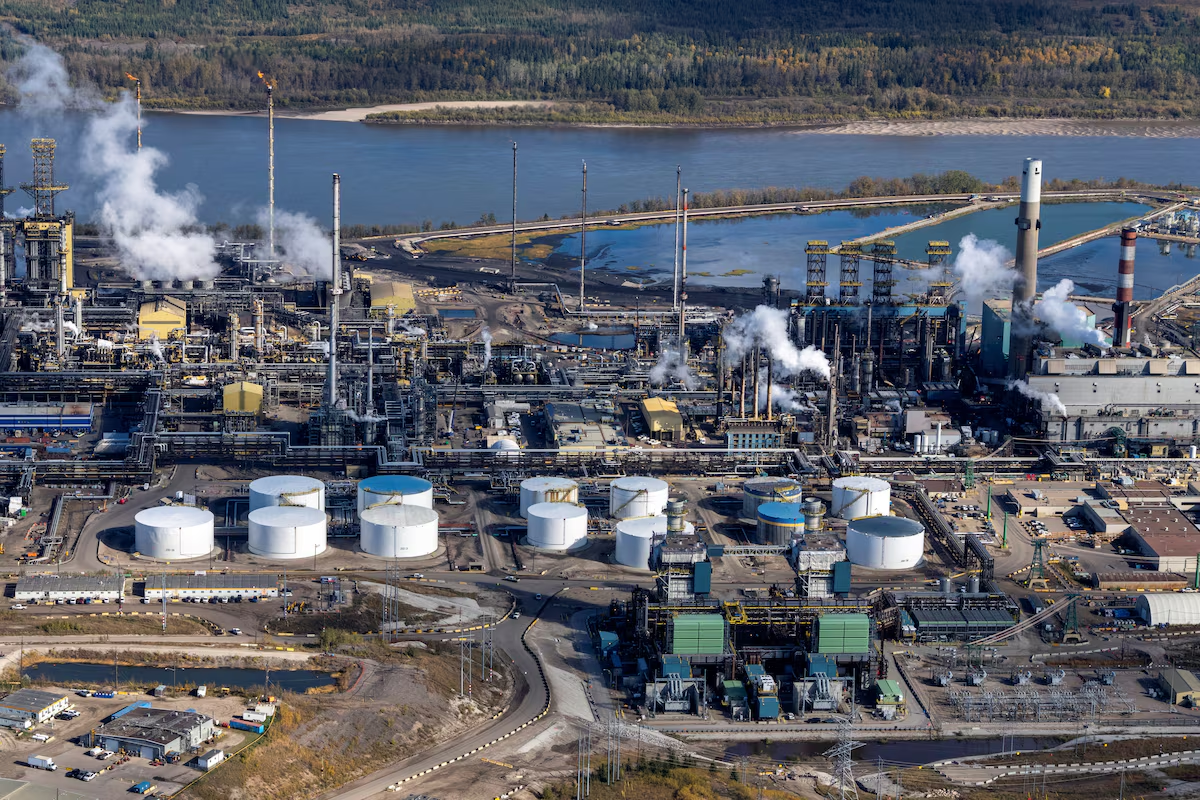

Open this photo in gallery:
The Suncor oil sands plant at the Alberta’s Oil Sands, which contain one of the world’s largest unconventional petroleum reserves.Todd Korol/Reuters
The Alberta government will lower royalty rates on some new oil sands production next spring as an incentive to lure investment to the province in its push to increase crude production.
The Alberta Oil Sands Growth Program was announced Friday by Premier Danielle Smith in Calgary, flanked by the chief executive officers of major oil companies in the province.
Ms. Smith wants to double Alberta’s oil production to eight million barrels per day. Getting there – and filling new pipeline capacity that is on its way – will require the province to attract major investments, she said.
“Industry has been whipsawed with so many different policy changes that it’s up to governments to create a stable environment,” the Premier said.
The program will guarantee a 10-year royalty framework, in which producers pay a 2-per-cent royalty rate for the first five years, increasing by one percentage point annually until reaching 6 per cent in years nine and 10.
At the end of the 10-year period, projects covered under the program will return to Alberta’s regular oil sands royalty framework. Under those rules, royalties depend on the price of oil and are based on a percentage of an asset’s gross revenues. The amount ranges from 1 per cent to 9 per cent for before a developer has fully recouped their initial investment, then rises to anywhere from 25 per cent to 40 per cent.
Any new greenfield or brownfield expansion that produces 5,000 barrels of oil a day will be eligible for the royalty program. Although the projects can use existing oil sands infrastructure, they cannot be located within the boundary of a previously approved project.
Ottawa to invest $200-million in Woodfibre LNG project, source says
Previous, unfriendly energy policies saw oil and gas investment capital fly from Alberta and Canada for more than a decade, but the new policy will help “ensure a globally competitive fiscal and regulatory regime that attracts and incents capital for growth,” Rich Kruger, CEO of Suncor Energy Inc. SU-T, said Friday.
“The reason I’m standing here today is because I believe in what’s going on here, and I think it will make a material difference.”
Alberta Finance Minister Jason Nixon said the value of projects drawn by the program will depend on various factors such as oil prices, but he anticipates that investment will begin immediately as a result of the policy.
But lower royalty rates for new oil sands production mean potential provincial revenues are being left on the table, said Janetta McKenzie, director of the oil and gas program at the Pembina Institute, a think tank.
“We’ve built a royalty system that balances economic needs and the needs of firms with the need to ensure Albertans get fair return for their oil,” Ms. McKenzie said in an interview.
“This does seem like the latest in a line of public financial support given to the oil sands sector, which is already very profitable and very well established.”
Ms. Smith countered that the program is aimed at driving new development.
“If it doesn’t exist, we’re getting $0 off of it. If it does exist, then we delay our share so that the companies can pay their investment back so that we can benefit later. It’s just delaying the amount of additional new revenues that will come in,” she said.
Alberta landowners urge farmers, ranchers to resist oil development
The royalty program is part of a suite of policies due to be finalized by Nov. 15, after the province, Ottawa and five major oil sands companies signed a non-binding MOU to develop financial and regulatory frameworks aimed at driving oil sands development and production growth.
The companies in negotiation with the governments are Imperial Oil Ltd. IMO-T, ConocoPhillips Co. COP-N, Suncor, Cenovus Energy Inc. CVE-T and Canadian Natural Resources Ltd. CNQ-T, which together form an industry group called the Oil Sands Alliance.
Some of the items sought by industry have already been delivered, including Ottawa’s recent changes to the regulatory process that aim to speed up project assessments.
But Sunday’s deadline for the remainder of the definitive agreements – including details on a massive carbon capture project planned for the oil sands – will likely be missed, the chief executives of Oil Sands Alliance member companies told analysts during recent earnings calls.