
Open this photo in gallery:
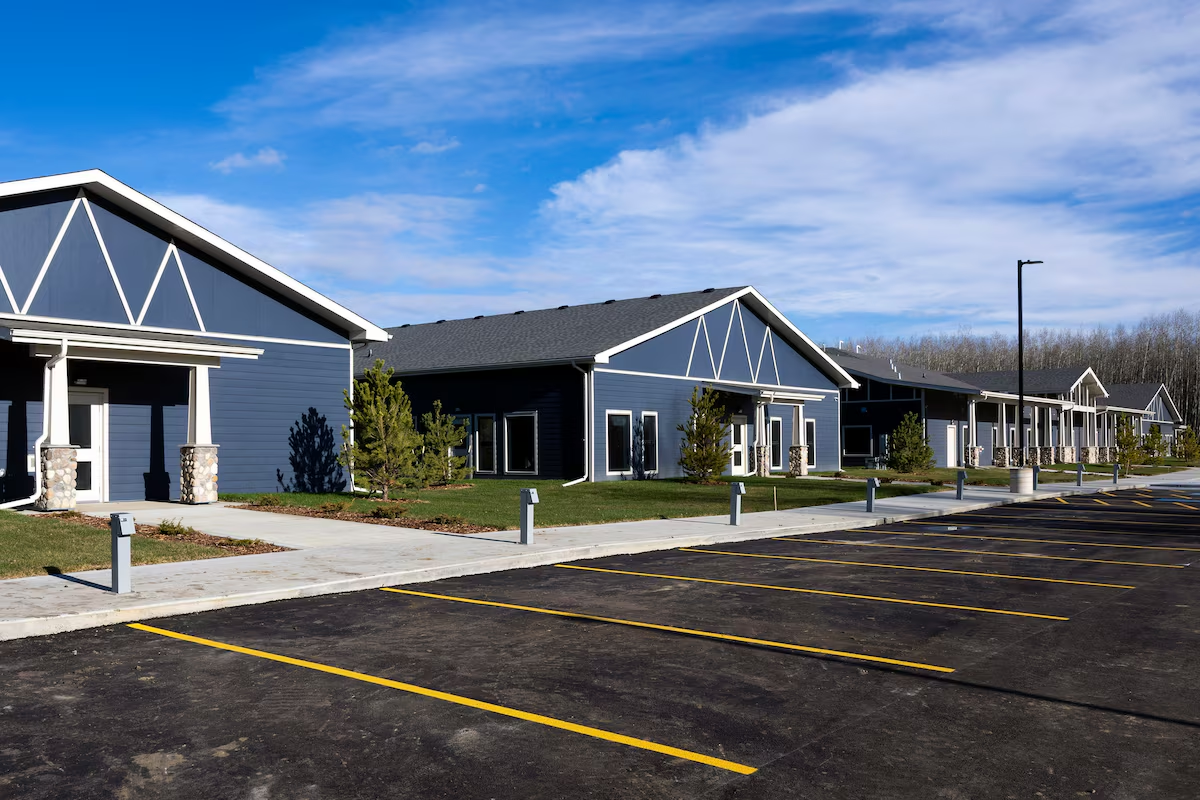
The maskêkosihk recovery community on Enoch Cree Nation expects to open its doors to patients next month.John Ulan/The Globe and Mail
One of the three addiction-treatment centres swept up in Alberta’s health care procurement controversy expects to open its doors to patients in December, but a handful of subcontractors allege they have not been paid in full for their work.
The Alberta government in late October announced that construction of the maskêkosihk recovery community on Enoch Cree Nation was complete. The First Nation, which abuts Edmonton, selected Melewka Homes Ltd. to build its $35-million provincially funded facility, the type of addiction-treatment centre the government is counting on to address the opioid crisis ravaging communities across Alberta. Two other Indigenous communities, Tsuut’ina Nation and the Métis Nation of Alberta, have been building recovery centres with provincial funding and also hired Melewka.
“Every new recovery community means more people can access the support they need to reclaim their lives from addiction,” Rick Wilson, the Minister of Mental Health and Addiction, said in an Oct. 26 statement about Enoch’s finished facility.
But Melewka’s three recovery centre projects are mired in lawsuits and counterclaims over bills, drawing further attention to Alberta Premier Danielle Smith’s handling of a broadening procurement controversy that has dogged her government for nearly two years.
Smith insists Alberta recovery centres moving ahead amid tangle of legal action
Over the last year, Alberta has insisted that while it paid for the projects through grants, each Indigenous community was in charge of selecting a general contractor for their respective facility. Tsuut’ina’s former lawyer, in court documents, alleges the government “recommended” Melewka for its recovery project. That has not been tested in court.
Ms. Smith in August said she expects construction on the three recovery projects to be done this year, but the tangle of lawsuits could take much longer to smooth out. Ryan Fournier, a spokesman for Ms. Smith, did not acknowledge messages seeking comment.
Court records show that four subcontractors allege Melewka has not fully paid them for their work on the Enoch facility. Melewka is facing another 11 lawsuits from subcontractors alleging they have not been paid in full for their work on the recovery centre in Tsuut’ina or for Métis Nation projects, including its addictions-treatment facility. The subcontractors are seeking at least $7.4-million across the various lawsuits.
Melewka, in the majority of cases, responded by suing the subcontractors, alleging shoddy craftsmanship and other problems. None of the allegations have been tested in court.
Open this photo in gallery:
Court records show that four subcontractors allege Melewka Homes Ltd. has not fully paid them for their work on the Enoch facility, which wrapped up constuction in October.John Ulan/The Globe and Mail
Further, some subcontractors that worked on Enoch’s recovery facility accepted discounted rates rather than pursuing legal remedies. John Schuring, who owns Lana Exteriors Ltd., had submitted a final bill of about $133,000, plus GST, to Melewka. In the end, Mr. Schuring accepted 80 cents on the dollar and ate the tax.
“It sucks,” Mr. Schuring said, noting he is out about $30,000 on the invoice. He subcontracted work to Constant Exteriors Inc. and paid the company what it was owed, save for about $5,000.
“On a government project, this never should have happened,” Erin Constant, who owns Constant Exteriors, said. “There clearly was no one watching what was happening.”
Diablo Fire Protection Ltd. sued Melewka in September, arguing the general contractor failed to pay for roughly $241,000 worth of work on the recovery facilities for Enoch and Tsuu’tina, which abuts Calgary.
Melewka, in a counterclaim filed on Oct. 26, alleges Diablo breached its agreements regarding Enoch and Tsuut’ina by not executing work up to standard, and refusing to return to the projects to complete duties and fix problems.
Further, the counterclaim alleges Diablo refused to fix the deficiencies at Enoch “in an attempt to coerce Melewka into making further payments under the Tsuut’ina Agreement.”
Melewka is seeking at least $498,750, according to the court document. The company alleges it will have to hire others to fix and finish Diablo’s work at Enoch and Tsuut’ina, driving up costs and creating delays.
Diablo’s lawyer declined to comment.
Fancy Doors & Mouldings Ltd. sued Melewka in July for $602,000, alleging the company is behind on bills tied to all three recovery facilities.
Melewka countersued in September, alleging Fancy supplied deficient products, including some in the wrong size.
Fancy has yet to fix the problems tied to the Metis Nation facility, Melewka alleges. And because of the difficulties on the Enoch and Métis Nation projects, Melewka alleges it then cancelled all or part of its Fancy order regarding Tsuut’ina.
Fancy declined to comment.
Sky Light Painting Ltd. alleges Melewka owes it $211,600 for work on the Enoch facility, while Adeer Contracting Ltd. alleges it is out $84,000. Melewka countersued both companies for $150,000 each, alleging Sky Light and Adeer both billed for unauthorized work and did not complete their duties and correct their mistakes. Sky Light and Adeer did not acknowledge requests for comment.
In response to questions from The Globe and Mail, Erin Stroud, a spokesperson for Enoch, directed questions about outstanding bills to the construction company.
“To the Nation’s knowledge, all undisputed amounts owing have been paid,” she said in a statement. “Any outstanding construction-related or payment disputes involving Melewka and its subcontractors would be matters for Melewka.”
Melewka did not acknowledge requests for comment.
Open this photo in gallery:
Melewka, owned by Lewis Semashkewich and his son John Semashkewich, was also hired to build two other recovery centres in Alberta.John Ulan/The Globe and Mail
The company, owned by Lewis Semashkewich and his son John Semashkewich, is ensnarled in another legal battle which connects the Melewka projects to Alberta’s broader health care procurement controversy.
Melewka is sparring over millions of dollars with former business partner Mohamed Eldassouki and his associates, including his brother-in-law, Sam Mraiche.
Mr. Eldassouki, in court documents, alleges the elder Semashkewich fraudulently took control of his company and a bank account holding about $8.4-million. Conversely, Melewka alleges Mr. Eldassouski’s company inappropriately received more than $11-million tied to Melewka’s projects.
The Semashkewiches also allege that Mr. Eldassouki’s company was secretly controlled by Mr. Mraiche, and that he demanded money while threatening to use his connections to have Melewka removed from construction projects or delay payments.
Mr. Mraiche, in court documents, denies controlling his brother-in-law’s business and said his involvement was limited to giving Mr. Eldassouski “casual, unofficial, and informal business advice.”
Alberta recommended Sam Mraiche-linked company to build recovery centre, lawyer alleges
None of the allegations have been tested in court. Lawyers for Mr. Mraiche, and Mr. Eldassouski did not acknowledge messages seeking comment.
Mr. Mraiche owns MHCare Medical Corp., the company at the centre of Alberta’s heath care procurement affair – which erupted when Athana Mentzelopoulos sued the provincial government and her former employer, Alberta Health Services, for wrongful dismissal in early 2025.
She alleges Alberta fired her as AHS chief executive to end her investigation into procurement processes and potential conflicts of interest between employees at the public health agency and private businesses, including MHCare. The public health agency paid the company $70-million for generic children’s medication from Turkey, most of which never arrived. Mr. Mraiche was also part of a consortium negotiating for private surgical contracts worth $430-million.
Mr. Mraiche is not party to the lawsuit and has stated his government deals are above board.
Melanie Paradis, a spokeswoman for the Métis Nation, did not address questions about that community’s recovery facility, citing “legal and privacy reasons.”
Tsuu’tina Xàkijí-tii (head chief) Ellery Starlight said in a statement that the nation has paid Melewka in accordance with its grant agreement and “any potential outstanding subcontractor payment issues are matters between the general contractor, Melewka, and its subcontractors.”
He added that the nation believes construction on the facility never stopped and is 80-per-cent complete, through the payment certification process. Tsuut’ina expects to finish on budget, Mr. Starlight said.