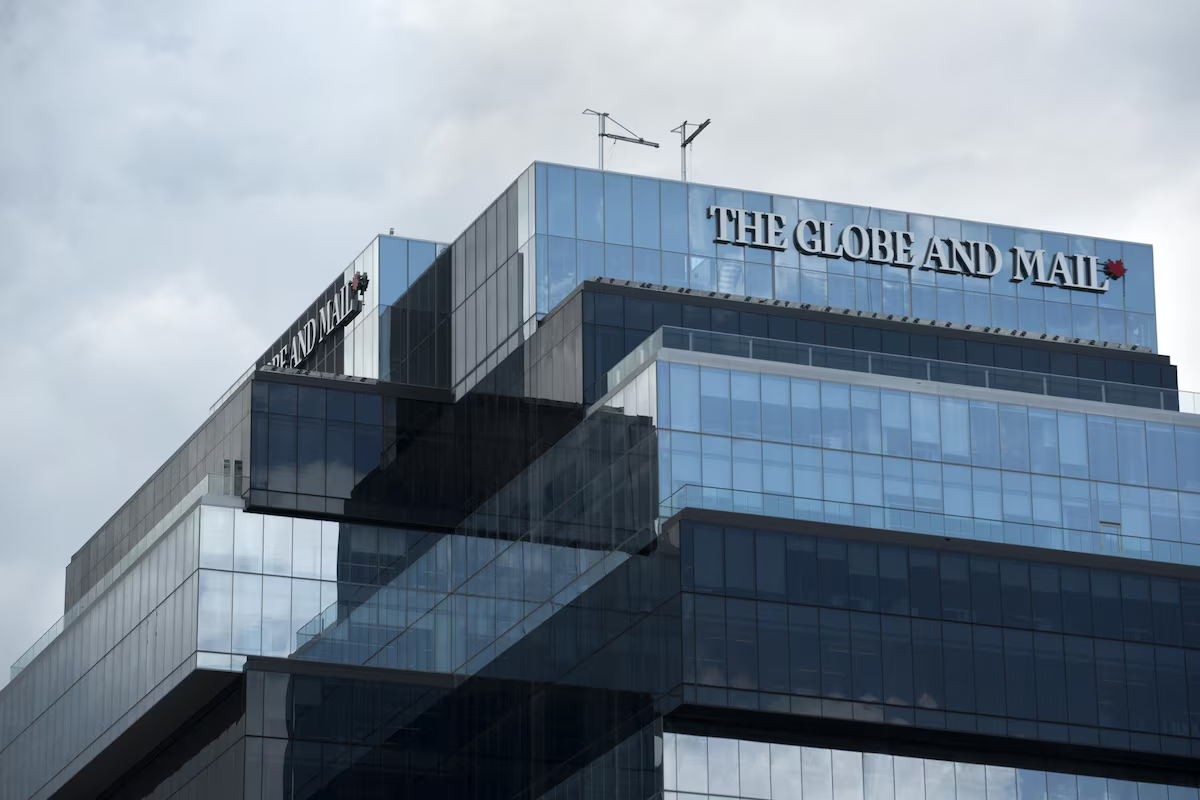

The Globe and Mail has won four prestigious Jack Webster Awards for work on topics that include extensive coverage of the Tumbler Ridge school shooting, the complexity of bail reform in Canada and the necessity of protecting wilderness in British Columbia.
The accolades, which honour excellence in journalism across B.C., were announced at the ceremony’s 40th annual iteration in downtown Vancouver on Monday. Globe journalists were nominated in eight categories and won in four of them, making the publication the leading news outlet at the event two years in a row.
Justine Hunter, The Globe’s Victoria-based legislative reporter, received three awards – one as part of a team, and two for her feature stories on environmental protection.
This past February, Ms. Hunter worked alongside a substantial number of Globe staff who mobilized immediately in the aftermath of a mass shooting in Tumbler Ridge, B.C.
Canadian news outlets have significantly less experience covering deadly gun attacks in schools than their U.S. counterparts. But when violence erupted in the small town tucked in the foothills of the Canadian Rockies, The Globe drew on the entirety of its reporters in the B.C. bureau, as well as journalists in Calgary, Edmonton and Toronto.
The Tumbler Ridge coverage included exclusive stories with vivid language and meticulous reporting, much of which was published just hours after the shooting – such as a piece on a 12-year-old student who hid in a closet with classmates; how the shooter suffered from crucial mental-health challenges and had a history with psychedelic mushrooms; and details about the disturbing social-media messages that foreshadowed the violence.
For their work on the tragedy, Ms. Hunter and the Globe team of Nathan VanderKlippe, Mike Hager, Andrea Woo, Jana G. Pruden, Tu Thanh Ha and Patrick White took home the prize of Best News Reporting of the Year.
“Congratulations to all the winners and nominees. What is particularly validating is the jurors recognized brave, independent work,” said Globe and Mail editor-in-chief David Walmsley.
Ms. Hunter also won a Webster for her interactive story with visual journalist Jeremy Agius about how a moratorium has mostly kept tankers out of B.C.’s Hecate Strait, though Canada’s ambitions to ship oil to new markets could be perilous in what’s been called the fourth-most dangerous body of water in the world.
Additionally, Ms. Hunter’s personal expedition retracing the steps of an adventurous 20-year-old woman who helped map the protected Strathcona Provincial Park in the summer of 1910 won for excellence in feature reporting.
Vancouver-based Globe justice reporter David Ebner was awarded the top prize in the legal category for his piece examining Prime Minister Mark Carney’s promises toward stricter bail rules. Despite the apparent political consensus that bail in Canada is too lenient, data show that a record number of people are not being released through that system, Mr. Ebner reported.
Monday’s ceremony was co-hosted by CBC journalists Dan Burritt and Jason D’Souza.
Environment-focused publication The Narwhal received three top honours, one of which was a partnership with the non-profit Investigative Journalism Foundation; while the CBC and IndigiNews, the Indigenous-led online outlet, each won in two categories.
The awards are handed out by the Jack Webster Foundation, named after the influential late reporter from Western Canada. The foundation says its annual celebration is meant to create a community where B.C. journalism thrives.