
Open this photo in gallery:
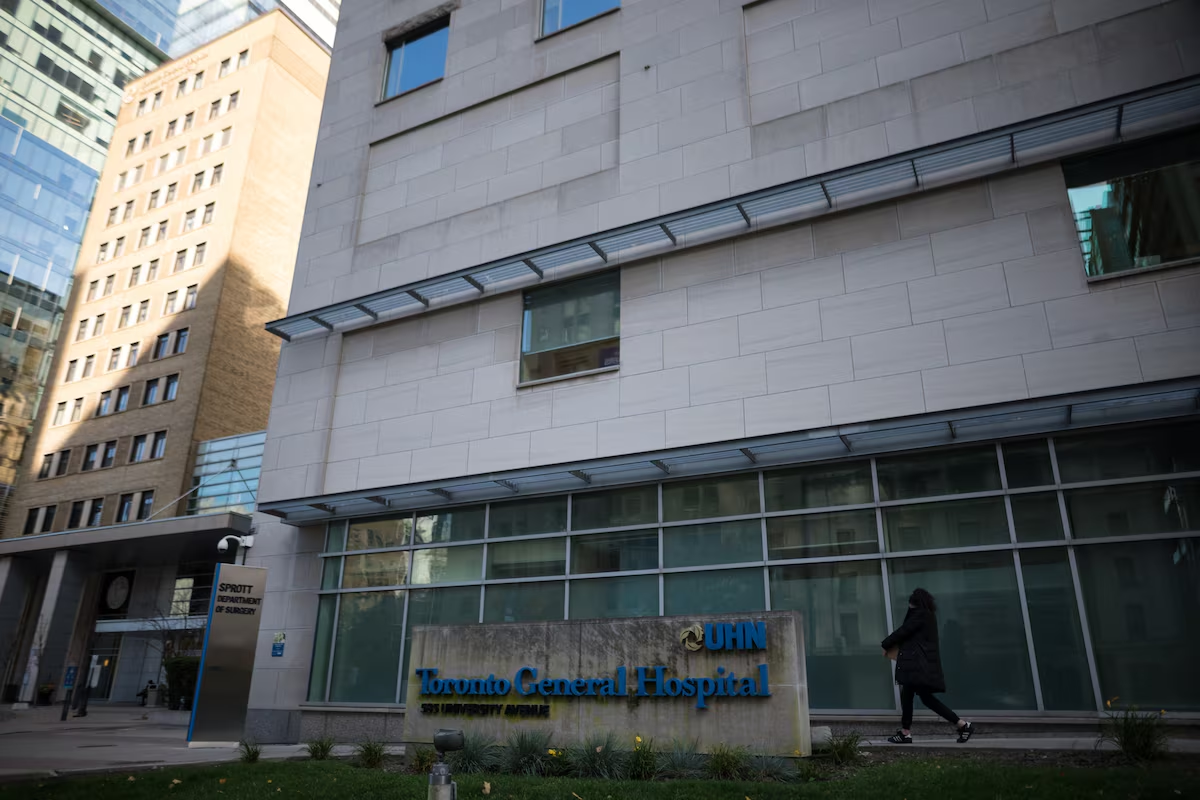
The exterior of Toronto General Hospital. The $35-million gift will lead to the development of the Ajmera Transplant Institute, which UHN said will be a global hub for organ transplants, research and education.Tijana Martin/The Globe and Mail
The University Health Network says a landmark $35-million donation from a prominent Toronto family will help advance organ transplantation in Canada through the creation of a specialized institute.
With this latest donation, the Ajmera family – which founded FGF Brands, one of North America’s largest industrial baking and food-processing companies – has cumulatively given $62-million to UHN. The total amount is the largest known donation in Canada to support transplant care by a single family.
The gift will lead to the development of the Ajmera Transplant Institute, which UHN said will be a global hub for organ transplants, research and education.
Sam Ajmera, who was born in India and co-founded FGF Brands, said in a statement that he wanted to build a better life for his family when he immigrated to Canada at age 26, and now he wants to continue to give back to the country that allowed him to do just that.
“My hope is that the Ajmera Transplant Institute will turn the discoveries of today into the treatments that save lives tomorrow – improving the lives of patients and families for generations to come,” Mr. Ajmera said.
University Health Network CEO Kevin Smith has a plan to fix hospitals – even with a dangerous shortage of money
The institute will build off the work already done at the Ajmera Transplant Centre, the country’s largest and most comprehensive transplant program. Located at Toronto General Hospital within the UHN, it is also named after the Ajmera family in recognition of a previous donation.
The team at the centre have been at the forefront of organ donation. Their successes include creating the world’s first centre for living organ donation, performing a rare five-organ transplant and using living-donor liver transplantation to treat people with otherwise incurable metastatic tumours.
Deepali Kumar, medical director of the Ajmera Transplant Centre, said in an interview that there are not enough organs available for everyone who needs one.
Each year, more than 250 Canadians die waiting for a life-saving organ, according to Canadian Blood Services. Hundreds more face rejection or other complications related to transplantation.
The new institute, Dr. Kumar said, will help the team identify new ways to either generate organs or make better use of the organs available.
“The institute will be all things transplant, so it will include the clinical care, including all the organs we transplant. It will include research. It will include education. We will be able to recruit the best and brightest people from around the planet.”
She said investments will be made in artificial intelligence to improve organ transplantation, and in ex vivo technologies, which manipulate living cells, tissues or organs outside of a body.
A section of the institute will focus on diabetes, specifically pancreas and islet transplantation, which are therapies to restore insulin production, she added.
“The gift marks a defining moment for UHN and for the future of transplantation,” Dr. Kumar said in a subsequent statement. “With it, we will have the opportunity to reimagine what is possible for those facing organ failure, reduce wait times and improve outcomes, and advance the next generation of transplant therapies.”
The UHN said in a statement that challenges in transplant care require a new collaborative model between experts in clinical care, engineering, immunology, regenerative medicine, cell therapy and data science. The Ajmera Transplant Institute, it said, will meet that need.