
Open this photo in gallery:
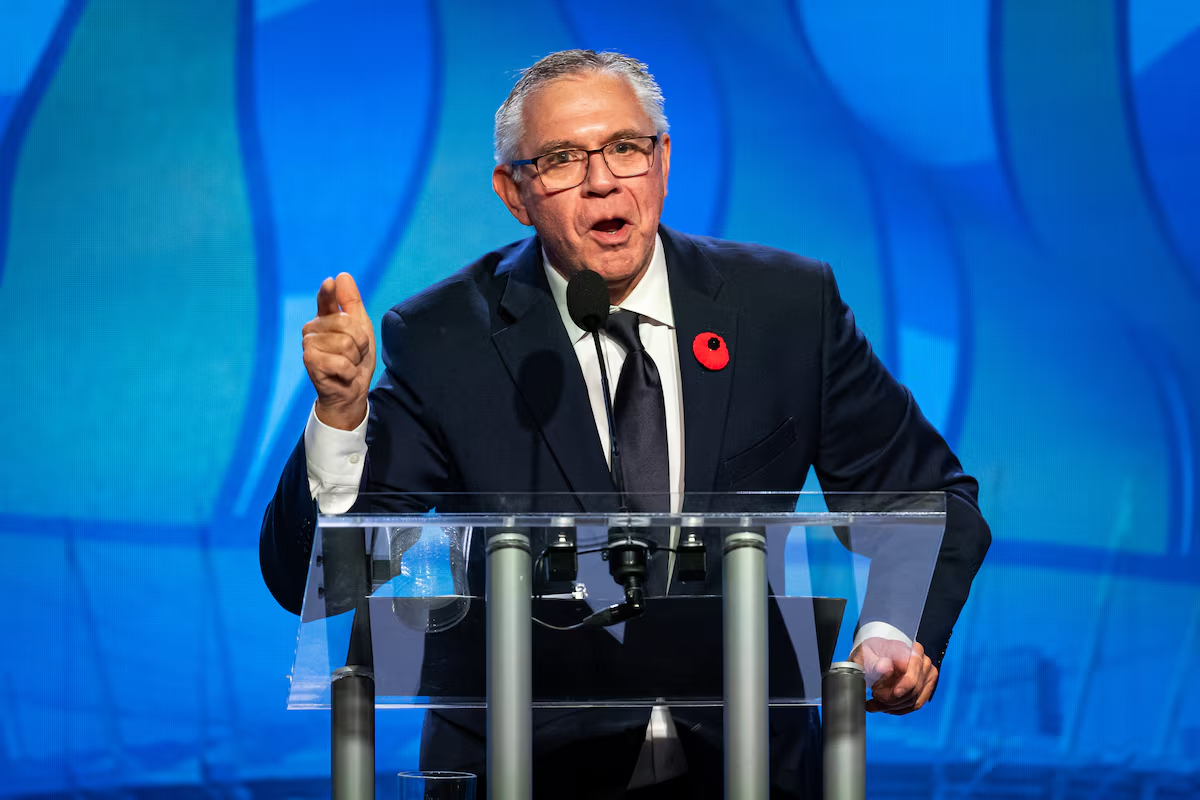
B.C. Conservative Leader Lorne Doerkson speaks on stage during provincial election night in Vancouver on Saturday.ETHAN CAIRNS/The Canadian Press
British Columbia’s next premier, a former rodeo rider and newspaper publisher who many people hadn’t heard of five weeks ago, says his first priorities will be taking an in-depth look at the province’s deeply indebted finances, and working with Alberta and Prime Minister Mark Carney to jump-start the planned oil pipeline to the West Coast.
BC Conservative Leader Lorne Doerkson won a large majority government Saturday in a snap election called two years early by NDP Leader David Eby.
“British Columbians voted for change last night and for whatever reason, they liked the platform that we put forward,” Mr. Doerkson said at a news conference Sunday. “I intend to get to work right away.”
The loss has the BC NDP bitterly regretting the high-stakes gamble of calling the election, the timing of which appeared aimed at taking advantage of the disarray in the Conservative caucus. The Conservatives had elected a deeply unpopular leader in the spring, but she resigned two days before Mr. Eby made the election call.
Mr. Doerkson was named interim leader and was soon thrown into a campaign, uniting a fractious caucus behind him.
Lorne Doerkson didn’t plan on leading the BC Conservatives, but he’s trying to meet the moment
NDP MLA and cabinet minister Adrian Dix, who was re-elected, called Saturday’s result one of the most disappointing nights in the modern history of the BC NDP. After nine years of government under the leadership of John Horgan and Mr. Eby, the party is heading into opposition.
“Clearly, given the results, it was a mistake to call the election,” Mr. Dix told reporters after the results came in.
Mike Farnworth, who has served as B.C. transportation minister and was also narrowly re-elected, agreed calling the snap election was a bad idea.
“In hindsight, I don’t think it’s rocket science to say we probably shouldn’t have,” he said in an interview Sunday.
He said the caucus and the party will have to take time to reflect on the outcome and what comes next.
B.C. Conservatives win majority government, Lorne Doerkson to become premier
Mr. Eby resigned as party leader in a somber speech Saturday night, accepting responsibility for the outcome of the vote. He said he would continue to represent his riding.
“This is obviously something I do with a very heavy heart,” he said to supporters at his party’s gathering in Vancouver. “But it is time for new leadership within our party.”
The results with 99 per cent of the polls reporting showed 64 Conservatives elected, 27 for the NDP and two for the Greens. The NDP lost 20 seats compared to the party’s result in the last election in 2024.
At his news conference Sunday, Mr. Doerkson listed some of his first priorities.
He said briefings with the public service will begin in coming days with “some urgency” so the government will be able to swiftly advance its agenda once it’s sworn in.
He said after being sworn in, he would immediately launch an independent review of the province’s finances, citing the record-high $14-billion deficit and the need to find a way to bring it to balance eventually.
Five takeaways from B.C.’s election
Other initiatives include an expert commission on hospital emergency rooms and wait times, as well as a tax break aimed at returning $1,000 to every British Columbian.
He said he hopes to engage with Mr. Carney and Alberta Premier Danielle Smith to get the Pacific Link pipeline, between Alberta and B.C., moving.
Without being specific, Mr. Doerkson said he has been “thrilled” about recent announcements by the Prime Minister. “We’ll work very closely with him, and of course, our neighbours.”
Mr. Doerkson said Sunday that he hopes to use a session of the B.C. legislature next spring to repeal an Indigenous rights law passed unanimously by the legislature in 2019, the Declaration on the Rights of Indigenous Peoples Act, or DRIPA. Critics worry the province is at risk of many lawsuits if Indigenous groups believe the province’s laws are not in alignment with DRIPA.
“I am still committed to the repeal of DRIPA. It has not worked in this province, and, frankly, it has caused more problems to date than, I think, potentially anything else,” he said.
B.C. law on Indigenous rights has increased conflict and uncertainty, municipalities group hears
The premier-designate said he looks forward to working with First Nations communities in the province, noting that he has received complimentary messages from some of those communities.
He said he had not ruled out holding a session of the legislature this fall.
Former Alberta premier Jason Kenney said Mr. Doerkson’s win offers lessons that other Conservatives should take to heart.
“Yet another reminder to Conservative parties: ignore the crazy fringe of the hard populist right. Don’t let the tail wag the dog. Let them stay in their little fringe parties,” Mr. Kenney posted on social media Saturday night.
“Instead, propose bold, thoughtful policy reforms rooted in conservative principles that appeal to the broad mainstream,” Mr. Kenney wrote.
Manitoba NDP Premier Wab Kinew said the B.C. results should be a warning for other politicians and consultants looking to eke out tactical advantages without considering voters themselves.
Gary Mason: Political hubris claims another victim – the NDP’s David Eby
Politics is not a game, he said.
“It is a serious responsibly that isn’t to be played with. There’s no partisanship in these comments, it’s all about reminding people that we have a serious obligation to take our democracy and our duties with the utmost of care.”
Voter turnout appears to have played a significant role in Saturday night’s outcome.
Elections B.C. reported Sunday afternoon only 48 per cent of eligible voters cast a ballot, a record low.
While the Conservatives took nearly half of all the votes cast, they netted fewer actual votes than in the 2024 election, as did the NDP.
B.C. election turnout slumps to new low as fewer than half of voters cast ballot
The Conservatives recorded about 5 per cent fewer votes than in 2024, while the Greens took home roughly 13 per cent more. But the NDP took by far the biggest hit, with 274,000 fewer votes, a drop of 29 per cent.
Stewart Prest, a political science lecturer at the University of B.C., said that trend suggests a big chunk of the NDP’s base stayed home, and it cost the party the election.
Mr. Eby had tried at first to frame the election around the need to repudiate what he described as a Conservative Party too closely aligned with the U.S. politics of culture war issues and division, Mr. Prest said.
But “voters generally don’t like being told what to do,” Mr. Prest said. “Being told you have to show up two years after you cast a vote to do it again to prove a point, I think that was a difficult sell with NDP supporters.”
With a report from Canadian Press