
Open this photo in gallery:
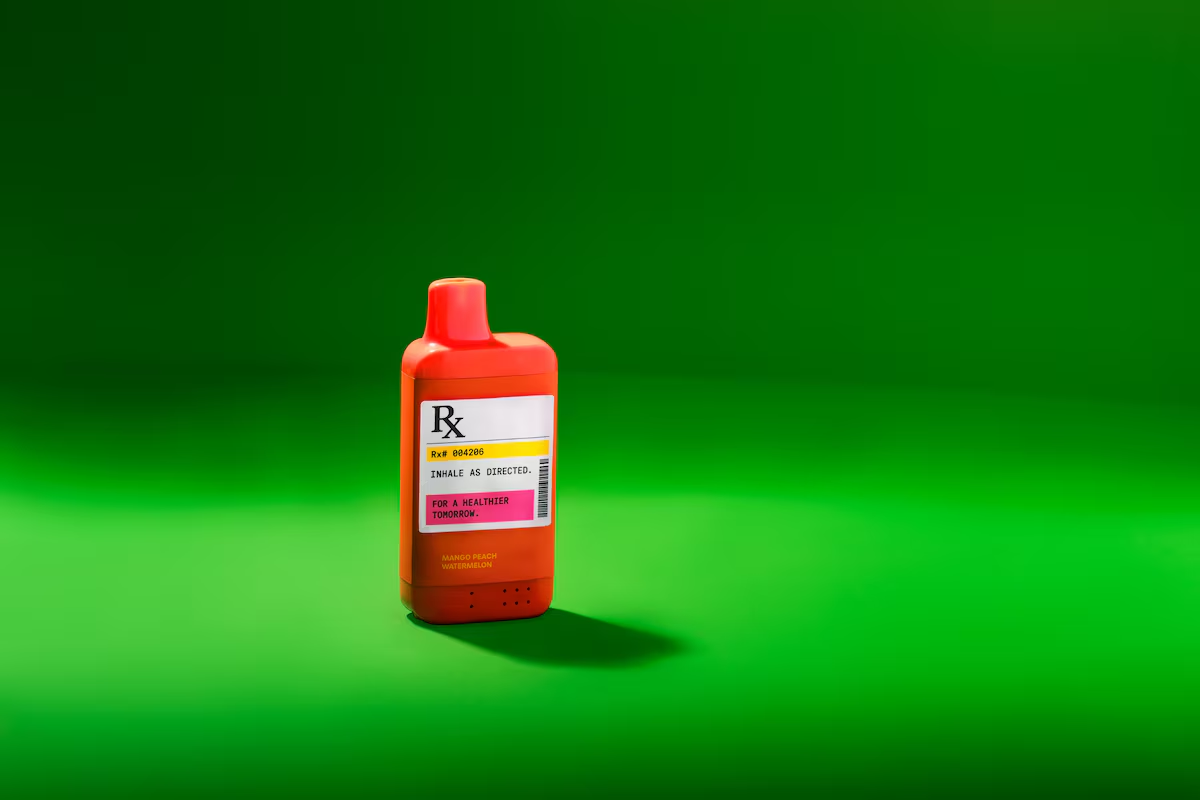
Greentank’s ‘Quantum Chip’ technology, the company claims, produces fewer by-products and higher consistency in its vaping devices.Sarah Wright/Yes-and.Studio/The Globe and Mail
Behind Corey Koffler’s desk hangs a large, Pop Art-style portrait of his grandfather, Murray, who founded Shoppers Drug Mart, Canada’s largest drug store chain. The painting—a wedding present from Corey’s wife—features the words, “Today is the first day of the rest of your life.” Given the grandson’s business, however, the late pharmacy tycoon, who helped start Canada’s Council on Drug Abuse, might more fittingly urge, “First, do no harm.”
Corey, along with his brother Dustin, runs Greentank, a Toronto-based manufacturer of components for vaping devices. The company recently launched a technology that the brothers say dramatically reduces the amount of harmful materials consumers inhale while improving the vaping experience. But to prove the claims in a market dominated by vastly larger competitors, the brothers hope to partner with Big Tobacco, an industry whose products are widely viewed as the deadliest ever invented.
The Kofflers founded Greentank in 2016 with a focus on cannabis vaping cartridges. Rather than seek a Health Canada license, they opted for the white-label route. “It’s like the Intel Inside business model,” says Corey, who is Greentank’s CEO. “We wanted to power the devices of the largest brands.” Today, Greentank’s hardware sits inside about a quarter of cannabis vape devices sold in Canada, he says. For the past five years, however, the company has been homing in on a bigger prize: developing a heating mechanism for nicotine vapes. The market is six to nine times the size of cannabis and has considerable room to grow, given that there are roughly 1.2 billion smokers in the world and something like 100 million regular vapers.
At Greentank’s office in Toronto’s Liberty Village, Dustin—who is president and heads up R&D—puts a grey wafer half the size of a fingernail in my hand. “That’s the centre of everything when it comes to inhalation,” he declares. Most vaping devices use ceramic heaters encircled by wires that heat up when users inhale. This process produces trace amounts of formaldehyde and other harmful substances. In Greentank’s heating element, trademarked Quantum Chip, liquid never touches hot metal. “It passes through the chip in a fraction of a second, with uniform heating,” says Dustin. “It’s as pure as it gets.” He points out that vaping is 99% less harmful than combustible cigarettes (most health organizations estimate it at 95%). Greentank’s chip, he says, reduces 99% of the remaining 1% of harm.
Stuart Brazier, CEO of AIR Global, a Dubai-based maker of vaping products, believes the brothers have invented a better mousetrap. Late last year, AIR released the first commercial application of Greentank’s technology in its Crown Switch nicotine-vaping device for the European market. Then, in July, the company invested US$20 million into Greentank. “We’ve got the know-how, the brand and the liquids,” says Brazier. “They’ve got the tech.”
The real breakthrough for Greentank, however, would be a partnership with a tobacco major. Last year, the Kofflers hired Chris Gemmell, who had spent a dozen years at British American Tobacco (BAT), where he focused on what the industry calls “reduced-risk products” such as vapes. As chief product officer, Gemmell’s job is partly to “expand global commercialization.” The company is in talks with several big tobacco brands, says Corey, but trials can take three years and millions of dollars in product integration investment on the part of the brand. But if Greentank could secure such a partner, “we would immediately have scale, because companies [like BAT] are selling hundreds of millions units a year.”
Scale matters because Greentank is up against deeply entrenched competition. Timothy Donahue of Nicotine Insider, who has covered nicotine and vaping for nearly 15 years, says the industry is going through a “hardware arms race.” He points out that the vast majority of vaping hardware currently comes from a handful of Chinese companies, led by Smoore International, based in Shenzhen. (Greentank’s own manufacturing facility is also in Shenzhen, along with almost half its staff.) “Smoore has enormous advantages in its manufacturing scale and established commercial relationships,” says Donahue. “And it’s such a trademark- and patent-heavy industry, with tons of lawsuits.” In fact, Smoore spent three years suing Greentank over patents before losing at the U.S. International Trade Commission and dropping a California case.
Gemmell argues that Greentank’s business model gives it a significant advantage. The Chinese manufacturers have closed ecosystems. “Not only do they sell you the core technology but you have to manufacture the device with them,” he says. Greentank can build the entire device or only sell components. “We can remove the handcuffs,” says Gemmell, giving a vape brand more supply-chain flexibility.
Greentank’s claim of safety improvement—backed by a study AIR commissioned that found the Quantum Chip produces 97% less nickel and 94% less formaldehyde than benchmark products—is another big draw. It may not matter a great deal to consumers, Brazier admits. “Who really cares about this are regulators.” AIR is preparing a submission to the FDA for a so-called pre-market tobacco authorization. If the FDA approves the submission (even before conducting its own testing), the product can launch in the U.S. It’s not an easy hurdle—a miniscule number receive authorization.
Meanwhile, Greentank is gaining attention. Earlier this year, the company received a best reduced-risk innovation award at InterTabac, the world’s largest tobacco fair, and AIR’s device featuring the Quantum Chip was named best vape device. The cutting-edge upstart could make a tasty morsel for Big Tobacco, says Donahue. “Tobacco companies aren’t just competing over nicotine formulations or flavours anymore. They’re competing over the entire delivery system. Hardware is increasingly becoming part of brand experience. And tobacco companies have lots of cash.” Matthew Shaloub, whose GreenAcre Capital is one of the earliest investors in Greentank, agrees. “I could see a scenario where a big tobacco company would rather keep this technology exclusive to their own devices.”
If that were to happen, it would likely put an end to the Kofflers’ move into the health business. They’ve been approached about adapting their technology for wellness applications—vitamins and so on—and Donahue says he’s heard mention of using it in nebulizers or inhalers for administering medicine for, say, migraines, since the inhalation process means it would get absorbed by the body more quickly.
Now that’s a focus Murray Koffler would applaud.