
Open this photo in gallery:
A truck crosses from Windsor, Ont., into Detroit on the Gordie Howe International Bridge. Canada’s current trade talks with the U.S. are informal and more about keeping the door open, lead negotiator Janice Charette said Thursday.JEFF KOWALSKY/AFP/Getty Images
Getting caught up on a week that got away? Here’s your weekly digest of The Globe’s most essential business and investing stories, with insights and analysis on the biggest headlines, stock tips, personal finance strategies and more.
U.S. to drop 50% tariffs on certain Canadian products
Open this photo in gallery:
Sen. Susan Collins speaks to reporters following a campaign stop Wednesday, Oct. 21, 2026, in Lewiston, Maine.Robert F. Bukaty/The Associated Press
Maine Senator Susan Collins says that she has successfully lobbied the Trump administration to drop tariffs on nine categories of Canadian products, including Canadian seaweed as well as several products used by Maine fruit farmers to harvest or package their goods.
Ms. Collins said on Friday that the U.S. would stop tariffing Canadian seaweed as well as several products used by Maine fruit farmers to harvest or package their goods.
These include paperboard carton, plastic crates, plastic bags, refrigeration equipment, agricultural sorting machinery, and non-adhesive foil.
Ms. Collins previously got the Trump administration to drop tariffs on Canadian road salt and other goods. The administration then added tariffs to other goods so the total amount of Canadian products tariffed would remain the same.
Joly demands Stelco owner comply with job commitments in new letter, gives 15-day deadline to respond
Open this photo in gallery:
Stelco’s steel mill in Hamilton. Industry Minister Mélanie Joly sent a new letter to the company’s U.S. owner, Cleveland-Cliffs, on Thursday.Carlos Osorio/Reuters
Industry Minister Mélanie Joly sent Stelco’s U.S. owner Cleveland-Cliffs a letter, giving the company 15 days to honour its job commitments or potentially face legal action, following their plans to lay off up to 500 Ontario workers. The letter sent to Stelco president Paul Simon on Thursday detailed multiple examples of the company allegedly violating its legally binding commitments and demanding it comply.
The U.S. steelmaker remains locked in conflict with Ottawa over several weeks, with the federal government saying Cliffs is in breach of a promise to maintain at least the same number of unionized employees in Canada for five years.
In a conference call on Monday, after the release of third-quarter earnings, Cleveland-Cliffs Inc. chief executive Lourenco Goncalves criticized Prime Minister Mark Carney for “snatching defeat out of the jaws of victory” in trade and extended “kudos” to U.S. President Donald Trump.
Canadian organizations urged to address web programming vulnerability
Open this photo in gallery:
The website for Innovation, Science and Economic Development Canada was temporarily offline for ‘urgent maintenance’ on Wednesday after vulnerabilities were identified in PHP, a programming language used to run websites around the world.Taehoon Kim/The Globe and Mail
Many websites around the world were forced to close down temporarily this week after a serious vulnerability was found in a critical piece of the internet’s infrastructure. Problems in PHP, an open-source programming language used to run websites, were exposed by security researchers using AI technology, sending website operators worldwide scrambling to implement a fix.
The Canadian Centre for Cyber Security on Wednesday instructed organizations to immediately make updates addressing serious flaws in PHP, adding that applications that can’t immediately be fixed should be temporarily taken offline.
The vulnerabilities discovered are among the most dangerous kind, head of Canadian Centre for Cyber Security Rajiv Gupta said, because they allow for an exploit called remote code execution, where an attacker can run malicious code on a system over a network without having physical access to it.
“It allows an attacker to take control of a web server and never have to worry about authenticating,” he said.
Strategic maple syrup reserve close to empty, producers say
Open this photo in gallery:
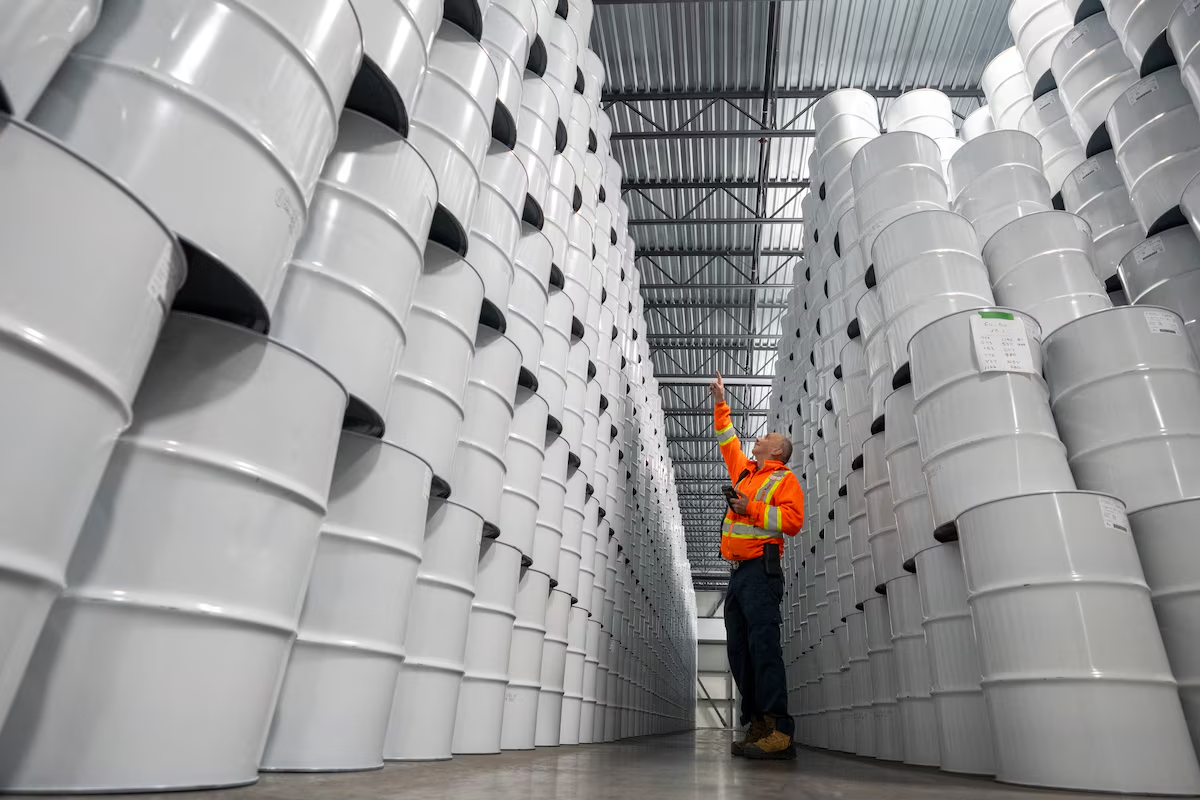
A worker checks barrels of pasteurized maple syrup stored at the Global Strategic Maple Syrup Reserve warehouse in Plessisville, Que. The reserve’s three warehouses in Quebec have a combined capacity of 133 million pounds, or 218,000 barrels.Christinne Muschi/The Canadian Press
Canada’s official maple syrup reserve is sitting near empty, the result of a strong surge in demand that has drained supply to levels not seen in more than a decade.
The Quebec industry, worth about $1.2-billion a year, produces most of the world’s maple syrup. And its stockpile is maintained by a government-sanctioned cartel called the Federation of Quebec Maple Syrup Producers, known by its French acronym PPAQ.
“At the end of next February, all the remaining syrup sold under contract will be gone,” said Simon Doré-Ouellet, deputy director-general at PPAQ. “Our warehouses will be at zero.”
Maple syrup that’s not sold goes to three warehouses in Quebec with a combined capacity of 133 million pounds that can be drawn on when weather conditions yield a lower crop. But at the moment, demand from consumers is simply outstripping supply. Bulk buyers and processors are snapping up higher volumes of syrup to meet that demand and sell to retail customers.
Governments are rushing to build new critical minerals mines, but early-stage projects are rife with risk
Open this photo in gallery:
Prime Minister Mark Carney attends the groundbreaking for Nouveau Monde Graphite’s Matawinie graphite mine in Saint-Michel-des-Saints, Que., in May.Graham Hughes/The Canadian Press
Ottawa is betting big on critical minerals to strengthen Canada’s economy, but many of the mining projects the government is backing come with considerable financial risks. So, with taxpayers helping foot the bill, the question is whether the potential payoff will be worth it.
Mining correspondent Niall McGee takes a hard look at some of the projects the government has decided to back to expand Canada’s position in the global race for critical minerals. Those include such minerals as graphite, palladium, dysprosium and terbium. Many are led not by transnational players, but by junior companies that have not developed mines of their own.
His reporting shows the government is aware that there are numerous risks, but sees its role as necessary to bridge a funding gulf in mine development. Read the full story here.
Get the questions from the weekly business and investing news quiz, and prepare for the week ahead with The Globe’s investing calendar.