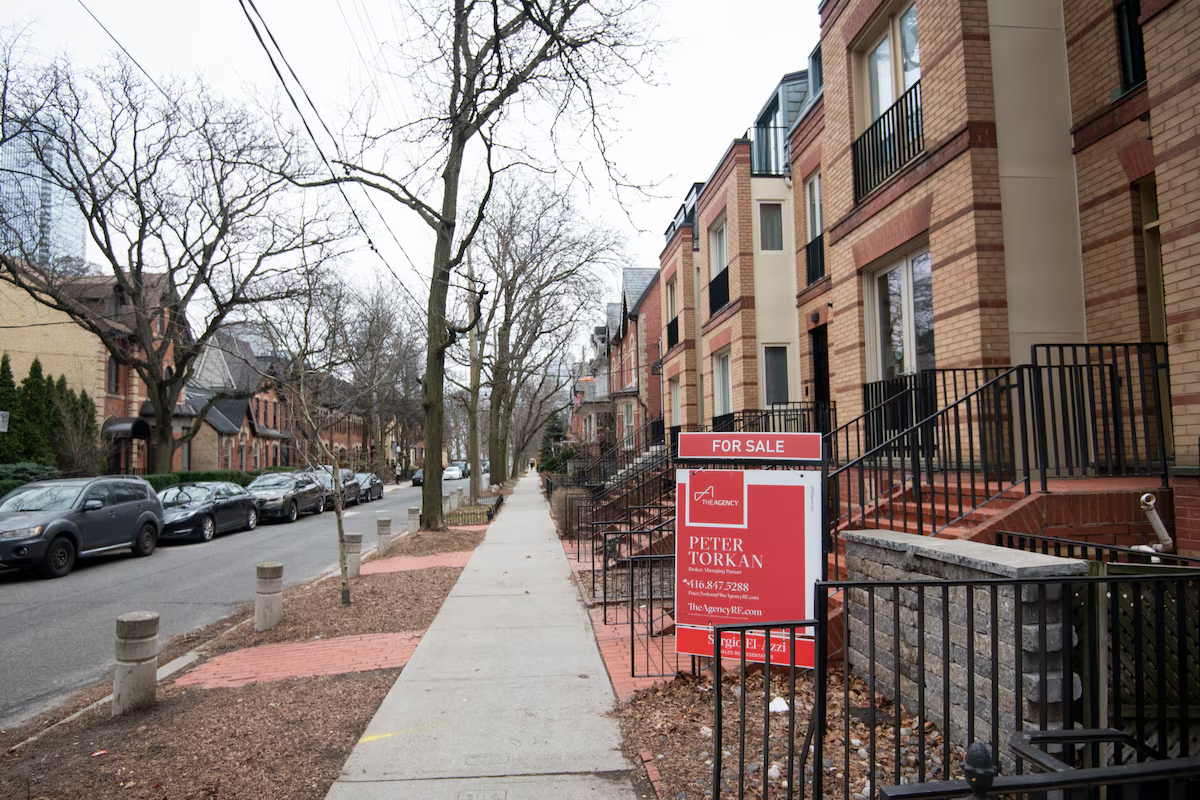

Open this photo in gallery:
The current drop in rents and prices may be weakening the political resolve for change – even as a recent slowdown in construction points to another shortage in the near future.Fred Lum/The Globe and Mail
In 2019, the City of Toronto announced that it was going to create Housing Now. Then-mayor John Tory launched a program by that name to urgently build mixed-income housing on city land. Seven years later, not one of those homes has been completed.
Yet, despite housing costs and availability dominating local politics for years, it has not been a defining issue in Toronto’s municipal election campaign ahead of the vote on Monday. Nor has it been in Vancouver, where the Green Party’s Pete Fry defeated incumbent mayor Ken Sim on Oct. 17 to end ABC Vancouver’s hold on the mayor’s office. This year, candidates have devoted more attention to other issues, principally taxes and municipal spending, perceptions of public safety, homelessness and transit.
Part of the explanation is that, as the housing market has softened, elected officials no longer see planning reform and housing construction as an urgent priority. The current drop in rents and prices may be weakening the political resolve for change – even as a recent slowdown in construction points to another shortage in the near future.
“New people are likely coming to our cities whether we want them to or not,” says Mark Richardson, a housing advocate with the Toronto group HousingNowTO. (The group’s name refers to the city program.) “We will be ill-prepared for it. Rents will start climbing again, bidding wars will return to some neighbourhoods, and people will act surprised that this has happened again – even though it’s predictable.”
In the Vancouver region, “People feel the crisis is easing,” says Alexandra Flynn, a housing policy expert and associate professor at the University of British Columbia’s Peter A. Allard School of Law. “Asking rents in Vancouver are down from their 2023 peak and condo prices are still falling, so for some voters, the sense of emergency isn’t what it was.”
In Depth: The population is shrinking in pockets of Vancouver and Toronto. What if we put more housing there?
The market in both cities has been influenced by two trends: A high number of newly completed homes has coincided with a sharp decline in demand owing to decreased immigration.
At Vancouver City Hall, these changing conditions have altered the conversation. Mr. Sim and his ABC party came to power in 2022 promising to address housing affordability, including through zoning reform. The province has also weighed in: David Eby’s NDP government in 2023 passed a bill mandating higher-density housing near mass transit, and another bill widely permitting “small-scale multiunit housing.”
However, in Vancouver, specific city planning changes that would make it easier to build housing have sputtered. This summer, responding to vocal opposition from some residents’ groups, council voted to reject the proposed Villages Plan, which would have allowed new low-rise housing in 17 neighbourhoods. That set back the city’s effort to accommodate more homes across established residential areas, a centrepiece of the recently revised Official Development Plan.
Although housing may not be a primary election issue, it nevertheless remains a major source of concern among voters. A recent Ipsos poll of British Columbians found that housing affordability and availability is the third most pressing issue.
“It is strange how little politicians are speaking to housing affordability,” says Daniel Oleksiuk, director of the advocacy group Abundant Housing Vancouver. “Politicians don’t seem to want to address this in 2026, but they will have to face the facts eventually.”
He added that Mr. Fry has not set a clear direction on housing policy, and the new councillors – a majority, including several from the left-wing COPE party – do not have clear records on housing. “There is an opportunity for those people to see whether they want to open up more of the city’s neighbourhoods or not.”
In Toronto, “This has not been a housing election,” says Matti Siemiatycki, director of the Infrastructure Institute at the University of Toronto. “In the last few years, housing was the top issue – it’s really a good reminder of how quickly the winds can shift.”
This marks a change from the period between 2020 and 2024, when all three levels of government were actively trying to accelerate housing construction. The federal Housing Accelerator Fund tied funding to municipal commitments to reform planning and increase housing supply.
Toronto Mayor Olivia Chow has focused her re-election campaign on a property-tax freeze, capping transit fares and school food programs. Her principal opponent, Brad Bradford, has emphasized public safety, traffic congestion and “cost of living.”
Opinion: Canada can end homelessness. Cities in the U.S. are showing it can be done
On housing, Ms. Chow has emphasized protections for existing tenants, overseen the creation of Toronto’s public builder, and has emphasized the role of government in building social housing and partnering with private builders, as in the Housing Now program. She has set a broader target of 65,000 new rent-controlled homes approved – not built – by 2030.
Mr. Bradford, a professional urban planner who worked at City Hall before running for office, has taken a different tack. While promising tenant protections and financial supports for non-profit builders, he has also proposed eliminating the city’s land transfer tax on a first home purchase up to $1.1-million, a savings for homebuyers that his campaign estimates at $18,000 that will cost the city around $300-million annually.
Mr. Richardson, the housing advocate, argues that the current downturn is a missed opportunity for governments to invest in affordable rental housing.
“Construction materials, construction labour and land are never going to be cheaper than they are now in Toronto,” he says. “This is a Boxing Day sale on housing, and the fact that our governments at all three levels are mostly twiddling their thumbs, not exploiting this opportunity to greatly invest in affordable rental housing, is just sad.”
Housing starts in both Toronto and Vancouver have fallen sharply in recent years. In the Greater Toronto and Hamilton Area, condominium housing starts are down 90 per cent from their 2021 peak, according to the research group Urbanation. The number of apartment units under construction, including condominiums and purpose-built rentals, has fallen 45 per cent in three years.
In the Vancouver region, the Canada Mortgage and Housing Corp. notes that overall housing starts and condominium housing starts remain low, which presents a longer-term risk to affordability, as buyers face increased competition for fewer homes.
The lack of building today will mean fewer new homes in two to five years. Shaun Hildebrand, president of the Toronto real estate research group Urbanation, expects completions to fall more than 60 per cent to 2029 from their current levels.
“The housing crisis is not easing – it is changing shape,” Mr. Hildebrand says. “While renters and buyers have seen some relief, it is short-term. The underlying problem of a structural shortage of supply remains, and it is getting worse because we have largely stopped building. We are already seeing rents find their floor and rental vacancy start to come back down.”
Rising rents could prompt a new sense of political urgency about housing, Mr. Richardson suggests, once middle- and upper-income people are feeling the pinch again. “A couple of years ago, this was an emergency and a wartime effort,” he says. “Now that the pressure on wealthier people has softened, it is no longer a wartime effort. Now it’s just inconvenience.”