
Open this photo in gallery:
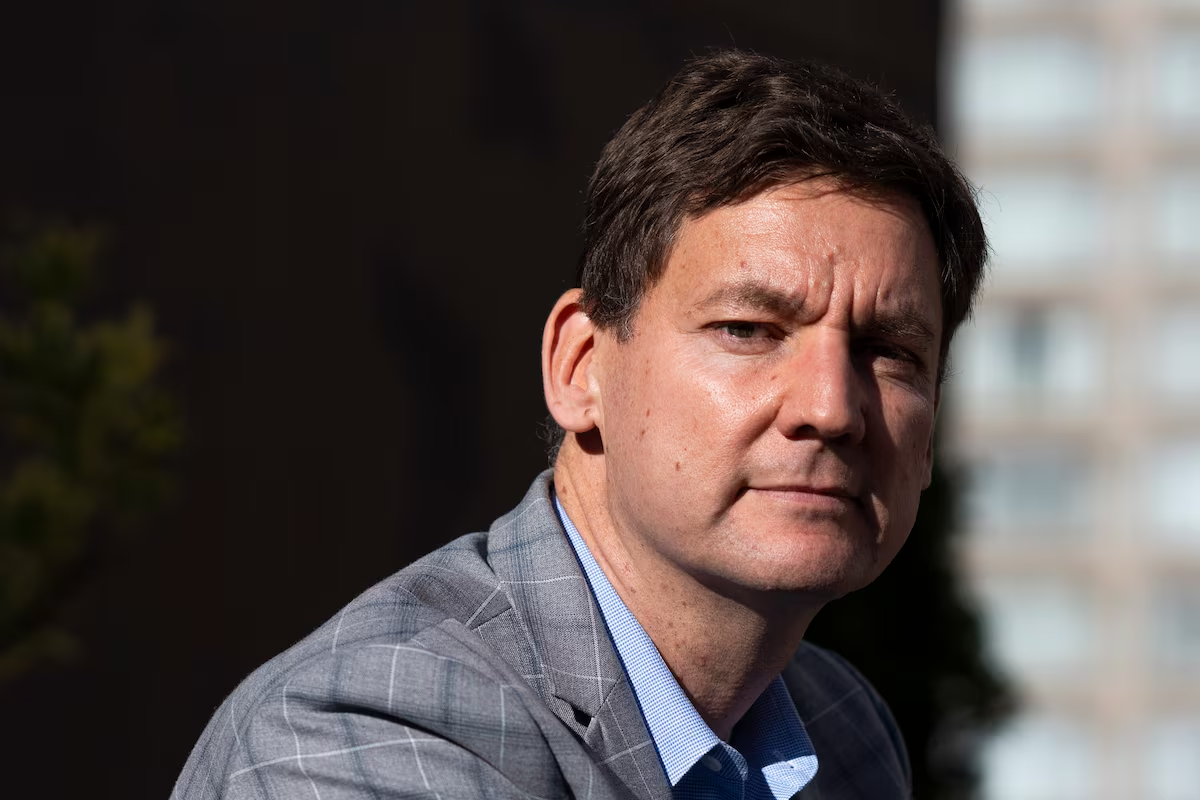
NDP Leader David Eby, shown during a meeting with The Globe and Mail editorial board Oct. 9, called a snap election on Sept. 22.Jimmy Jeong/The Globe and Mail
Before David Eby was sworn in as British Columbia’s 37th premier, he set his sights on the province’s toughest challenges: housing, health care and public safety.
“My goal,” he told reporters as premier-designate in October, 2022, “will be to work through with our team what the world of the possible is.”
Four years later, as the NDP Leader seeks another mandate, he must convince British Columbians that his government’s efforts are beginning to bear fruit. On the campaign trail since last month’s snap election call, Mr. Eby has pointed to falling rents after a housing policy overhaul, thousands of additional doctors and nurses, and a program targeting repeat violent offenders that has significantly reduced police interactions.
At the same time, Mr. Eby has contended, B.C. is facing unprecedented threats from both U.S. President Donald Trump’s trade war and a Conservative Party that risks taking the province backward.
Saturday’s election will test whether voters trust Mr. Eby to see the job through.
Five takeaways from the B.C. leaders’ debate
Mr. Eby was born and raised in Kitchener, Ont., and moved to Vancouver after law school to article with the federal Justice Department. He began his career in 2005 with the Pivot Legal Society in the Downtown Eastside, advocating for the city’s most marginalized. In 2008, he was named executive director of the BC Civil Liberties Association.
In 2013, Mr. Eby unseated then-premier Christy Clark in Vancouver-Point Grey to become an NDP MLA. After the NDP took power in 2017, he served as attorney-general and housing minister under premier John Horgan. Mr. Eby was acclaimed party leader in 2022 after a messy race in which his only challenger was disqualified, and he was sworn in as premier that November.
His record in office has been marked by both progress and persistent challenges. In the 2024 campaign, he pledged that every B.C. resident who wanted a family doctor or nurse practitioner would be connected to one by the end of 2025. His government introduced a new family doctor payment model, streamlined the process for international medical graduates and recruited hundreds of health care workers from the United States. However, more than a million people still don’t have family doctors and specialist wait times remain long.
B.C. party leaders make economic pitch to business community ahead of election
The NDP’s response to the toxic drug crisis has satisfied few: Opponents blame its experiments with drug decriminalization and prescribed alternatives to illicit drugs for making things worse, while proponents of the interventions say the government undermined its own efforts by failing to fully implement them and retreating under pressure.
Mr. Eby has also taken positions that seem at odds with the progressive advocacy that defined his early career. His push to expand involuntary treatment for people with concurrent mental-health and substance-use disorders, for instance, has drawn criticism from the civil liberties association he once led.
In an interview, Mr. Eby countered that a drastically altered illicit drug supply and the brain injuries that it has caused require a more intensive response, including in Vancouver’s Downtown Eastside.
“I think it’s safe to say that the responses that the neighbourhood needs now are different from the ones I believe they needed in 2008,” he said. “And that includes things like involuntary care for people who are struggling and unable to ask for help.”
Open this photo in gallery:
Mr. Eby speaks during an election campaign stop in Surrey on Oct. 15.ETHAN CAIRNS/The Canadian Press
The unravelling of NDP climate commitments has disappointed some. In his first speech as premier-designate, Mr. Eby said expanding fossil-fuel infrastructure is incompatible with reaching climate goals; his government has since helped to advance a wave of liquefied natural gas projects.
On this, Mr. Eby said Mr. Trump’s effort to “destroy the Canadian economy” had forced a reassessment of the province’s priorities.
“That means we have to move really quickly to diversify our markets around the world, find new sources of income, and that has shifted the calculus quite dramatically on things like LNG,” he said.
Meanwhile, the Conservatives point to B.C.’s projected $13.8-billion deficit as evidence of the NDP’s fiscal mismanagement. In response, Mr. Eby said the preceding Liberal government ran “massive infrastructure debts” that his government has worked to remedy, including multibillion-dollar upgrades to the Highway 1 corridor, the Surrey Langley SkyTrain extension, and upgrades to schools and hospitals.
His party has proposed a tax increase on income over $190,000, which it says would reduce the projected deficit to $12-billion by 2028-29. Critics counter that similar forecasts in previous budgets failed to materialize.
Green’s Pete Fry elected mayor of Vancouver, defeating incumbent Ken Sim
The opposition has also taken aim at the NDP’s approach to reconciliation. After a B.C. Court of Appeal ruling raised questions about the practical and legal effects of the province’s Declaration on the Rights of Indigenous Peoples Act, Mr. Eby had considered amending or suspending the legislation before committing instead to working with First Nations to address concerns.
He has said that the legislation has nonetheless enabled partnerships with Indigenous communities that have paved the way for major projects.
Those who have worked closely with Mr. Eby describe a self-assured leader who can be difficult to read. Former NDP cabinet minister Katrina Chen likened him to a scientist and said he has a cerebral leadership style.
“As a leader, it’s kind of hard to know what he’s thinking,” said Ms. Chen, who co-chaired Mr. Eby’s leadership campaign.
Mr. Eby is a “firm, articulate guy” intent on convincing people of his point of view, she added.
Six charts that show how B.C.’s fiscal outlook has gotten worse
Former finance minister Selina Robinson, a vocal critic of Mr. Eby’s since he removed her from cabinet in February, 2024, said she had left a surplus when she vacated the finance portfolio and advised the Premier to be mindful of a slipping economy.
“He didn’t take my advice, and that’s been my experience of David,” Ms. Robinson said in an interview. “I don’t think he takes the advice of his people who know, and so he does his own thing. And I think he has made some bad decisions.”
For all the unfinished business, Mr. Eby has argued that voters should judge his government against the alternative, warning that a Conservative victory would reverse hard-won progress on housing, health care and Indigenous reconciliation.
“I know that I haven’t been perfect. Our government hasn’t been perfect,” Mr. Eby said in his closing remarks at a leaders’ debate last week. “But we have always been, and we always will be, committed to fight for you.”