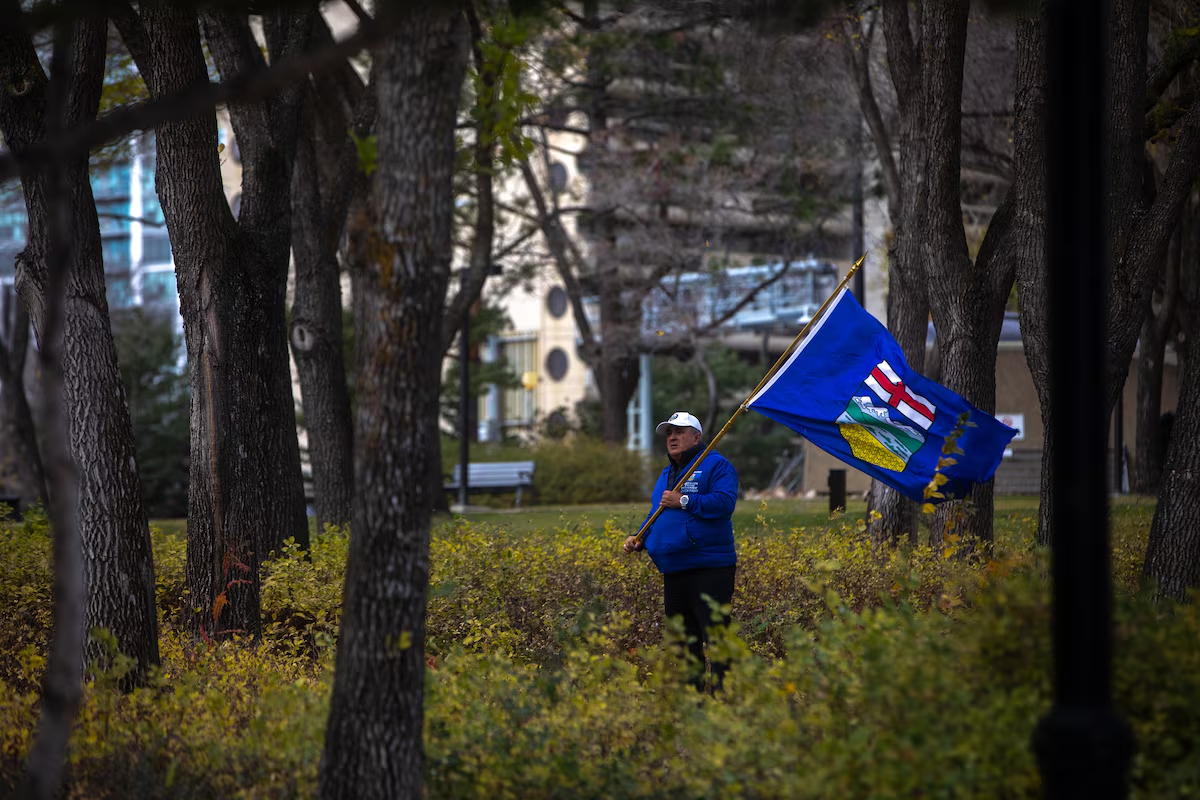

Open this photo in gallery:
An attendee stands in the trees during an Alberta independence rally at the Alberta legislature in Edmonton on Saturday.Amanda May Erickson/The Canadian Press
John Turley-Ewart is a contributing columnist for The Globe and Mail, a regulatory compliance consultant and a Canadian banking historian.
Alberta Premier Danielle Smith wants to take her province on a trip back in time.
Monday’s referendum is about more than whether Alberta should stay or go. It’s an attempt to revive a political model from a rural, agrarian past that fundamentally ill-serves the province’s modern society and economy – one that is overwhelmingly urban and suburban and reliant on political stability, foreign capital and attracting domestic and global talent to prosper.
Albertans need to put this outdated political playbook to rest on Monday.
From that agrarian past came a political culture that was an outgrowth of a boom-bust, staple economy where rural grain farmers were the dominant demographic. They owned their own farms, generated wealth by their own labour, drove the province’s political agenda and relied on capital, railways and policies from central Canada to fully realize Alberta’s economic potential.
What the Alberta referendum on separation could mean for the province and Canada, according to our reporters
That culture prized delegate democracy as a mechanism to hold elected representatives accountable. Politicians were expected to give voice to party delegates in the legislature, in Ottawa and in the boardrooms of central Canada when they needed to explain why Alberta’s economic needs were different.
This contrasts with the kind of representative democracy that evolved in other parts of Canada, where a tradition unfolded that gave politicians leeway to exercise their personal judgment on important policies, brokering compromises between an array of constituencies and facing voter judgment during elections.
Slow progress or no progress in securing change in Ottawa made directing conflict outward a route to electoral success provincially, a pattern the late political scientist C.B. Macpherson documented in his classic Democracy in Alberta. Governments in Alberta built political dynasties by casting themselves as the voice of the people in existential, populist struggles with Canadian political and business elites.
This forged a quasi-party system in the province. Political debate and brokering compromises happened within political party structures rather than between government and opposition parties in the legislature. The political life of governments was extended and the importance of the governing party in the lives of Albertans elevated.
Opinion: Alberta will pay a price to leave Canada, and a bigger price to get back in
A modern, energy-rich and growing Alberta began to trip up the old political model as the 2000s progressed. Over the past quarter-century Alberta has grown wealthier, and its population increased by about 1.7 million people.
Much of that new population settled in Calgary, Edmonton and surrounding metropolitan regions. Population growth in rural parts of the province is comparatively muted. Immigrants now account for almost a quarter of the province’s population of 5.1 million.
Alberta’s Progressive Conservative governments began catering to growing urban and suburban populations, practising a version of politics that looked like the political pragmatism usually seen in Ottawa and other provinces.
This broke Alberta’s conservatives into political pieces. One piece, the Progressive Conservatives, promoted a political formula that was more urban, pragmatic and capable of meeting the evolving needs of disparate constituencies.
The other, which consolidated under the Wildrose Party banner, sought to preserve rural political dominance and externalize conflict to paper over internal differences between the political priorities of rural voters and those in Alberta’s cities and suburbs.
Smith, Carney rally support for Alberta to remain in Canada ahead of referendum
The provincial NDP election win in 2015 prompted a short-lived truce between conservatives, driven in large part by former federal Conservative cabinet minister Jason Kenney, who united both versions of conservatism under the United Conservative Party banner.
But Mr. Kenney’s top-down governing approach during the pandemic cut across the grain of grassroots democracy some wanted preserved.
Ms. Smith took the reins of the UCP in October of 2022 and won at the polls in May, 2023, painting the NDP provincial government as an Ottawa accomplice supporting federal environmental policies that threatened the future of Alberta’s oil and gas industries.
The Alberta political playbook from yesteryear appeared to be back. But rather than a new lease on political life, the revival of Alberta’s old governing model in 2023 looks more like an end-of-life rally.
Monday’s referendum and its 10 questions suggest as much. It paints an implicit and damaging picture of an Alberta under siege by immigrants with the added twist of prospecting separation from Canada.
It also invites the kind of political instability reminiscent of late 1930s Alberta, when the provincial government regularly traded in antisemitic tropes, sparked a constitutional crisis by trying to create a separate banking system and used its taxing powers to all but seize the assets of banks operating in the province.
Alberta’s future won’t be found in the politics of a populist agrarian past. Monday’s vote is an opportunity for Albertans to make that clear.