
Open this photo in gallery:
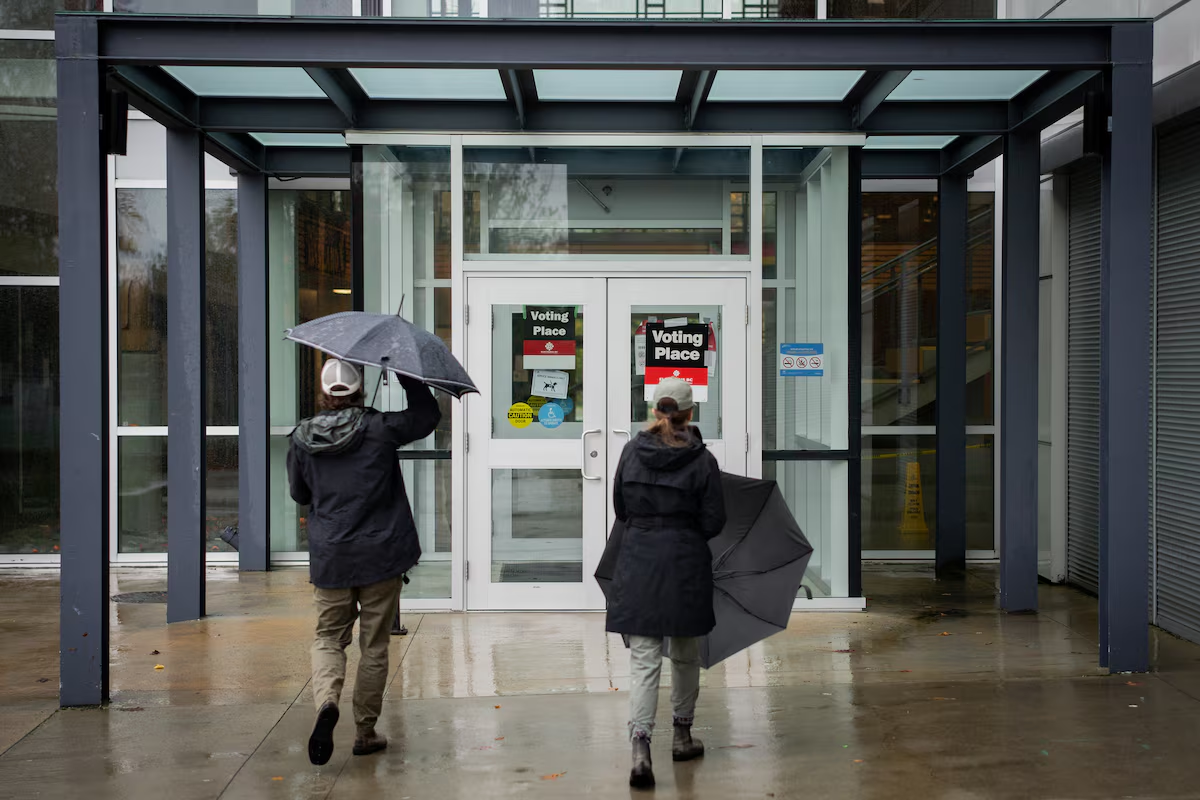
People walk into a polling station to vote in Vancouver on election day in 2024.ETHAN CAIRNS/The Canadian Press
British Columbia’s three largest political parties are proposing different approaches to how the province should raise and spend public money, pitching contrasting income-tax proposals in the third week of the election campaign.
The fiscally focused election promises tap into some of voters’ top concerns – affordability, health care and the province’s finances. But as B.C. faces a projected $13.8-billion deficit, the differing approaches from each of the three main parties come with their own risks. Economists say tax hikes proposed by the NDP and Greens could raise less revenue than projected and discourage economic activity, while the Conservatives’ tax cut could put B.C. further in the red.
NDP Leader David Eby said his government, if re-elected, would increase income taxes for the province’s highest earners to fund health care services, while Green Leader Emily Lowan said she would target the ultra-wealthy with a “fair share” tax to fund public services and drive down the provincial debt. Conservative Leader Lorne Doerkson has pledged to put cash back into the pockets of British Columbians by cutting income taxes.
An Angus Reid Institute Poll released Oct. 5 found 57 per cent of respondents said the cost of living was their top concern; 42 per cent, health care; and 24 per cent the provincial deficit.
At a campaign stop in Victoria on Oct. 4, Mr. Eby said his party would raise income taxes by 2 percentage points on the top two brackets; the portion of income between $190,405 and $265,545 would be taxed at 18.8 per cent, and the portion between $265,545 and $1-million at 22.5 per cent. A new bracket of 24.5 per cent would apply to income above $1-million.
Open this photo in gallery:
B.C. NDP Leader David Eby speaks to supporters during a provincial election campaign stop in Campbell River, B.C., on Oct. 4.DARRYL DYCK/The Canadian Press
The progressive taxation plan, which would start in the 2027 tax year, would generate $1-billion by 2028-29, Mr. Eby said. The changes would apply only to income earned over each tax bracket threshold and affect only the top 4 per cent of earners in B.C.
A person who makes $250,000 a year, for example, would pay an extra $2,169 per year, for a total of $28,649 in provincial income tax – which would still be $5,250 less than they would pay in Ontario. Those earning $190,000 or less would see no changes.
“We’re going to ask those who are the wealthiest to pay a little bit more so that we can deliver the care that you and your family deserve,” Mr. Eby said.
Trevor Tombe, a professor of economics at the University of Calgary, said the NDP’s projected gains may be overly optimistic. Using a Statistics Canada tax-modelling tool, he estimated the proposed increases would raise about $700-million by 2027 and affect about 175,000 British Columbians.
The actual amount could be much lower because those high-income earners could change their consumption, production and investment decisions as a result.
B.C. candidates and voters scramble to get their minds around two elections, one week apart
“Economists call this the behavioural effect of a tax change, and it offsets some of the mechanical effect of a tax change,” Prof. Tombe said.
“It’s sometimes possible that the behavioural changes are so large that tax increases lower revenues.”
He cited a Fraser Institute 2022 paper that suggested a rate increase in B.C. would generate approximately one-quarter of what the mechanical effect suggests, which would shrink his $700-million estimate to less than $200-million and the NDP’s $1-billion estimate to $250-million.
Mr. Eby’s proposed new tax bracket of 24.5 per cent on income over $1-million, combined with the federal income tax of 33 per cent, would put B.C.’s combined marginal rate at 57.5 per cent – the highest in the world, Prof. Tombe said. But over all, B.C. would still be one of the lowest-tax jurisdictions in Canada, the third-lowest on incomes of $400,000 and the second-lowest on incomes of $250,000.
Ms. Lowan, of the Green Party, said Mr. Eby’s plan fails to reflect that the ultra-wealthy grow their fortunes in stocks and real estate, and not paycheques. One day after the NDP announcement, Ms. Lowan announced that her party would introduce a one-time tax of 5 per cent on net wealth above $50-million, 10 per cent above $100-million and 20 per cent above $1-billion. This would raise an estimated $22.2-billion after accounting for administrative costs and behavioural responses, the party said.
B.C. NDP one candidate short of full slate for snap provincial election
An ongoing annual tax of 2 per cent on net wealth above $50-million, 3 per cent above $100-million, and 5 per cent above $1-billion would then generate about $5.4-billion each year, according to the Greens.
Jared Walker, executive director of the non-profit, non-partisan organization Canadians for Tax Fairness, said such progressive taxation plans are in line with successful policy pushes to tax the rich across North America.
In Massachusetts, for example, an additional tax of 4 per cent on income above US$1-million, introduced in 2022, generated US$3.4-billion in fiscal year 2026.
“Asking fewer people than it takes to sell out BC Place to pay a bit more tax so we can keep hospitals running for millions of British Columbians is both good policy and common sense,” Mr. Walker said in an Oct. 6 statement.
Conservative Leader Mr. Doerkson, meanwhile, announced on Oct. 8 that his party would raise the province’s personal income tax exemption level to $32,000, from $13,216, saving most workers $1,000 a year.
“With a $1,000 tax cut, British Columbia will be well on its way to becoming the most affordable, competitive province in Canada,” Mr. Doerkson said at a campaign stop at a Surrey grocery store on Thursday.
Eby’s election promise to tax unsold condos in B.C. draws industry criticism
Mr. Doerkson did not answer a reporter’s question about how much his plan would cost and instead spoke generally of growing the economy. But Prof. Tombe said the plan would take $2.5-billion a year out of the province’s coffers – raising questions about how the Conservatives would offset the lost revenue while addressing the deficit and honouring Mr. Doerkson’s earlier campaign pledge to freeze taxes across the board for as long as he’s premier.
The NDP also raised the $2.5-billion price tag and added that Mr. Doerkson’s plan would give $190-million to B.C.’s top 4 per cent of earners.
Prof. Tombe said all policy has tradeoffs, and reasonable people will reach different conclusions based on the outcomes they give most weight to.
“I’d note that B.C. has a long-term fiscal challenge, so raising the basic personal amount by this much will make that challenge more difficult,” he said of the Conservative plan.
“I’d also note that B.C., like Canada, has a large economic and productivity growth challenge, so raising income tax rates – especially at the top – risks making that challenge more difficult, too.”