
Open this photo in gallery:
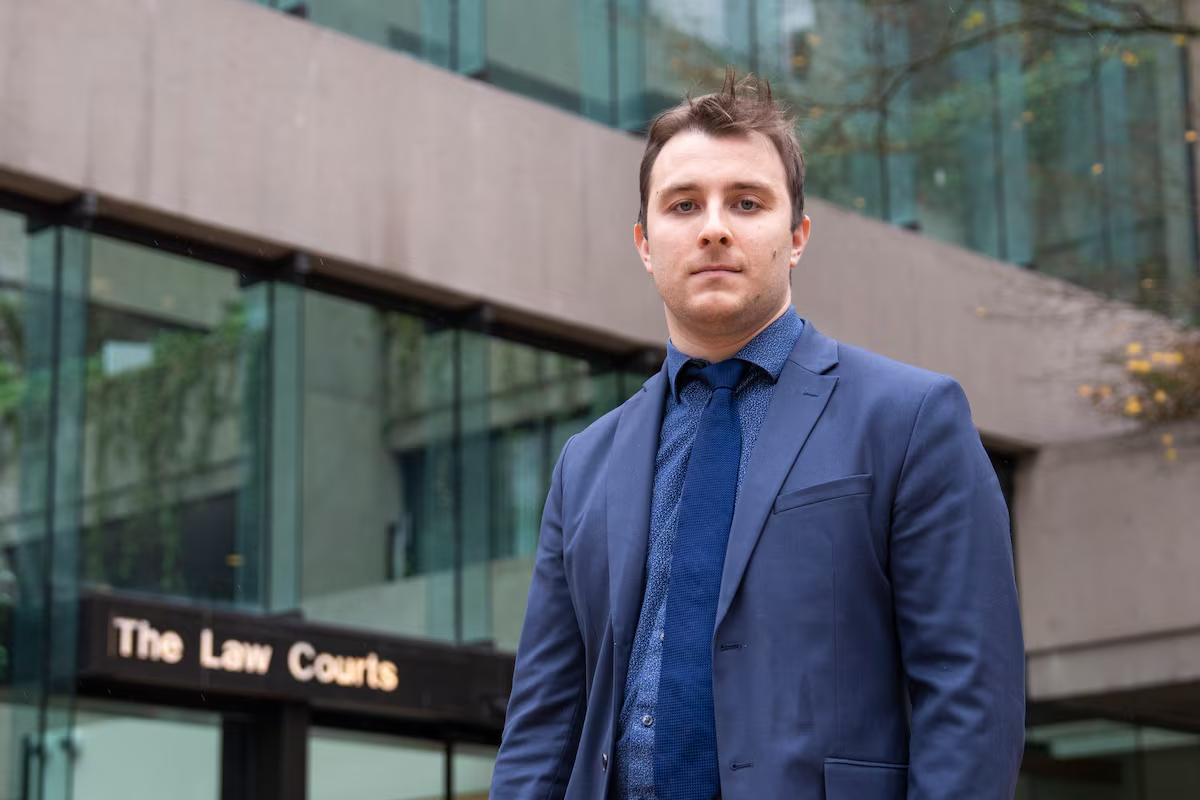
Jeremy Kalicum, one of the operators of the Drug User Liberation Front, outside a courthouse in B.C., in November, 2025.Jimmy Jeong/The Globe and Mail
A B.C. Supreme Court judge has ruled in favour of two operators of an illicit-drug compassion club who challenged the constitutionality of Canada’s drug laws, saying that the section on trafficking is a violation of Charter rights.
B.C. Supreme Court Justice Catherine Murray on Tuesday ruled that Section 5(2) of the Canadian Drugs and Substances Act is “of no force or effect” because it infringes on sections 7 and 15 of the Charter, which guarantee the right to life, liberty and security of the person and equal protection under the law.
Jeremy Kalicum and Eris Nyx had operated for more than a year as the Drug User Liberation Front, buying illicit drugs from the dark web, testing them at university labs for fentanyl and other impurities, and selling them at cost to their 43 members.
B.C. man who bought dark web drugs for compassion club says he wanted to reduce overdoses
During trial, lawyers for the pair argued that the section of the federal CDSA under which they were charged violates Charter rights because it prevented the pair from providing people who use drugs with a safer alternative to the toxic illicit supply.
The declaration of invalidity is suspended for six months and the pair’s convictions are stayed.
People in the courtroom gallery sobbed as Justice Murray read her findings and addressed Mr. Kalicum and Ms. Nyx directly.
“I know from watching you throughout this very lengthy court process that it has taken a toll,” she said.
“I applaud you for what you’ve done. I think you should be very proud of yourselves, and it’s people like you who make a difference. And you just did.”
More to come.