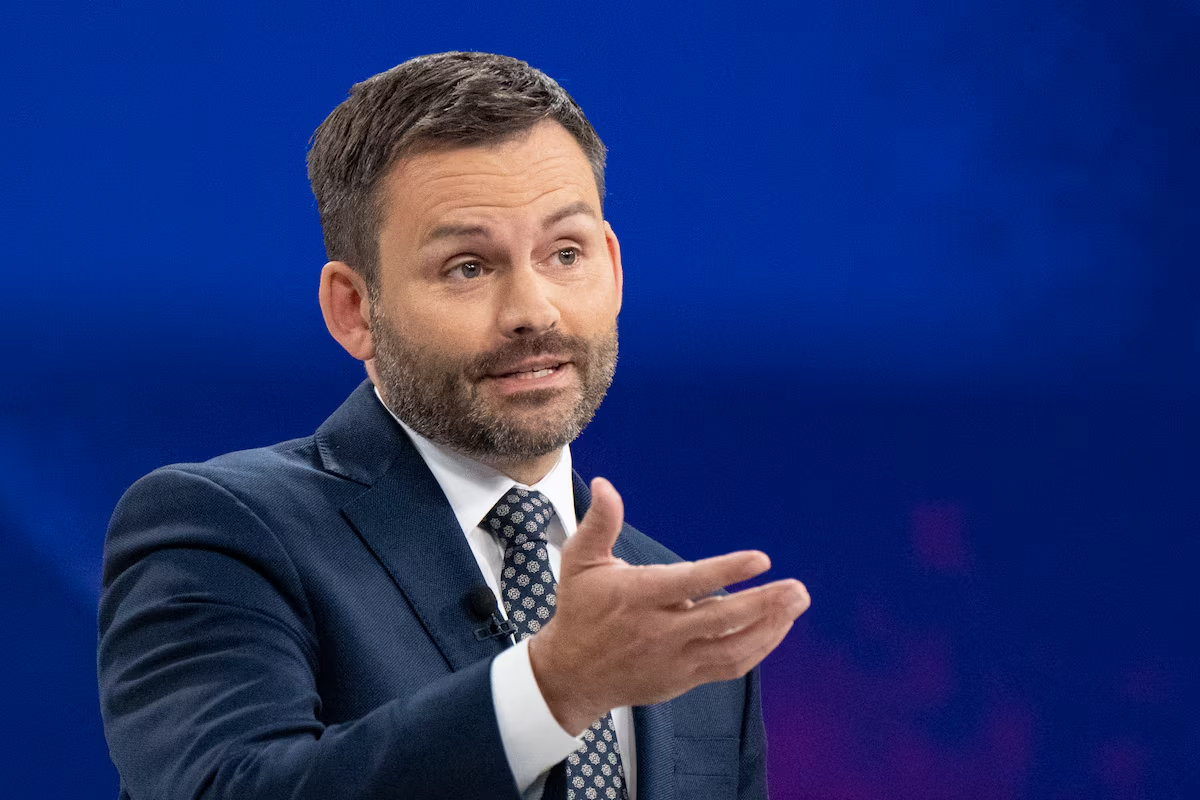

Open this photo in gallery:
Parti Québécois Leader Paul St-Pierre Plamondon gestures during the last Quebec election debate in Montreal on Sept. 23. The PQ has maintained a lead in the polls for the better part of three years.Christopher Katsarov/The Canadian Press
Quebec may be on the cusp of electing a Parti Québécois majority government that has promised to hold a referendum on independence in the next four years, despite the fact that most voters don’t want to separate from Canada.
Just under a week out from the Oct. 5 election, Quebec’s political landscape remains so divided that the PQ could nab a majority of the province’s 127 seats with scarcely 30 per cent of the vote. It would be an unprecedented ending to an unusual campaign, in which none of the PQ’s four opponents have been able to mount a compelling case against the sovereigntist party.
“Even though an overwhelming majority of Quebeckers, francophones included, do not want a PQ government, they are the least despised of all parties,” said David Heurtel, a political analyst and former provincial Liberal cabinet minister.
In Depth: The persistence of Paul St-Pierre Plamondon brings the PQ to a critical point
In an election that has failed to excite many voters, support for the PQ has barely moved. There is no groundswell of separatist sentiment in Quebec. But neither does there appear to be much concern about the prospect of a vote on secession in the not-too-distant future. After all, if there is a referendum, Quebeckers seem to be saying, they can just vote “no.”
The Parti Québécois has maintained a lead in the polls for the better part of three years, as the popularity of the governing Coalition Avenir Québec collapsed. But PQ Leader Paul St-Pierre Plamondon’s promise to hold the province’s third referendum on independence has limited the party’s appeal beyond its sovereigntist base. For much of the campaign, which began in late August, his lead was narrow and his grasp on power seemed uncertain.
Still, the PQ has benefited from regional divisions that could see five parties win seats in the National Assembly next week. Three of the five oppose holding a vote on separation, but none has managed to rally the anti-referendum forces. Fewer than 30 per cent of Quebeckers say they would vote for independence.
Open this photo in gallery:
While fewer than 30 per cent of Quebeckers say they would vote for independence, none of the PQ’s four opponents have been able to mount a compelling case against the sovereigntist party.CHRISTOPHER KATSAROV/AFP/Getty Images
Early in the campaign, the CAQ seemed to be making a comeback under the leadership of Premier Christine Fréchette, who positioned herself as a safe bet during an escalating trade war with the United States.
But weak debate performances and voters’ desire for change have taken the wind out of her sails. Three polls early this week showed support for the CAQ slipping below 20 per cent, and the party once again seems to be fighting for survival.
Quebec premier warns of U.S. attempts to sow division ahead of election
Meanwhile, the Quebec Liberals have not managed to connect with francophone voters outside Montreal, and the newcomer Conservatives, who have run a strong campaign, are not yet competitive across much of the province outside the Quebec City region. The left-leaning Québec solidaire is working to hold on to the handful of seats it holds in urban ridings.
The result is that the PQ could win the 64 seats it needs for a majority without ever having polled above 30 per cent during the campaign – the lowest vote share in Quebec history for a majority government, Mr. Heurtel said. “It just shows how broken the electoral system is,” he added. “The system was not built for five parties that are able to generate support between 12 and 30 per cent of the electorate.”
The PQ Leader has been consistent about his plan for a vote on secession since he took over the party in 2020, and he laid out his vision for an independent Quebec in a 524-page book published in June.
Open this photo in gallery:
A poll by Synopsis Recherche found that only 14 per cent of Quebeckers believe the province would vote to separate from Canada in a referendum.Jacques Boissinot/The Canadian Press
By being transparent, Mr. St-Pierre Plamondon took the edge off people’s fears, said political analyst Antonine Yaccarini. “He managed to normalize it,” she said. “I hear a lot of people say it doesn’t scare them that much. It doesn’t scare them that there could be a consultation on Quebec sovereignty and they will simply vote ‘no.’”
In August, the PQ Leader announced he would not hold a referendum until U.S. President Donald Trump exits the White House in 2029 – a move that ensured his rivals would struggle to capitalize on his Achilles’ heel. He has largely avoided speaking about independence ever since.
Voters in Quebec head to the first day of advance polling ahead of general election
Sébastien Dallaire, chief insights officer at polling firm Leger, said younger voters who have no memory of the 1995 referendum may be less fearful about the implications of another divisive debate on sovereignty. “Throughout the campaign, we haven’t heard that much about what the consequences of another referendum would be,” he said.
According to a poll published Sunday by the firm Synopsis Recherche, only 14 per cent of Quebeckers believe the province would vote to separate from Canada in a referendum. Among those who said they would vote “yes,” only 40 per cent thought a referendum would be successful. (The poll surveyed 1,000 people recruited through online panels between Sept. 24 and 27.)
“For Quebeckers right now, in their minds, the referendum is kind of settled,” said Mr. Heurtel, who added that voters have much more prosaic concerns about the cost of living, health care and housing. “This is not today’s question.”
Still, he said Mr. St-Pierre Plamondon would struggle to govern with just 30 per cent support, even with a majority. “Basically, you don’t have a mandate,” he said. “Most Quebeckers don’t feel he’s the guy.”