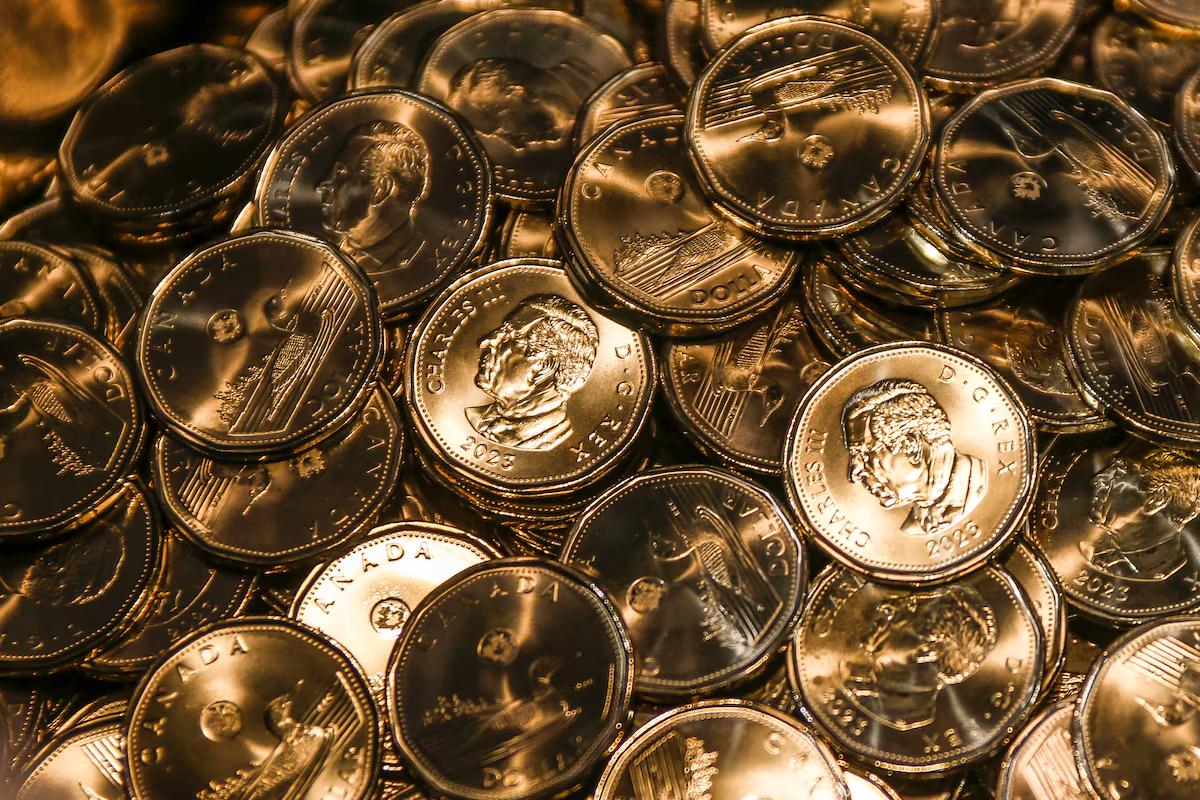

The Canadian dollar edged lower against its U.S. counterpart on Friday, but the currency was still on track for a monthly gain as domestic data showed stronger-than-expected economic growth.
The loonie was trading 0.1-per cent-lower at 1.4025 per U.S. dollar, or 71.30 U.S. cents, after trading in a range of 1.4003 to 1.4057. For July, the currency was headed for a gain of 1.2 per cent as the price of oil, one of Canada’s major exports, jumped.
Canada’s gross domestic product grew by 0.3 per cent in May, eclipsing the 0.2 per cent gain analysts had expected, while a preliminary estimate pointed to annualized second-quarter growth of 3.4 per cent, which would be its best quarterly performance for more than three years.
“For the Bank of Canada, this will provide them with a bit more evidence that the economy is adapting to the trade uncertainty, and will trim their estimate of slack,” Douglas Porter, chief economist at BMO Capital Markets, said in a note. “But it likely won’t change the bigger picture concerns of fresh tariff threats and lofty energy prices.”
Investors expect the Bank of Canada to leave its benchmark interest rate on hold over the coming months, while chances of a hike by year-end edged only slightly higher to 68 per cent from 60 per cent, swap market data showed.
The U.S. dollar rose against a basket of major currencies, recovering some ground after Japanese authorities stepped in to prop up their currency a day earlier.
U.S. crude oil futures were trading 2.7-per-cent higher at $85.83 a barrel, adding to their monthly advance, as reports that some tankers were forced to turn around in the Strait of Hormuz prompted traders to reassess shipping flows through the key waterway.
Canadian bond yields rose across the curve. The 10-year was up six basis points at 3.650 per cent, trading near the top of its range since May.
Canada’s bond market was set for an early close ahead of Monday’s civic holiday.