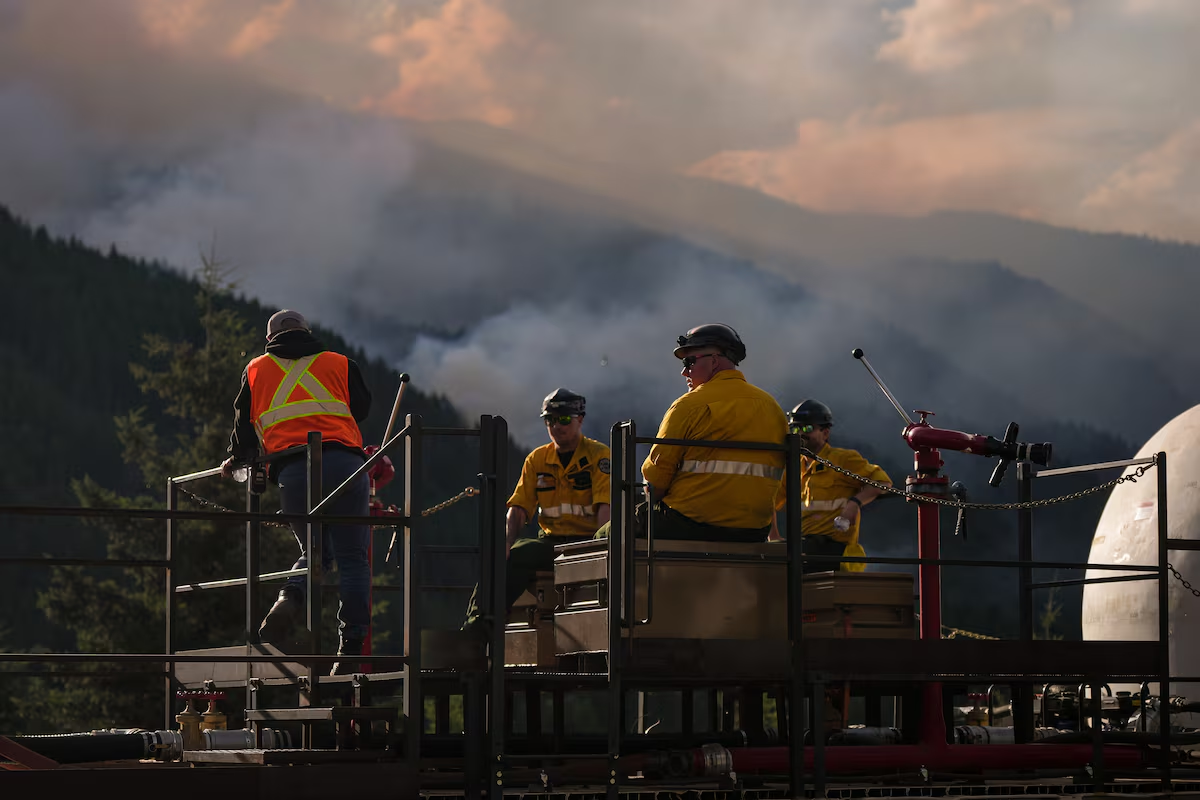

Open this photo in gallery:
CN Rail workers on a firefighting train travel past the Brunswick Creek wildfire in Boston Bar, B.C., on Thursday.DARRYL DYCK/The Canadian Press
Funding for the wildfire prevention and education program in British Columbia is under review after running out earlier this year, alarming wildfire officials in communities that have relied on it.
The B.C. government has not said what the future of the FireSmart Community Funding and Supports program – which backs education efforts and wildfire risk reduction measures – will be.
“We put a lot of effort into building out a sustainable program that really delivered lots of value to the public and our residents,” said Nathan Betz, the FireSmart co-ordinator for the North Okanagan.
New push to set national standards for wildland firefighting protective equipment
The silence about future funding “leaves that all up in the air.” While wildfire prevention funding isn’t likely to disappear completely, the uncertainty is causing disruptions for people working to mitigate wildfire risk on the ground.
Meteorologists predict the current El Nino weather phenomenon will bring hotter than average temperatures this summer and into early fall, with precipitation normal or below normal. These conditions increase wildfire risk.
Cori Ramsay, president of the Union of BC Municipalities, or UBCM, said the funding from the program established in 2018 has been almost fully delivered to local governments and First Nations, and it’s unclear what will happen once the funds are exhausted.
“There’s already a lot of communities in this intake that will not receive funding, and it’s really heavily oversubscribed,” she said.
Open this photo in gallery:
The Brunswick Creek wildfire consumes trees on a mountainside, in Boston Bar, B.C., on Thursday.DARRYL DYCK/The Canadian Press
The program distributed $175-million in total since 2018, according to the UBCM. It was used by communities for everything from educating residents about how to reduce wildfire risk by removing flammable plants on their properties to, in places such as Merritt and Quesnel, using goats to clear vegetation.
The UBCM, which the government delegated to distribute the funds, announced in January that the fund has only $25-million left, so the application process to receive some of the money will become competitive.
The B.C. government allocated an extra $15-million for FireSmart funding in the 2026 budget.
Federal budget 2025: Proposed new national emergency alert system gets $55.4-million
Ms. Ramsay said the FireSmart funds are widely used by communities to further safety initiatives, including appointing a FireSmart co-ordinator who manages the programs and educational resources, and offering free assessments to homeowners on ways to reduce their wildfire risk and as a result, their insurance premiums.
“It’s just really critical work that local governments are able to do at home on the ground,” she said. “If the funding goes away, this work ends.”
Ravi Parmar, British Columbia’s Minister of Forests, confirmed the future of the program, as the money dwindles down, is now in “review.”
Mr. Parmar said he is currently collecting feedback from municipalities and experts.
“We wanted to do a real assessment on what the future of this funding could look like,” Mr. Parmar said. He said he’s heard opinions for and against the current model, with some communities looking for a more sustained funding source.
He said the most consistent feedback has been that the best wildfire is one that never starts.
“I’m a big believer in this program, big believer that this program has resulted in communities being protected from wildfires,” he said.
Open this photo in gallery:
A helicopter turns to pick up more water while fighting the Brunswick Creek wildfire, on Thursday.DARRYL DYCK/The Canadian Press
In the North Okanagan, Mr. Betz has already cancelled plans for fuel mitigation work such as removing flammable vegetation. He’s stopped bringing on home assessors and halted projects that required larger expenses.
He said residents have been keen to implement fire safety measures if they see FireSmart co-ordinators in their communities or neighbours making their property safer.
“We just get exponential growth, it just expands like a wildfire within that community and really starts to take off,” he said.
He said implementing potentially expensive changes to properties are overwhelming, just like wildfires. Having local resources and co-ordinators, he said, helps break down the issue into a manageable change.
Opinion: Fighting wildfires should be counted as defence spending, too
West Kelowna fire chief Jason Brolund said wildfire fuel mitigation work made a difference during last month’s fire in Kalamoir Regional Park.
“When we spend the money putting the fires out, we’re spending it on the wrong end of the problem. We can spend a fraction of that money preventing these fires, educating the public, making our homes and public buildings more resilient to wildfire,” he said.
Mr. Brolund said the province needs a five-year community wildfire resiliency plan, along with a requirement to identify and describe planned work.
He noted the $15-million top-up the province provided for this year came with stipulations: mitigation activities, such as removing debris, are no longer eligible for this funding.
West Kelowna is “fortunate,” he said, as the municipality has always used local funds for this kind of work.
Mike Goetz, mayor of Merritt, said he’s hoping the province acts urgently to ensure funding continues because “fires aren’t going to go away.”
“Without substantial investment, communities will find it increasingly difficult to pro-actively reduce wildfire hazards. That’s just the way it is.”