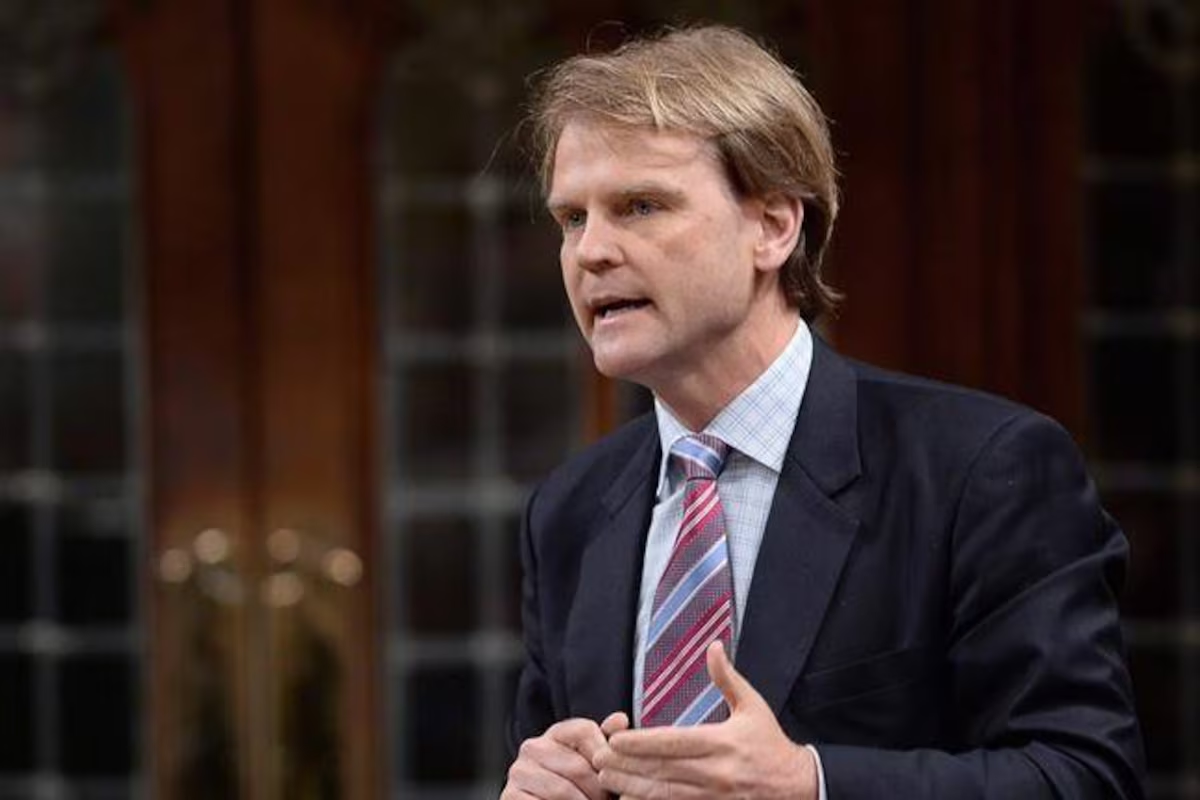
Open this photo in gallery:
Former immigration minister Chris Alexander, shown in the House of Commons in 2015, is deciding whether he will run in Toronto’s mayoral election, scheduled for Oct. 26.The Canadian Press
Former federal Conservative citizenship and immigration minister Chris Alexander says he’s seriously considering running for Toronto mayor and would run what he describes as a non-partisan campaign, saying he wants to focus on improving core services and strengthening the city’s economy.
Mr. Alexander, a one-term federal MP who represented the eastern suburb of Ajax-Pickering, served in former prime minister Stephen Harper’s cabinet from 2013 to 2015. He grew up in midtown Toronto and moved back to the city in 2022, where he lives in Summerhill with his wife and three children.
Mr. Alexander said he’s being encouraged by many individuals and organizations to run for the city’s top job and is weighing his decision, which will be made “quite soon.” He declined to say who has been encouraging him but said that would be revealed if he decides to run. He said he has also spoken to former Toronto mayor John Tory, who confirmed to The Globe and Mail that he offered Mr. Alexander general advice.
Mr. Alexander said the current field of candidates – with Mayor Olivia Chow and city councillor Brad Bradford considered the two front-runners – is “relatively thin,” and he thinks the contest warrants an outsider with a “fresh look.”
“We need centrist leadership that brings solutions,” Mr. Alexander said in an interview on Friday.
“I would be running a non-partisan campaign with the support of people I know and already lots of people I didn’t know before, but with the door wide open to all of Toronto’s diversity, all of the people that contribute to its economic, cultural and social success.”
His potential candidacy was first reported by the Toronto Star. The election date is Oct. 26.
John Tory: World Cup shows that Toronto can think big. This can be its next bold bet
Mr. Alexander grew up in midtown Toronto before attending university and moving to Ajax, Ont. After the COVID-19 pandemic, his family moved to Nairobi, Kenya, for six months, and settled back in Toronto in 2022. A former diplomat, he served as ambassador to Afghanistan and lived in that country for six years before running for federal politics.
His time in federal politics was coloured by an incident during the 2015 federal campaign, when his party proposed a “barbaric cultural practices” tip line to report incidents of honour killings, forced marriages and polygamy. Mr. Alexander lost his seat to the Liberals in that election.
Mr. Alexander said while forced marriage remains a problem, the party erred in its method.
“The way we approached it in that campaign was a mistake. I’m on the public record regretting the way it was handled, and that’s in the past,” he said.
“Good politicians learn from their mistakes and move forward.”
Mr. Alexander said his career has focused on “complex problem solving,” which cities need, including on transit, economic drivers of growth, taxes and services.
He said he hasn’t heard anyone focus on the big picture for Toronto’s economy, taking into account the financial sector, mining and natural resources, and advanced manufacturing.
“We need to articulate a vision for Toronto and the GTA that helps our provincial and federal leaders with the agenda they’re pursuing,” he said. “So I think it’s about being a strong partner on economic issues to other levels of government.”
On the province’s plans to expand Toronto’s downtown waterfront Billy Bishop airport to allow for jets, Mr. Alexander said the debate has become polarized and won’t pronounce on a side either way. Recently the Ontario government passed a law that removed the City of Toronto’s decision-making powers over the airport.
“I would want to lead a discussion that forged a consensus about what role Billy Bishop airport plays in the city’s life, how it can remain a driver of the economy, while protecting the island and waterfront legacy,” he said.
“I think those two goals can be met, but only if you have a deep, meaningful debate with all of those involved.”
Asked if the Ontario government is interested in debate, Mr. Alexander said: “I think you would want an outcome that is supported by Torontonians.
“There’s plenty of room for debate.”