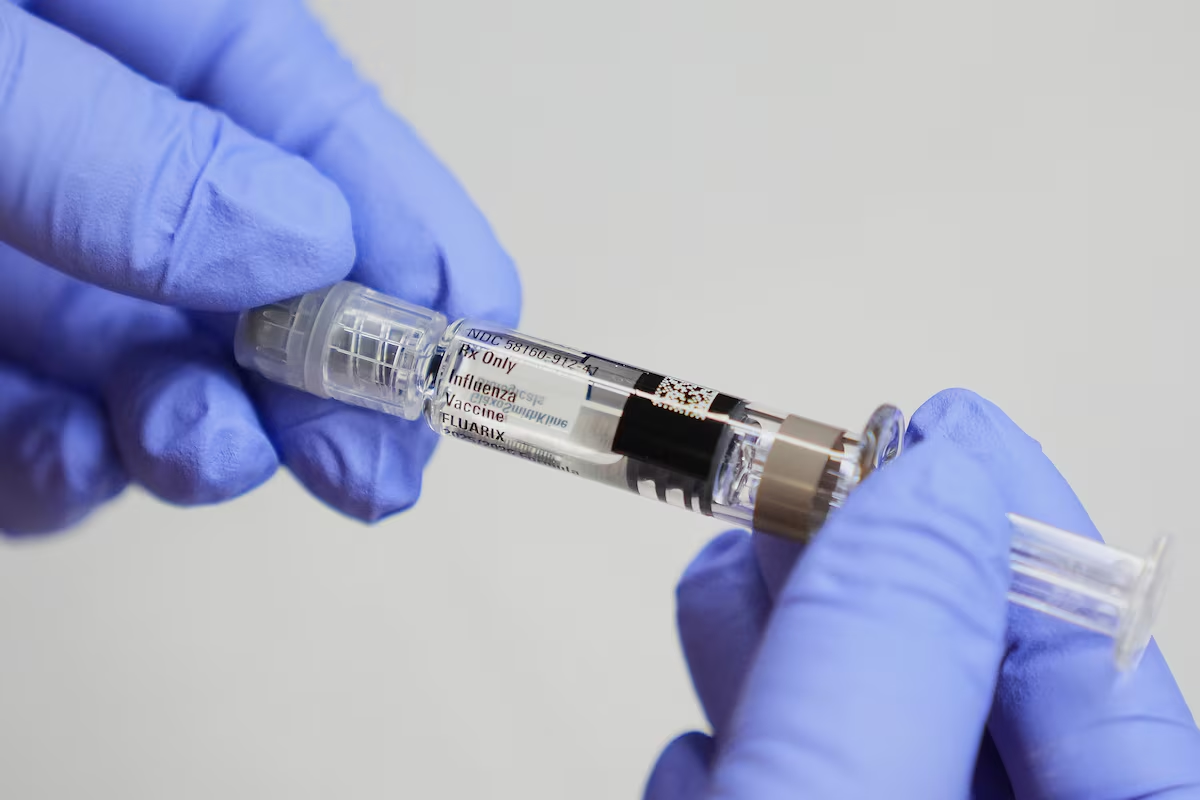

Open this photo in gallery:
New data from the Public Health Agency of Canada show Canada’s positivity rate for flu has risen to 3.7 per cent.Lindsey Wasson/The Associated Press
Quebeckers who are not considered high-risk will have to pay nearly $200 to get vaccinated against influenza and COVID-19 this season, charting a path opposite to other provinces in Canada as the viral season picks up speed.
Quebec is the only province scrapping universal flu coverage, owing its decision to guidance from the province’s immunization committee. Only some categories will be eligible for a free flu shot, such as Quebeckers 65 and older; people with certain chronic conditions – such as immunocompromised people – and those living with them; pregnant women; residents of seniors’ homes and long-term care facilities.
Those who do not qualify can expect to be charged around $150 for the COVID-19 vaccine, which came into effect in the province last year. Now, they will also need to pay between $30 and $40 for the flu shot, said Marilie Beaulieu-Gravel, a spokesperson for the association representing pharmacy owners in Quebec.
New data from the Public Health Agency of Canada, reported on Friday, show Canada’s positivity rate for flu has risen to 3.7 per cent. The flu season officially starts when the positivity rate crosses the seasonal 5-per-cent threshold, but some parts of the country are reporting that the respiratory virus season is already under way.
Sanofi inaugurates Toronto facility that will produce seasonal flu vaccines for Canadians
Nathalie Grandvaux, a University of Montreal medical school professor who is an expert on virus-host interactions, said the Quebec government is making a mistake.
“I fail to understand the logic here, which seems to be purely an economic logic, and I still don’t get it,” she said.
Flu shots are necessary because the virus mutates and new strains appear, she added.
“You don’t keep the immunity from the previous year’s vaccine,” she said. “You’re going to end up with a lot of people with flu symptoms in emergency wards, clogging up hospitals when there are other priorities.”
While COVID-19 indicators such as hospitalizations and deaths are down, people can still get infected and develop symptoms, affecting schools and workplaces. She also mentioned the risks of drawn-out debilitation linked to long COVID.
Quebec and Alberta were the only two provinces that started charging for a COVID-19 shot last season, with the exception of certain higher-risk populations. Albertans had to pay $100 per jab if they were ineligible for a provincially covered shot. The charge is the same this year.
Isaac Bogoch, an infectious disease specialist at Toronto General Hospital, who also works in the University of Toronto’s Department of Medicine, said policy makers should be reducing rather than adding barriers to vaccination.
“We really need to work harder to build back public trust in public health and health care and adding barriers does not align with that goal,” he said.
Dr. Bogoch said flu and COVID-19 gaining speed across Canada signals another early season.
“I don’t know that this should come as a surprise to anyone in that it’s fall,” he said in an interview on Thursday. “We tend to see more flu a bit later on. But there have been seasons where we’ve had earlier flu seasons, there’s been seasons where we’ve had later flu seasons, and thankfully flu shots are starting to roll out.”
Flu vaccine reduced risk of serious illness by about 40%, estimate says
Last fall, the flu season hit hard and fast, driven by low vaccine uptake and the circulation of a problematic strain that was a mismatch for the seasonal vaccine. Cases peaked at the end of December with a positivity rate of 33.3 per cent – the highest rate recorded over the past three viral seasons.
Both Prince Edward Island and the Southwestern Public Health unit in Ontario, in separate statements earlier this week, warned that the flu virus is already making its rounds. The PEI government said cases were increasing and some required hospital care.
Dr. Ninh Tran, the medical officer of health for Southwestern Public Health, said in an interview that the area’s first flu case was confirmed on Monday, roughly a month earlier than last year.
He stressed that people who are currently eligible to get their vaccine, which includes high-risk and priority groups, such as seniors, should do so now. The general public can get their shots starting Oct. 26. In all provinces except Quebec, it is free.
“There are a number of things people can do in the meantime before getting their vaccine,” said Dr. Tran. “That’s staying home when you’re sick, washing your hands frequently, covering your coughs and sneezes, cleaning high-touch services.”