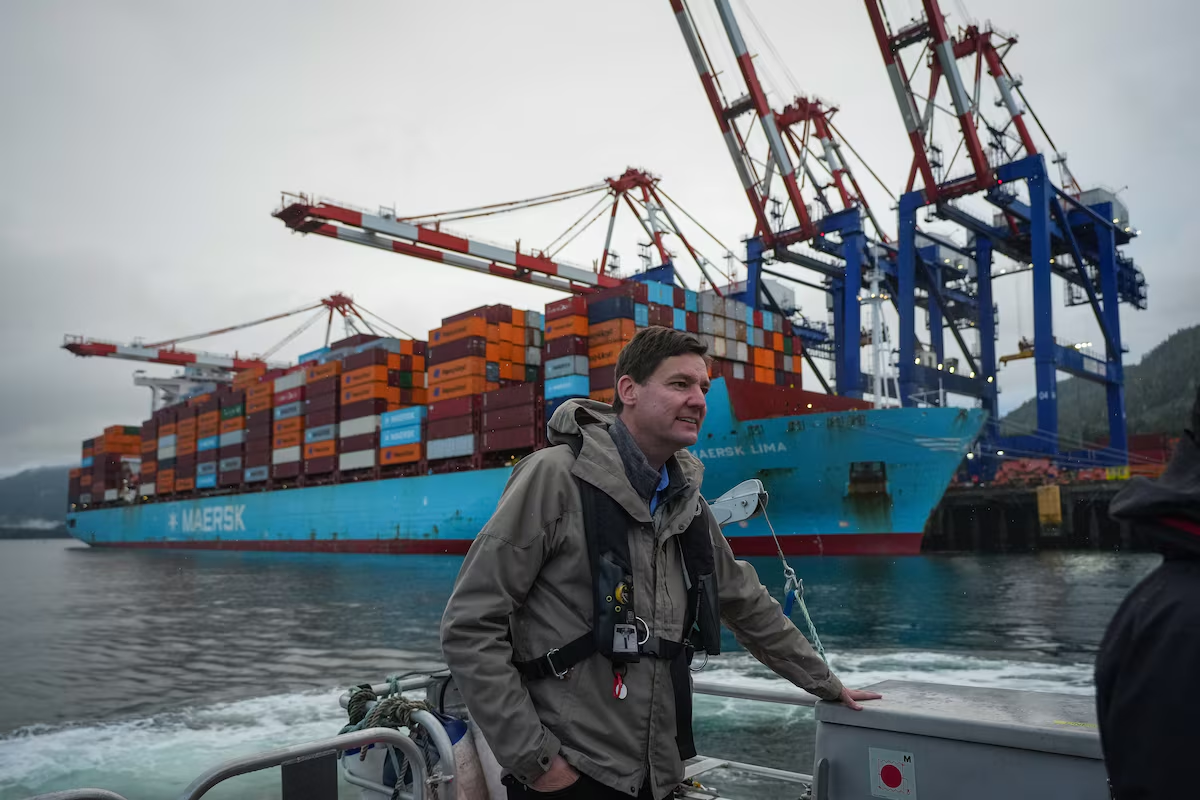

Open this photo in gallery:
B.C. NDP Leader David Eby, shown in Prince Rupert on Monday, said a re-elected government would double critical mineral exports in part by running environmental assessments and permitting processes concurrently.DARRYL DYCK/The Canadian Press
Leaders of the B.C. NDP and Conservatives on Monday laid out plans to accelerate development of the province’s natural resources, with David Eby pledging to double critical mineral exports within five years if re-elected and Lorne Doerkson vowing to double LNG production by 2032 if his party forms government.
The promises, made in the second week of campaigning ahead of the Oct. 24 provincial election, are the latest efforts by both leaders to put resource development at the centre of their economic pitches. The NDP’s Mr. Eby has made trade diversification and greater economic independence from the U.S. a throughline of his re-election bid, while interim Conservative Leader Mr. Doerkson has blamed NDP regulations for driving investment out of the province.
The pledges also come a week after the provincial and federal governments gave environmental approval to a major expansion of FortisBC’s Tilbury LNG facility in Delta, B.C.
Speaking from the Port of Prince Rupert, Mr. Eby said a re-elected NDP government would double critical mineral exports in part by running environmental assessments and permitting processes concurrently, which he said would cut timelines by more than 60 per cent. It would also set fixed permitting timelines for mineral exploration, a plan first announced in January.
As well, Mr. Eby pledged to fast-track construction of the multibillion-dollar North Coast Transmission Line, which his government committed to advancing in early 2025. It received legislative approval last November and broke ground earlier this month. One of Prime Minister Mark Carney’s designated nation-building projects, the transmission line is projected to contribute nearly $10-billion annually to B.C.’s economy.
“Doubling the critical metals and minerals exports from B.C. in the next five years means more jobs, more prosperity for British Columbians, more support for the cost of living and a clear response – and support – when we’re under direct attack” from U.S. President Donald Trump’s trade war, Mr. Eby said.
Open this photo in gallery:
B.C. Conservative interim Leader Lorne Doerkson, right, shown in Vancouver on Monday with Peace River South candidate Larry Neufeld, voiced a plan to host a global investment summit next year.JACOB MALLARI/The Canadian Press
Meanwhile, Mr. Doerkson said that a Conservative government would double the province’s LNG production by 2032 and triple it by 2035 with faster permitting and approvals, while upholding “the highest environmental standards in the world.”
“But we won’t let regulatory reviews become bureaucratic black holes that kill good projects through attrition,” he said from Vancouver. “If a project is good for B.C., it’s going to get a yes. In fact, it’s going to get a very quick yes.”
The NDP countered that Mr. Doerkson’s targets fall below the current pace of development, with five LNG projects moving toward final investment decisions “on track to more than triple production by 2035.”
Mr. Doerkson said a Conservative government would also host a global investment summit in Vancouver next year.
Werner Antweiler, an associate professor at the University of B.C.’s Sauder School of Business, said neither party pledge was outlandish but that the outlook for critical minerals was stronger. B.C. already has a substantial mining industry and a pipeline of proposed projects that could support the NDP’s target if global demand materializes.
“Depending on how narrow or broad you define ‘critical minerals,’ doubling that is entirely within reach because it is already well on its way,” Prof. Antweiler said in an e-mail to The Globe and Mail.
LNG Canada partners expected to green-light multibillion-dollar expansion
Ford commits to footing part of bill for proposed Alberta-Ontario pipeline
The Conservatives’ goal of doubling LNG production also appears achievable through projects set in motion by predecessor governments, he said. He cited as an example the Ksi Lisims project, which would export liquefied natural gas to Asia from northwest B.C. and is expected to make a final investment decision later this year.
However, further expansion is much less certain because Canadian LNG products are “late additions to an increasingly crowded marketplace” with cheaper competitors, Prof. Antweiler said.
Andy Hira, a political science professor at Simon Fraser University who studies energy policy, questioned the economic assumptions underlying both plans. Doubling critical mineral exports is possible “because the exports hardly exist at this point.” But he would want the NDP to first demonstrate that sufficient demand exists to better understand B.C.’s competitiveness compared to other potential sources.
On LNG, Prof. Hira said a provincial government could encourage development but can not dictate how much gets built, with investment ultimately dependent on private-sector interest and global demand.