
Open this photo in gallery:
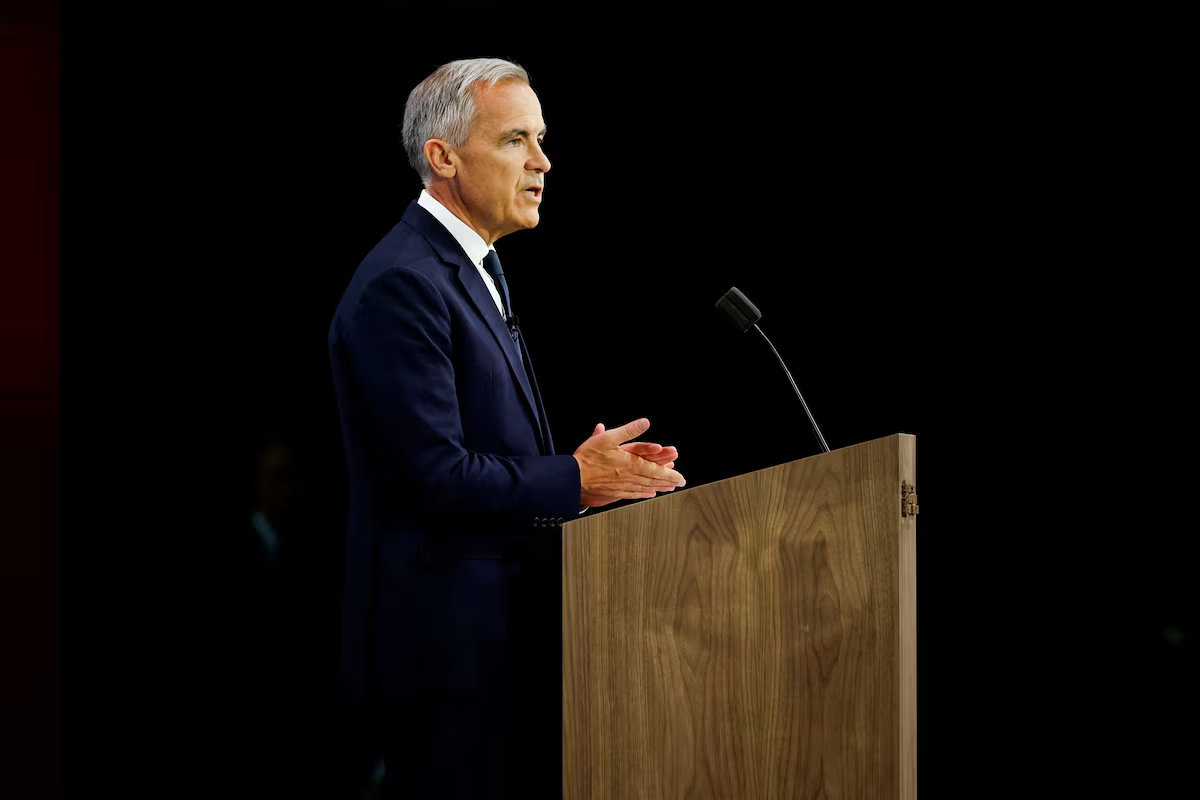
Prime Minister Mark Carney delivers the keynote speech at the Canada Investment Summit in Toronto, Sept. 15.Carlos Osorio/Reuters
For 48 hours in Toronto, one message kept getting repeated: Canada is actually, finally back.
During the country’s first-ever Investment Summit, Canadians sitting on panels kept delivering variations of it, and those listening in kept repeating it in private conversations at mini-forums, cocktail hours and dinners connected to the event.
Often, it was said with glee, with the suggestion that Canadians are serious people again. Because of that, private capital will finally show up.
But it isn’t so simple. If anything, sourcing capital hasn’t been Canada’s problem, despite the summit’s intentions. Realistically, beyond regulatory burden and tax incentives, there are some things a government can’t control, and some crucial ones have impacted Canada over the years. Number one on that list: commodity prices.
Since Prime Minister Mark Carney was elected in 2025, he has touted Canada’s strength as a resource nation. Oil. Gas. Copper. Uranium. Canada’s got it all.
Historically, these commodities helped fuel the country’s economic development. “Despite Canada’s recent abysmal investment performance, it has a history of capital spending booms lasting up to a decade, largely tied to its resource sector,” economists at Toronto-Dominion Bank wrote in a recent report on the potential for an investment supercycle.
But what got glossed over at the summit is that commodity prices have repeatedly crashed, and when they do, it scares away investors and creates capital droughts.
List of announcements coming out of the Canada Investment Summit
If commodity prices tumble again like they did when the mining supercycle crashed in 2012 or when oil prices plummeted in 2014, it will be tough to attract capital no matter how many regulations Canada relaxes or how many tax incentives it rolls out.
That may seem far-fetched now. The world is hungry for North American oil and natural gas because of supply disruptions in the Middle East and surging gas demand to fuel the copious data centres being built and planned.
But there was just as much fervour 15 years ago when China seemed to have limitless demand for Canadian metals and energy. Then metals prices crashed because they were in a classic bubble and a few years later Saudi Arabia started to pump much more oil, sending prices plummeting as supply skyrocketed.
“While increased commodity exports have made Canada richer, they have also made the economy more vulnerable to shifting price cycles,” researchers at the Bank of Canada have written when studying the country’s history with commodity supercycles and busts. (There have been four since the early 1900s.)
“In particular, the sharp fall in commodity prices that occurred after mid-2014 has led to a decline in Canadians’ income and wealth and triggered a complex and costly adjustment in Canada’s economy,” the researchers wrote.
Since then, investors in commodity companies have also held management teams to much different standards. Shareholders used to preach growth. But after enduring hundreds of billions of writedowns stemming from too much debt tied to bad deals, shareholders have preached capital preservation. They even want capital returned to them in the form of dividends and buybacks. It’s likely one of the reasons why Canadian energy companies aren’t saying all that much yet about boosting production to fill the newly proposed pipeline to the West Coast.
What are Carney’s next moves after EU meetings and the investment summit? Ask us your questions
Canadians could also use another reality check – one that’s much more encouraging. At the summit, a dominant narrative was that the country must do wonders to attract foreign capital again.
It isn’t true. “In a global context, Canada is actually well positioned,” said Syl Apps, senior managing director and head of U.S. Midwest and Canada at Hines, a global real estate investment manager.
Foreign investors repeatedly talked up things like the rule of law here, as well as Canada’s plentiful natural resources. They’re some of the reasons the country has attracted copious amounts of foreign money over the years. A subsidiary of Saudi Arabia’s Public Investment Fund bought major grain handling assets in the Prairies, and Blackstone, the U.S. private equity giant, holds $50-billion worth Canadian assets, many of them in real estate.
As much as Canada needs their money to help fund infrastructure and capital investments, these firms need the country just as much. They just don‘t want to admit it.
During the summit, BlackRock CEO Larry Fink said governments across the West are in debt and can’t afford to borrow more to fund infrastructure. Instead, he said, they’ll need some of the US$15-trillion that BlackRock manages to fund their growth.
Read the full transcript of Carney’s summit speech
What he failed to mention is that many sources of private capital have struggled in recent years. Returns from traditional private equity funds and private credit investments have been weak, and their own shareholders are losing confidence. Blackstone’s share price is down 33 per cent over the past year.
So even though some things are out of Canada’s control, the country doesn’t have to sell itself short. Canada has what the world wants, as Prime Minister Carney keeps saying, and the country has every reason to make foreign investors pay up for it.
It’s un-Canadian to brag, but the country can. And should.