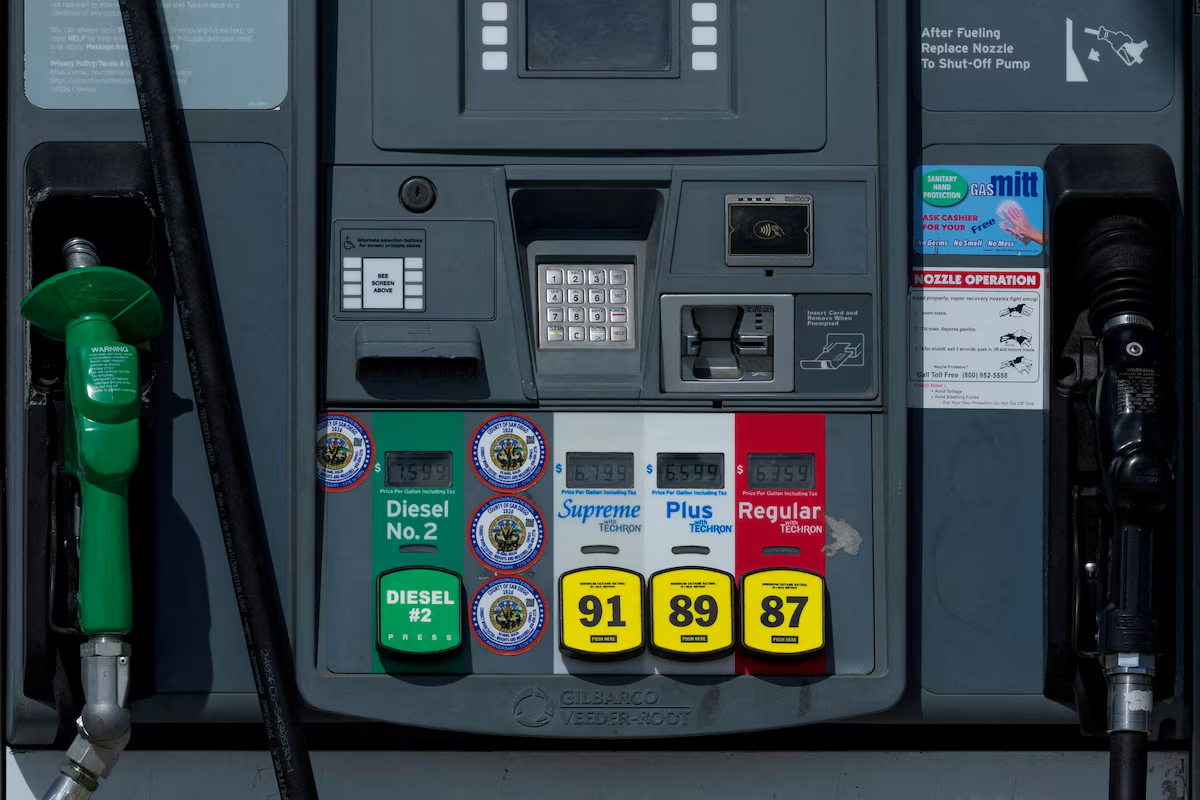

Open this photo in gallery:
A gas pump at an Exxon station in Washington in March 5.Mike Blake/Reuters
John Rapley is a contributing columnist for The Globe and Mail. He is an author and academic whose books include Why Empires Fall and Twilight of the Money Gods.
This week’s U.S. inflation reports showed that the oil shock has finally started to bite. The Mideast war will really start to come home now.
Friday’s Consumer Price Index produced a core measure hotter than expected, and worse news had come in the previous day’s Producer Price Index. With the latter now running above 5 per cent, yet more price rises lie ahead. Although Canada has done a better job bringing down inflation than our southern neighbours, we can expect next week’s inflation report to deliver similarly bad news.
When the Mideast war broke early this year, oil-market analysts puzzled over the absence of an oil shock. Ordinarily, the complete shutdown of the Strait of Hormuz should have caused prices to rocket to US$200 a barrel or more, plunging the world economy into recession. That never happened. After some spikes early in the conflict, prices settled down at a higher level but remained relatively stable.
Eric Reguly: Rising pump prices, inflation and bond yields are a perfect recipe for a Republican defeat in November
What analysts didn’t see in the early days of the war was that the world had built up huge buffer stocks of oil in national strategic reserves, private storage at refineries, and the so-called dark fleet of ships at sea. That plugged much of the lost supply, a favourable tailwind which then enabled the Trump administration to repeatedly calm jittery markets with promises that the war would soon end.
But those stocks are finally starting to run out. Meanwhile, the resumption of Mideast hostilities – Iran is still threatening the Strait of Hormuz and its Houthi allies secured a big victory against Saudi Arabia this week that could affect oil shipments through the Red Sea – has awakened traders to the realization that the war won’t end soon. Late last month, oil prices began rising steadily and this week crossed the US$100 threshold.
Worsening matters is that the prices on distillates such as diesel are rising even faster than those on crude oil. This is because in anticipation of a short conflict, some refineries had postponed routine maintenance. Now they’re being forced to catch up, taking some production offline, thereby aggravating price rises. Diesel, for instance, sits at record-high prices, which drives up costs in farming and transportation. The result is that inflation is not confined to the gas pump, but is seeping into all corners of the economy.
Opinion: Stocks and bonds are moving together. Here’s why you shouldn’t worry
In response, bond investors are demanding higher interest on their loans to governments. The U.S. 10-year bond yield is approaching 5 per cent, and Canada’s 4 per cent. Because they set the pace for markets, rising bond yields are driving up interest rates across the economy. If those trends continue, not only will cash-strapped consumers be forced by price rises to cut back their spending, but their credit card bills will eat up more of their monthly budget.
And in all Western countries, the mountain of debt accumulated over recent years will force governments to either raise taxes or cut spending, which will hurt the economy. With the U.S. government, for instance, now paying more in interest than it spends on defence, any attempt to rebuild military stockpiles depleted by the war will force it into some hard choices. The alternative would be to keep borrowing, which would aggravate inflation and drive interest rates even higher.
Gus Carlson: Trump stumbles as flunkies around him give dumber and dumber advice
So, too, the profits of debt-laden companies will suffer as firms must service debts at higher interest rates. Meanwhile, investors will begin to reallocate their portfolios away from equities to bonds, to take advantage of those rates. In the worst case, the supply of credit sustaining the AI boom in the U.S. will begin to dry up, and the bubble will burst. The “negative wealth effect” which would follow a stock-market correction would further constrain consumption, worsening any downturn in the economy.
The path of inflation and interest rates now points inexorably upward. For this to change, we need the war to come to a definitive conclusion, with full traffic resuming in the Strait of Hormuz. The Trump administration is still hoping that its blockade will plunge Iran’s economy into chaos, making the Islamic regime either capitulate or collapse. But while reports from within Iran depict an economy that is buckling and a public that is growing restive – a danger of which the country’s leadership is aware – there is nonetheless no sign yet of an imminent collapse. On the contrary, whether owing to greater desperation or confidence, the Iranian regime is stepping up the intensity of its attacks on American forces.
In hindsight, it might have been better if there had been a 1970s-style oil shock early in the war. That would have forced a quick resolution to the conflict. Instead, the frog-in-boiling-water scenario through which we’ve gone has enabled us to build up more debt, send stock markets higher and run down our savings in hopes that things would soon return to normal. If we take a tumble now, we’ll have farther to fall.