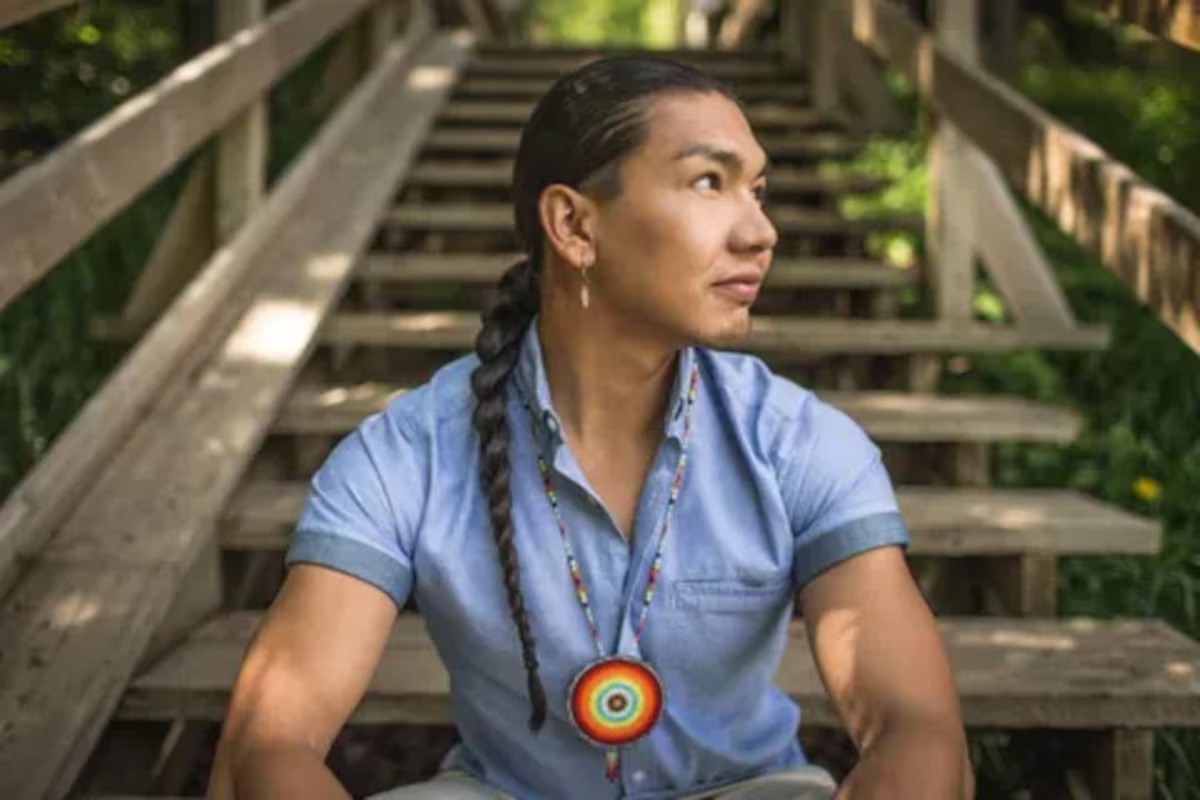

Open this photo in gallery:
Dr. James Makokis, a Nehiyô (Plains Cree) two-spirit family physician from Saddle Lake Cree Nation, described Alberta’s legislation as ‘anti-trans’ and said it violates treaty rights.Supplied
A First Nation in Alberta says it will defy a provincial law that restricts access to gender-affirming care for transgender youth, arguing these health services are protected under treaty rights.
The Saddle Lake Cree Nation, roughly 180 kilometres northeast of Edmonton, announced during a news conference on Wednesday that it is asserting its jurisdiction to provide Albertans access to gender-affirming treatment that is currently banned by the province.
The First Nation cited the “medicine chest” clause of Treaty No. 6, which states that “a medicine chest shall be kept at the house of each Indian Agent for the use and benefit of the Indians at the direction of such agent.” Indigenous leaders interpret this as a legal obligation for the federal government to provide health care on a continuing basis.
James Makokis, a Nehiyô (Plains Cree) two-spirit family physician from Saddle Lake, said the violence and harms faced by two-spirit and transgender people has to stop, stressing that the denial of care significantly increases mental-health risks.
He described Alberta’s legislation as “anti-trans” and said it is a profound violation of the treaty.
“The Saddle Lake Cree Nation categorically rejects these attacks on all gender diverse peoples, including Tastawiyiniwak – our two-spirit relatives – ensuring that life-affirming health care remains accessible, safe and protected from external political interference,” Dr. Makokis said in a subsequent statement.
Alberta’s trio of laws regarding transgender and gender-diverse youth are the most restrictive of any province in Canada. The legislation bans participation in certain sports divisions and regulates pronouns in schools, in addition to limiting gender-affirming care.
Last November, Alberta invoked the notwithstanding clause to shield the bills from being overturned by legal action. The clause – historically viewed to be a last resort – allows governments to override certain sections of the Canadian Charter of Rights and Freedoms for up to five years.
Legal challenges against the province are still before the courts.
Editorial: The debate over puberty blockers needs more science and less politics
Under the law restricting gender-affirming care, doctors are prohibited from prescribing puberty blockers and hormone therapies for those under 16. Additionally, physicians are banned from performing gender-reassignment surgeries on minors (those under 18), which was already a rare occurrence in the province.
Saddle Lake said the three laws are an “assault on gender diverse people” and that it will establish a safe haven for gender-affirming care on reserved lands. The nation said it will create a new health law, welcome Canadian-trained physicians to practise and work with health regulators to ensure there are no licensing barriers for these clinicians.
Heather Jenkins, press secretary to Alberta Justice Minister Mickey Amery, did not directly address the First Nation’s plans to offer gender-affirming care.
She said the laws “preserve the choices of children and youth,” strengthen the role of parents and “ensure fairness and safety” in amateur sports. “Alberta’s United Conservative government will be unapologetic in our commitment to these principles,” said Ms. Jenkins.
The Tastawiyiniwak, which roughly translates to the “in-between” people, also known as two-spirit, have always been recognized and included by the Cree people. Saddle Lake said it must protect these individuals against “continued assault” as a growing number of jurisdictions implement policies that limit care for gender-diverse people.
Standing behind speakers at Wednesday’s news conference were people wearing shirts with the transgender flag and holding signs in support of the LGBTQ+ community. One read: “As long as the sun shines, the grass grows and the river flows, tastawiyiniwak will exist.”
Patricia Seymour: As a physician, I see how gender-affirming care benefits youth
Chief Dale Steinhauer of the Saddle Lake Cree Nation said Alberta’s law is “dehumanizing” and the nation will not stand by as basic human rights and vital health care services are denied.
“Have the colonial governments not learned enough from their own history? Today, Saddle Lake Cree Nation reminds them again to stay in their boat,” said Ms. Steinhauer.
“When we were being stolen from our parents and experienced genocide in Indian Residential Schools, we wondered ‘Who are the people that will help us?’ Today, we are those people. Today we offer our help, support and jurisdiction to override these dehumanizing laws,” she said in a subsequent statement.
Representatives from the Canadian Medical Association and the Indigenous Physicians Association of Canada, who joined the news conference, voiced their support for Saddle Lake.