
Open this photo in gallery:
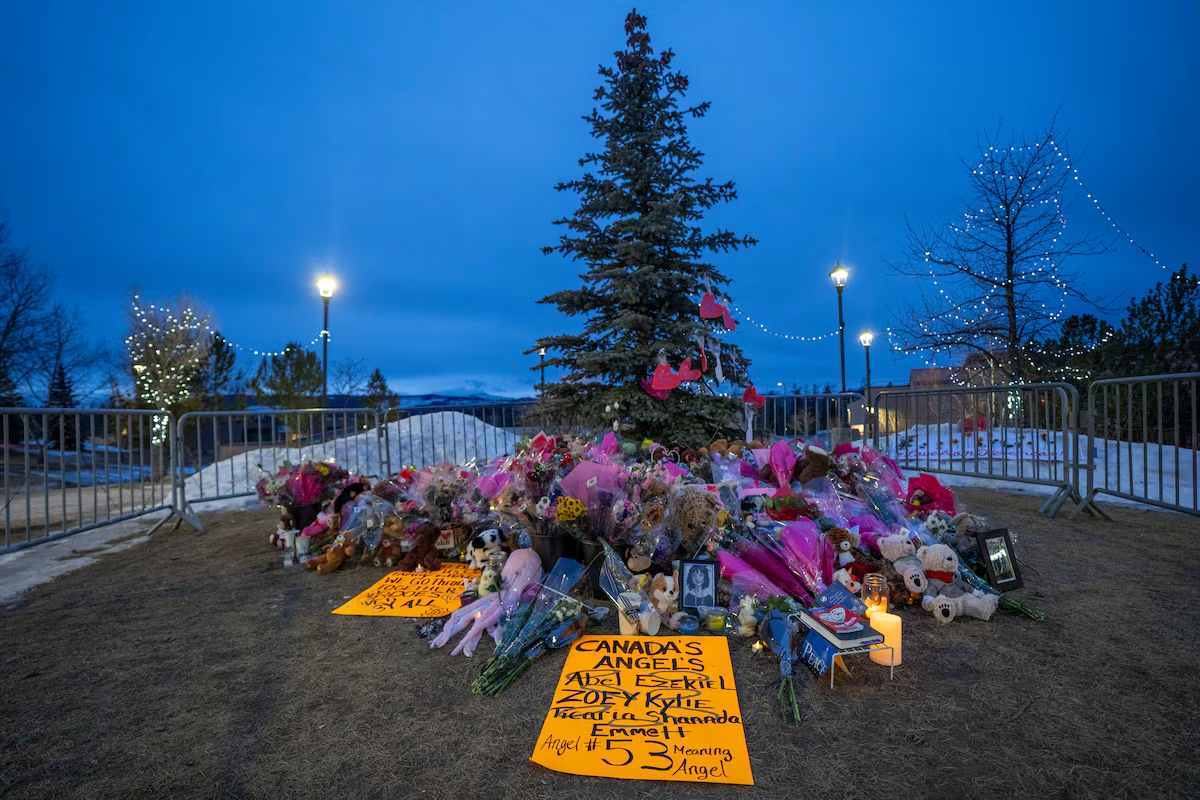
A memorial for the victims killed in the Tumbler Ridge mass shooting, seen on Feb. 15.Christinne Muschi/The Canadian Press
A U.S. law firm representing survivors of the Tumbler Ridge mass shooting is filing 30 lawsuits against OpenAI, alleging the tech giant was negligent in not reporting the shooter’s chat history to police in an effort to help prevent the attack.
Three new lawsuits, filed Wednesday in U.S. federal court in California, name OpenAI CEO Sam Altman and accuse the company of having a double standard when it comes to safety. The firm intends to file 30 in total.
The suits, one for each plaintiff, allege the company notified law enforcement immediately about threats against its own staff but allegedly withheld potentially life-saving information about the Tumbler Ridge shooter’s violent chat history before the shooting.
The suits also allege ChatGPT was allowed to continue chats with users on violent subjects in order to boost engagement, which allegedly facilitated the chats that allowed the shooter to plan her attack.
Jesse Van Rootselaar, 18, killed eight people in the northern B.C. community in February before killing herself in one of the deadliest mass shootings in Canadian history. Before entering the town’s school, she killed her mother and 11-year-old half-brother in their family home.
Court records detail chaos, fearful calls to RCMP during Tumbler Ridge mass shooting
The 30 new lawsuits add to seven others launched in April on behalf of victims who were killed. The new lawsuits claim the company knew the shooter posed a significant threat, but allegedly avoided alerting police before the attack because doing so would force the company to create an internal system for reporting other violent users to the authorities.
That, in turn, the lawsuits allege, would expose the threat its signature product routinely poses to human life, which could complicate a coming initial public offering that could be worth a trillion dollars.
The allegations have not been proven in court.
Jay Edelson, the lead lawyer for the plaintiffs, said it’s critical these cases get to a trial quickly because that could force the company to reveal the conversations the shooter had with ChatGPT, which he alleged would show how dangerous the chatbot can be.
“These cases have to get to a jury soon, not just for our clients but for public safety,” Mr. Edelson said.
In an e-mailed statement, OpenAI’s chief strategy officer, Jason Kwon, disputed the claims, saying the company’s intelligence and investigations team members, who report to him, work diligently to balance public safety with user privacy in what can be “really difficult and complex situations.”
“That judgement is not infallible, but it is always rooted in looking out for this balance for people,” Mr. Kwon’s statement said.
“It’s also completely untrue to say that the people at the centre of these challenging decisions do not prioritize safety, or that there are ‘political’ or ‘public relations’ factors at play.”
Ottawa, B.C. will commit $200-million for new Tumbler Ridge school and health centre
The plaintiffs in the new lawsuits include one student who survived after being shot in the chest, and 29 other students and school staff who witnessed the violence at close range.
One of them is a 13-year-old boy identified as A.C., who, after watching the shooter kill his classmates and shoot a teacher in the face, survived by pretending to be dead among the bodies of his murdered classmates, the statement of claim says.
Another is Deidre Rushlow, a Grade 7 teacher who locked her classroom door and hid students under her desk. The shooter then circled around to the back door and fired into the classroom. Bullets struck the wall around Ms. Rushlow’s and her students’ heads, according to the statement of claim.
Mr. Edelson said interviewing so many survivors drove home for him the deep emotional crater the attack has left on the small northern mining community. “They watched their fellow students get shot at and, in some cases, die in front of them. It basically was a scene out of a war.”
According to the statements of claim, OpenAI has two different threat analysis and security teams. The intelligence and investigations team, the lawsuits claim, is responsible for reviewing and assessing automatically flagged user content and developing responses, up to and including notifying law enforcement about potential threats to public safety.
That team reports to the company’s Global Affairs team, the lawsuits allege, which is responsible for managing the company’s public reputation, including deciding when to issue notices about potential threats from ChatGPT users.
The lawsuits allege Global Affairs stymied the intelligence and investigation team’s requests to notify law enforcement about the Tumbler Ridge shooter’s violent ChatGPT history.
Opinion: Canada needs to modernize school violence prevention
According to the lawsuits, a second internal group – the corporate security team – handles threats made against OpenAI staff and has the power to act on safety and security threats immediately, without considering reputational repercussions.
The lawsuits allege that’s what OpenAI did in November, 2025, when it learned of an individual who had “expressed interest in physically harming” its employees.
The corporate security team immediately notified San Francisco police, warned employees and locked down offices, despite there being no imminent threat, the lawsuits allege.
OpenAI did not respond to The Globe and Mail’s questions about its corporate security team or the alleged November incident.
San Francisco Police did not confirm whether it received any reports about threats to OpenAI staff last November.
While it has historically been challenging to bring lawsuits against tech companies such as OpenAI, Mr. Edelson said the legal landscape is shifting, pointing to the US$17-billion settlement Meta agreed to last week over claims brought against it by numerous U.S. states that its social media products are addictive and unsafe, allegations Meta denied.
“I think that [these cases] would have been really challenging to bring 10 years ago, but the law is a lot clearer now,” Mr. Edelson said.