
Listen to this article
Estimated 4 minutes
The audio version of this article is generated by AI-based technology. Mispronunciations can occur. We are working with our partners to continually review and improve the results.
Canada’s top Mountie has told First Nations leaders in Alberta the RCMP will review the chiefs’ call for a criminal treason investigation into the province’s premier and governing party, a response that has some chiefs optimistic.
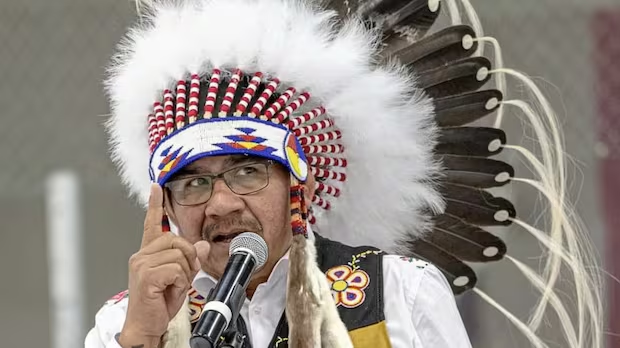
“It’s one step closer in regards to what we want to achieve in bringing this forward,” said Chief Desmond Bull of the Louis Bull Tribe in Maskwacis, who researched and formulated the case for the allegation.
“They’ll go through their process and determine if there is enough information to launch an investigation, so I’m hopeful there is,” said Sturgeon Lake Cree Nation Chief Sheldon Sunshine in a separate interview.
The Assembly of Treaty Chiefs, which represents 48 First Nations in Alberta across Treaty 6, Treaty 7 and Treaty 8 territory, passed a unanimous resolution on June 16 urging the RCMP and auditor general to investigate whether the actions of Premier Danielle Smith and other United Conservative Party members constitute treason under Section 46 of the Criminal Code.
Smith has called an Oct. 19 referendum for Albertans to vote on whether to stay in Canada or initiate a second, binding referendum on separation. The Alberta government says the referendum is a respectful and democratic process for citizens to air and debate legitimate frustrations with federal policies and decisions.
The Criminal Code defines treason primarily as the use of force to overthrow the government or sharing with another state information that may be used for a purpose prejudicial to the safety or defence of Canada.
After the resolution passed, the assembly forwarded the resolution to the RCMP, which responded a month later in a letter obtained by CBC Indigenous this week.
“Following receipt of your resolution, the matter was forwarded to the appropriate operational and investigative areas to determine whether the information provided meets the criteria necessary to initiate a criminal investigation,” wrote RCMP Commissioner Mike Duheme on July 17.
 RCMP Commissioner Mike Duheme wrote that the force is reviewing the request for an investigation. (Olivier Plante/Radio-Canada)
The letter is addressed to the leaders of Treaty 6, 7 and 8 and the Blackfoot Confederacy and copied to provincial and federal attorneys general Mickey Amery and Sean Fraser.
“Should the threshold for a formal criminal investigation be met, any investigative steps taken would then proceed in a thorough and objective manner, consistent with Royal Canadian Mounted Police (RCMP) policy,” Duheme continued in the letter.
“While the RCMP is unable to comment further at this time, we will continue to engage within the parameters of our mandate and legal obligations, as appropriate.”
Fraser’s office declined to comment and the Justice Department deferred to the RCMP. Amery’s office deferred to Alberta’s Ministry of Indigenous Relations, which hasn’t responded as of time of publishing.
In a statement sent Friday, RCMP headquarters in Ottawa said such assessments are conducted independently and objectively, based on the facts, the law and the evidence available. The RCMP said it doesn’t comment on private correspondence.
“Generally, only in the event that an investigation results in the laying of criminal charges, would the RCMP confirm the existence of the investigation,” wrote spokesperson Lisa McDonald-Bourg.
The premier has said she will vote for Alberta to remain part of Canada, but the treaty chiefs accuse Smith and the UCP of fuelling separatism through their actions and associations, while breaching treaties, running risks of foreign interference and failing to duly consult with First Nations.
“Even though she’s changing her position and then turning into some sort of Captain Canada, meanwhile, on the back side, they’re undermining their spot in Confederation,” said Sunshine.
Bull said he was glad to see the Mounties’ response and hopes to see some action. In the meantime, First Nations are encouraging their people to vote in the referendum.
“I was hoping the federal government would step in and say, look, you guys don’t have the numbers, you don’t have the support, you’re wasting taxpayers’ money. In the end, this is a lost cause and more or less a distraction tactic,” said Bull.
Smith called the treason allegation disgraceful in June and told the chiefs to “check themselves.” Both chiefs dismissed the comment.
Sunshine said he believes the Mounties “are taking this very seriously,” meaning the entire situation around the separation referendum and the potential risks.