
Listen to this article
Estimated 4 minutes
The audio version of this article is generated by AI-based technology. Mispronunciations can occur. We are working with our partners to continually review and improve the results.
A restricted fire zone (RFZ) that has been in effect for northwestern Ontario and a small portion of the northeast since July 15 is set to be lifted Thursday morning.
Ontario’s Ministry of Natural Resources (MNR) plans to officially revoke the order at 12:01 a.m. ET.
Under a restricted fire zone, no open-air burning, including campfires, is allowed. Once this is lifted, people will be allow to ignite fires no sooner than two hours before sunset and extinguish them no later than two hours after sunrise. However, some municipalities like Thunder Bay have specific rules on when fires can be ignited.
The MNR is thanking people in the province “for doing their part to help prevent wildland fires and keep communities safe.” The ministry is urging people to exercise extreme caution and follow Ontario’s Outdoor Fires Regulations, says the provincial forest fire website.
“The province will continue to assess wildland fire hazard conditions, and an RFZ designation may be reinstated in higher-risk areas if the fire hazard and fire activity warrants it.”
The restrictions were put in place during the peak of the region’s wildfire activity, during which upwards of 2,800 people were displaced from more than a dozen communities. The latest numbers from the province indicate that just over 700 people remain under evacuation.
 Cots are seen at Fort William Gardens in Thunder Bay. It was turned into an evacuation centre in July due to the wildfires. (Marc Doucette/CBC)
About 110 wildfires are burning across the province, seven of which remain not under control.
As forest fire hazards have eased considerably, the evacuation order and implementation order around wildfires known as Thunder Bay 36, Thunder Bay 56, Dryden 34 and Dryden 35 will also be lifted Thursday at 9 a.m.
This means travel and use of roads and lakes in these areas will be permitted, and more than 600 evacuees from Whitesand First Nation and Armstrong can officially go home.
Thunder Bay Ontario Provincial Police (OPP) say there will be more police presence on Highway 527 and in the communities of Armstrong and Whitesand First Nation to help with the safe return of residents after the MNR’s Implementation Order and Evacuation Order is updated, OPP North West Region said on Facebook on Wednesday morning.
“Please drive carefully, patiently and adhere to the posted speed limits. Let’s work together to make sure everyone returns home safely.”
Fire bans, safe burning practices
Kevin Anderson is division chief of fire prevention at Thunder Bay Fire Rescue.
Anderson said Thunder Bay will lift its own municipal fire ban once the RFZ is revoked on Thursday, though other communities may choose to keep their fire bans in place.
“Each municipality has the authority through the fire chief to have a fire ban whenever they choose to or lift it whenever they choose to, but we usually try to align with [the MNR] just to support them and their resources.”
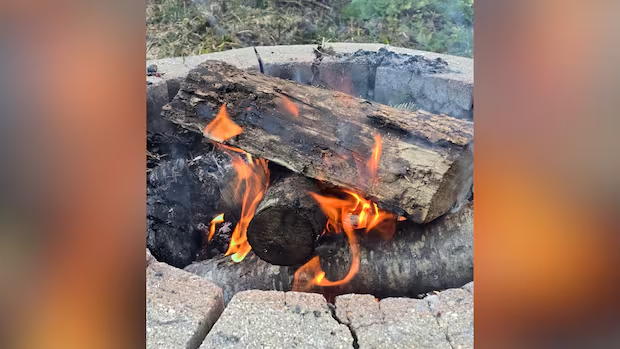
 As of Thursday at 12:01 a.m. ET, Thunder Bay residents can once again light fires as the province’s restricted fire zone and the municipality’s local fire ban are lifted. (Sarah Law/CBC)
Residents should check with their local fire departments to see whether municipal fire bans remain in effect where they live, he said.
While extreme temperatures of 40 C seen earlier this summer have since gone back to normal, “we’re seeing more and more increase in temperatures throughout the city and country as the years go by,” Anderson added.
He reminds residents that the wildfire season doesn’t end until Oct. 31, and the situation can quickly change.
“Every year is a little bit different, but with all this recent rain we’ve had, obviously the conditions have improved and things have greened up.”
Still, “even with all the rain, the ground’s really sucked it up because it was so dry.”
As of Thursday in Thunder Bay, fires are permitted between 5 p.m. and midnight, though residents must have a fire permit and make sure they’re burning at least two metres from any combustibles.
“Obviously everybody should still be cautious and do their best not to start any [wildfires], but for the enjoyment for the rest of the summer, it’s exciting news for everybody,” said Anderson.
Ontario’s interactive forest fire map online has the latest information on active wildfires and forest fire hazards.