
Open this photo in gallery:
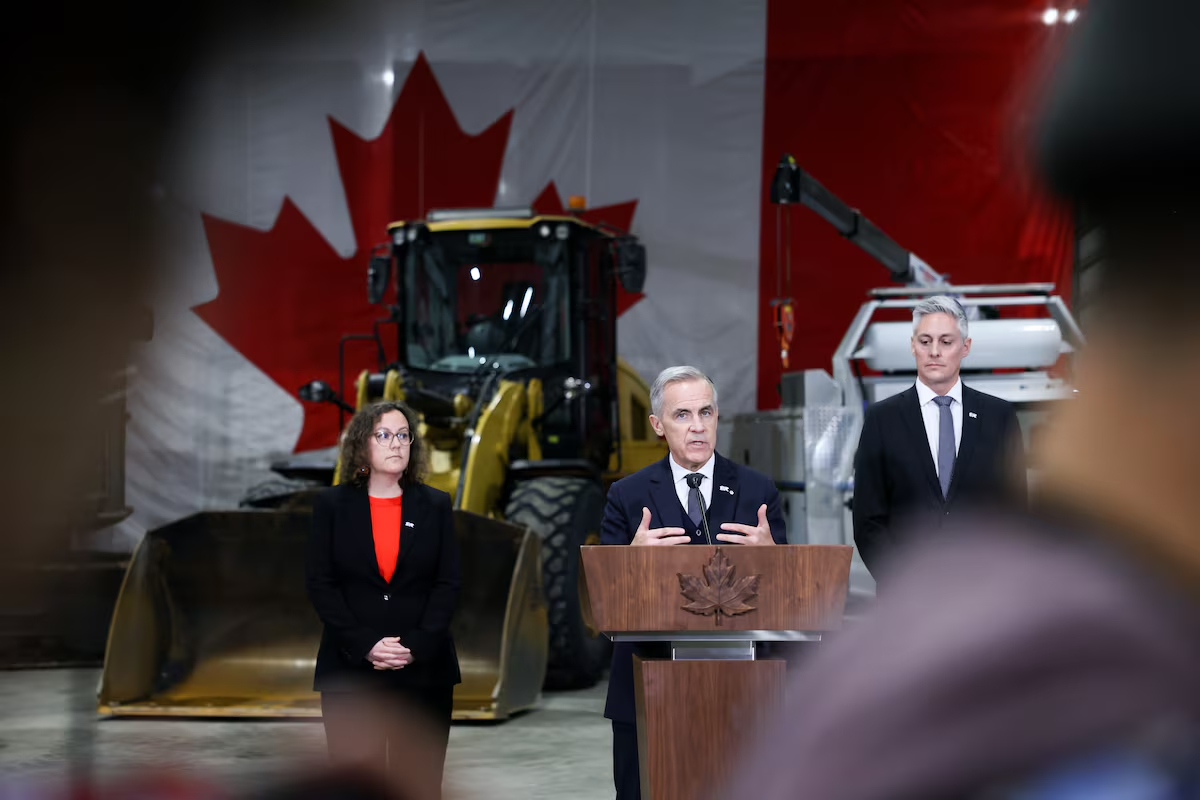
Prime Minister Mark Carney said Ottawa is designating the Mackenzie Valley Highway as a project of national interest during an appearance in Yellowknife on Friday.Hannah Eden/The Canadian Press
Prime Minister Mark Carney is fast-tracking federal approvals for a proposed 800-kilometre all-season highway in northern Canada that Ottawa says would cut driving distances, unlock more resource development and bolster Arctic security.
During a visit to Yellowknife on Friday, the Prime Minister designated the Mackenzie Valley Highway as a “project of national interest.” The government says this will speed up federal permitting, though the plan still requires an assessment by the Mackenzie Valley environmental impact review board.
The designation “ensures that everyone involved knows where we stand on a major project: communities, Indigenous governments, the territory, and the workers and businesses who will build it,” Mr. Carney said.
Ottawa said in backgrounder documents Friday that the capital cost for construction is expected to be $4.2-billion. The government has already committed to fully fund the highway’s construction and certain maintenance costs, including through funding in Budget 2026 and investments under the government’s Arctic Infrastructure Fund.
The planned route, entirely within the Northwest Territories, would run from Wrigley, at the end of the current all-season highway, to the Dempster Highway south of Inuvik.
Mr. Carney said this new highway would cut more than 1,000 kilometres from the route between military Forward Operating Locations in Yellowknife and Inuvik used by the North American Aerospace Defence Command (NORAD), the joint Canada-U.S. command that guards North American skies.
These forward operating locations are northern airfields from which NORAD can temporarily deploy fighter jets and support crews. These provide hangars, fuel and accommodations to support fighter squadrons.
Earlier this year, Ottawa earmarked nearly $35-billion to upgrade military installations in the North aimed at defending against threats to North America and asserting territorial sovereignty in the Arctic. These include the Forward Operating Locations in Yellowknife, Inuvik and Iqaluit, as well as the Deployed Operating Base at 5 Wing Goose Bay in Labrador.
Open this photo in gallery:
The sun sets over the Mackenzie Delta near Inuvik, NWT, in 2009. Ottawa says it will fast-track federal approvals for the Mackenzie Valley Highway.Staff/Reuters
“As we bolster our military presence, this highway will facilitate the transport of personnel, equipment, and supplies throughout the Western Arctic,” Mr. Carney said Friday.
Ottawa has set 2032 as a target for completion of this highway, pending environmental assessments. Construction could begin in late 2027 if the plans are approved.
It’s likely Canada will end up counting its spending on the highway construction as part of its NATO pledge to spend 1.5 per cent of gross domestic product annually on security and defence related infrastructure. It’s part of a 5 per cent of GDP target to be reached in the coming years.
David Perry, president of the Canadian Global Affairs Institute, a think tank, said the highway could have an indirect benefit on security in the region and lower costs for supplying the upgrades to forward operating locations or fuel transfers.
However he noted the military has successfully operated these locations for decades without the Mackenzie Valley Highway. “The military does not require the highway’s completion to make them serviceable. But it could help.”
Mr. Carney said the project will provide northern Canadians with reliable transportation in a region where climate change is affecting the duration of ice roads and the water levels for barges.
“The Mackenzie Valley Highway will change that. It will mean more reliable and affordable access to food, fuel, and essentials. More opportunities to visit loved ones, access medical care, and pursue stable, high-paying careers,” he said.
Ottawa’s pledge to build Mackenzie Valley Highway key to drawing investment, NWT Premier says
Bob Zimmer, Conservative critic for Arctic affairs and northern economic development, said the federal government has repeatedly promised to support the Mackenzie Valley Highway, yet the start date for construction remains elusive. “This is the sixth time this Liberal government has made an announcement on this project, and the fourth time a member of the Liberal cabinet has flown to Northwest Territories to do so,” he said.
“Every few months brings a new press conference or a new process. People in Wrigley, Tulita, Norman Wells and Fort Good Hope don’t need another announcement. They need shovels in the ground,” the Conservative MP said.
The federal government said the highway would improve transportation access for more than 10,000 people, including approximately 1,900 people in the central Sahtu Region who would gain access to an all-season road connection for the first time. In addition, it would cut the drive between Yellowknife and Inuvik from approximately 38 hours to an estimated 23 hours.
Ottawa also said the project would create 3,000 jobs at peak construction. The highway would also unlock opportunities for local businesses, trade and tourism activity, while supporting new resource exploration and development, the government said.
While Ottawa’s major projects office helps co-ordinate regulatory processes, the federal government is also planning to launch a new Crown corporation in the coming months to manage development and construction of complex major projects.
The Mackenzie Valley Highway would be the initial focus of the new major projects management entity, it said.
With reports from The Canadian Press