
Open this photo in gallery:
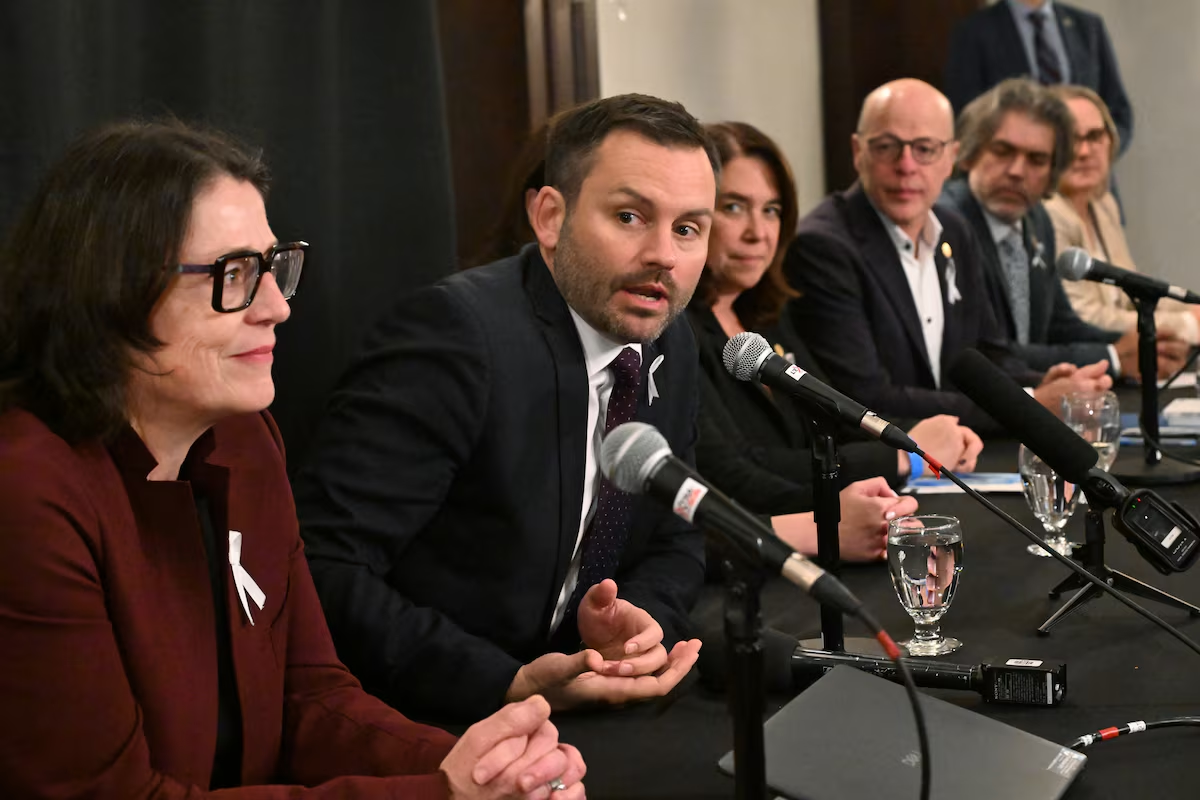
Quebec Premier Paul St-Pierre Plamondon speaks to government members at a pre-session caucus on Thursday.Jacques Boissinot/The Canadian Press
Quebec legislators will have to wait until next week to learn whether a judge will allow them to sit in the National Assembly without taking an oath of allegiance to King Charles III.
On Friday, a lawyer for the Quebec government argued in court that there will be a “major disruption” to the provincial legislature if a Quebec Superior Court ruling declaring elected officials must swear fealty to the Crown is allowed to stand.
The government is seeking leave to appeal the decision and is asking the Court of Appeal of Quebec to allow members of the legislature to sit without taking the oath while the case unfolds.
After the hearing in Montreal on Friday, Justice Lori Renée Weitzman said she would render her decision on Monday, acknowledging the urgency of the matter.
Premier Paul St-Pierre Plamondon has said his Parti Québécois government will sit in the National Assembly as planned on Tuesday without taking an oath to Canada’s monarch.
Andrew Coyne: Quebec’s legislators are shocked – shocked! – to discover they cannot vote to defy the Constitution
The constitutional showdown was triggered early this week, when Justice Ian Demers suspended a 2022 law that had abolished the requirement for members of the National Assembly to swear loyalty to the Crown.
In his decision, Justice Demers wrote that the suspension of the law means that lawmakers will now “be required to take an oath to the King before assuming their duties.”
Lawrence David, an Ottawa lawyer who launched a constitutional challenge of the 2022 law in August, told the appeal court he is “deeply concerned” by the prospect of the government sitting next week “regardless of what this court decides.”
“This court cannot be intimidated by political threats to its judicial independence,” he said Friday.
Mr. St-Pierre Plamondon has said the lower court decision doesn’t explicitly order lawmakers to swear allegiance to the King and there is nothing preventing them from convening in the National Assembly as planned.
The 2022 law was passed with the support of all parties after Mr. St-Pierre Plamondon and his caucus, then in opposition, refused to take the oath and were barred from entering the National Assembly.
But Mr. David argues Quebec has no authority to unilaterally amend the Constitution.
Opinion: Quebec legislators must swear an oath to the King. Monarchists shouldn’t feel smug
The substance of the case has yet to be heard, but Mr. David filed for an emergency injunction after the October election to force MNAs to take the oath before the legislature reconvened.
Justice Demers sided with Mr. David on Monday. He ruled that if lawmakers did not swear allegiance to the Crown, “all laws passed by the National Assembly would be unconstitutional and would have to be re-enacted,” which he said would cause “paralysis.”
The appeal court ruling next week will determine whether an appeal of that injunction can proceed, and whether MNAs can sit without taking the oath while it does.
Michel Déom, the lawyer for the Quebec government, said Justice Demers should have considered that he was creating “an unprecedented situation that will affect the work of the National Assembly.”
None of the province’s 127 legislators swore allegiance to the King after last month’s election.
Mr. Déom said the judge was wrong to focus on what would happen if the 2022 law were eventually found unconstitutional, instead of the immediate effects of suspending the law.
The Editorial Board: An oath of allegiance not just to the Crown, but to the rule of law
But Mr. David said the judge accurately concluded the law is “manifestly unconstitutional,” and said the appeal court should not allow lawmakers to convene without taking the oath.
“The fundamental question is this: Why allow systematic constitutional violations by an unlawfully constituted assembly that are certain to occur, instead of preventing them now?” he said.
“Prevention is better than cure.”
Friday’s hearing took place hours after the Supreme Court of Canada largely upheld Quebec’s secularism law, Bill 21, averting a potential constitutional crisis in the province.