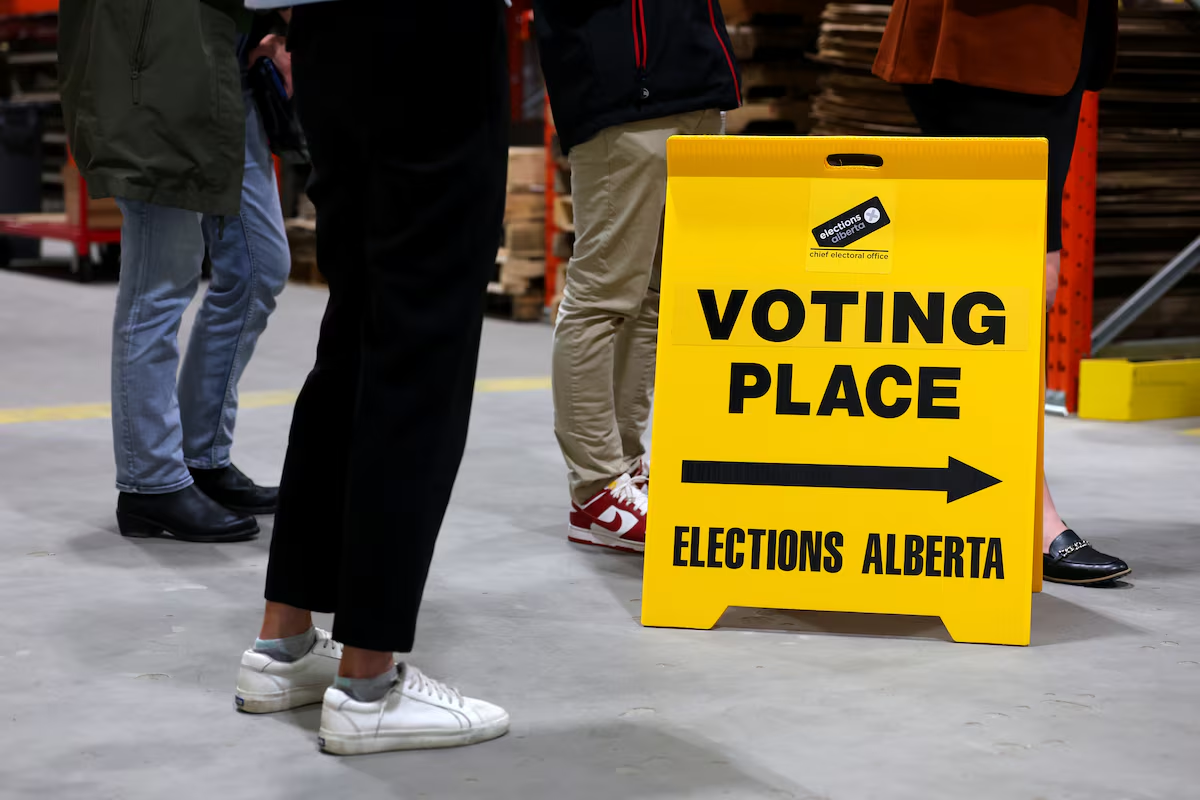

Open this photo in gallery:
The proposed changes would prevent any new or revived parties, such as a breakaway conservative faction or a refashioned Alberta Liberal Party, from accessing the provincewide list.James Maclennan/The Canadian Press
Alberta will restrict upstart or straggling political parties from accessing the province’s voter list, giving the United Conservative Party and provincial New Democratic Party an advantage in the next election, as part of a package of reforms the government said will help protect personal data.
Justice Minister Mickey Amery, in legislation tabled Monday, also proposed stripping voting rights from those convicted of failing to protect, or unauthorized use of, Alberta’s list of electors, according to a summary of the proposed amendments.
Alberta’s list of electors, which contains a trove of sensitive personal information for the province’s three million eligible voters, allegedly leaked in April, sparking widespread backlash and safety concerns. Elections Alberta, in court documents, alleges a copy of the list of electors it legally provided to the Republican Party of Alberta ended up in the hands of the Centurion Project, a separatist organization that made some of the contents available to its members through an online tool.
“This is exactly in response to the data breach,” Mr. Amery told reporters Monday before he tabled the legislation.
Nearly 600 people had unauthorized access to Alberta’s electors list, watchdog alleges
Currently, all registered political parties in Alberta are permitted access to the list of electors without providing a bond. Elections Alberta counts 13 registered political parties.
Mr. Amery’s proposed restrictions would make Alberta an outlier compared with its provincial peers. Elections BC and Elections Ontario both permit registered political parties to access their respective voter lists.
Elections Alberta and the RCMP are investigating the alleged mishandling of the province’s list of electors this spring. None of Elections Alberta’s allegations have been tested in court, and the government’s proposed punishments for mishandling the voter list are not retroactive.
But privacy concerns run deep. The Centurion Project’s founder, David Parker, worked with Michigan’s 10X Votes when pitching his get-out-the-vote tool.
The Globe and Mail found a loophole in the Centurion Project’s online security measures in April. Using login credentials supplied by the organization, The Globe accessed the database powering the Centurion Project’s basic search tool. It contained personal information for roughly 2.9 million voters, including unique elector identification numbers, addresses, legal names and 2,083,175 phone numbers.
Now, Alberta wants to restrict access to the provincial voter list to political parties that clear at least one hurdle, according to the government’s summary of the amendments. To access the provincewide list, political parties must have backed at least one candidate elected to the legislative assembly in the most recent election or by-election; or supported candidates in at least half the electoral divisions in the most recent election; or, after the writs are issued, endorse candidates in at least half the electoral divisions.
Under the proposed rules, only the governing UCP and the Alberta NDP would be eligible for access to the province’s list of electors. Parties that qualify must pay a deposit of $100,000, Mr. Amery said.
The government’s adversaries argue Mr. Amery’s proposals are designed to stifle democracy and shield the UCP from challengers. The next provincial election is scheduled for October 2027.
“It is obviously very limiting and intended to tip the scale in favour of the government,” said Peter Guthrie, the leader of the Progressive Tory Party of Alberta.
Mr. Guthrie, elected under the UCP banner in the last election, revived the Tory brand last summer. He said his party’s request for the provincewide list has not been fulfilled.
Alberta limits voter information shared with political parties after major privacy breach
Under the proposed changes, Mr. Guthrie’s Tory party would not be eligible for access to the full voter list, unless it has candidates in 50 per cent of the ridings when the writs are issued.
The changes also prevent new parties, such as a breakaway conservative faction, or those that might plot a comeback, such as the Alberta Liberal Party, from accessing the provincewide list. The Republican Party of Alberta, which does not have a seat in the legislature but ran candidates in three by-elections last year, would also be iced out.
Stephen Carter, a political strategist, said the UCP is limiting competition and curbing the ability for new and dormant parties to connect with constituents.
New parties are not unusual in Alberta. For example, the UCP formed in 2017, when the Progressive Conservative Association of Alberta merged with the Wildrose Party, which years earlier splintered from the PCs.
“This is protectionism,” Mr. Carter said. “It is a democratic responsibility for parties to communicate with the electorate. They are constraining that ability.”
Independent candidates could access the list of electors for their respective riding should they post a bond of $2,000, Mr. Amery said. New parties running a small slate of candidates could also access the lists for the relevant constituencies after posting a bond of $2,000 a riding, he said.
Alberta also plans to disenfranchise people convicted of mishandling the lists. It will “disqualify a person from voting, running for or holding public office, or (if other amendments pass) registering as a third party advertiser for eight years if they are convicted of unauthorized use or failure to protect the list of electors,” according to the government’s summary sheet.
Alberta to introduce citizen voter ID law, Smith says
Heather Jenkins, a spokeswoman for Mr. Amery, in a statement defended the province’s plan to suspend voting rights as a form of punishment. “Alberta has long imposed serious consequences for corrupt electoral practices, and BC’s election law similarly disqualifies convicted offenders from voting.”
The amendments would increase the maximum penalty for mishandling the list of electors to a $1-million fine, up to two years in prison, or both. The existing penalty for unauthorized use or failure to protect the list of electors is a maximum fine of $100,000, up to a year in prison, or both.
Further, Alberta intends to “make a person or party liable for damages in cases of unauthorized disclosure of the list of electors that result from negligence, recklessness, willful blindness, intentional conduct or that contravene the Election Act in relation to the list of electors.”
The proposed amendments would also prevent Elections Alberta from distributing the list of electors to people or political parties “charged with or under investigation for unauthorized use or failure to protect the list of electors.”
Mr. Amery’s new rules also prohibit storing the list of electors outside Alberta, including digital copies.