
Open this photo in gallery:
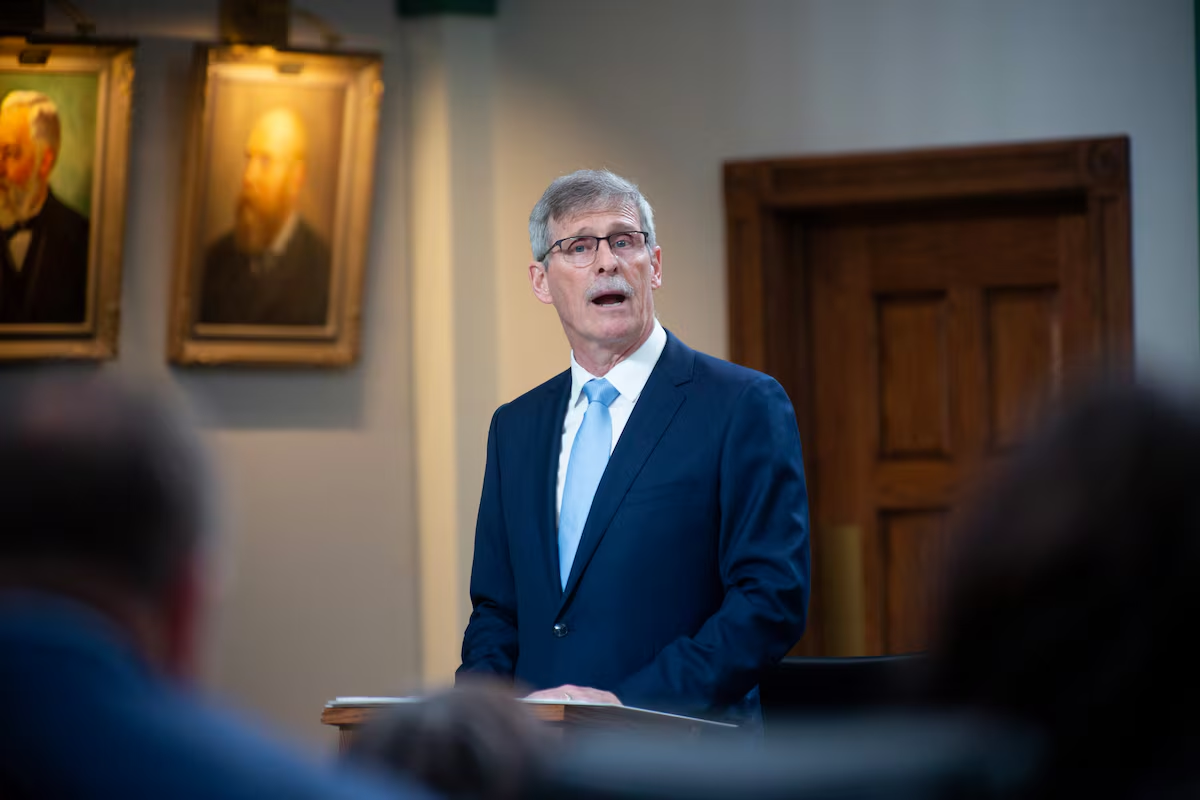
Newfoundland and Labrador Finance Minister Craig Pardy delivers the provincial budget in the House of Assembly in St. John’s, N.L., on April 29.Paul Daly/The Canadian Press
Newfoundland and Labrador is forecasting a modest budget surplus, thanks in part to more than $1-billion in extra oil revenue after the war in Iran sent crude prices soaring.
Craig Pardy, the province’s finance minister, said there are sectors beyond oil — mining, for example — that are driving production and economic growth. But he admitted Monday that without the surge in oil prices, the indebted province would be having a very different year.
And even with a good year, Newfoundland and Labrador still faces grave financial challenges and a towering debt to overcome, he said.
“Let me be clear: that is one good year. It does not mean that the problem is fixed,” Pardy told reporters in St. John’s, N.L., on Monday. “So we will not manage the province’s finances as if one good year will last forever.”
Newfoundland and Labrador is forecasting a modest budget surplus, thanks in part to more than $1 billion in extra oil revenue after the war in Iran sent crude prices soaring. Finance…Full Caption
In April, Pardy delivered a budget for the current 2026-27 fiscal year forecasting a deficit of $688-million and a net debt of $20.8-billion. But as of Monday’s fiscal update, those numbers have changed. The Progressive Conservative government is now expecting nearly $1.5-billion more revenue than forecast in the budget, much of which comes from nearly $1.1-billion in additional oil revenues.
Pardy’s update forecasted a $78-million surplus and a $19.3-billion net debt. The government will still have to borrow about $3.9-billion this fiscal year, which ends in March 2027, and it will pay about $1.2-billion in debt servicing fees, including interest.
Newfoundland and Labrador is expecting to take in more than $3-billion in oil royalties this fiscal year, accounting for roughly 25 per cent of the province’s entire revenue, officials said.
Pardy insisted his government is looking beyond the temporary surge in revenue from high oil prices, pointing to anticipated benefits from Equinor’s proposed Bay du Nord offshore oil project, and an agreement between Crown utilities in Newfoundland and Labrador and Quebec to expand the hydroelectric output of the Churchill River in Labrador.
Equinor is expected early next year to decide whether to proceed with Bay du Nord. Officials are still hammering out final contracts for the Churchill River deal.
Spending in Newfoundland and Labrador is also higher than was anticipated in April’s budget, by about $704-million. More than half of that is due to health-care costs, Pardy said. The rest he largely attributed to inflation and a recently announced suite of measures to offset the high cost of living.
Quebec pledges to unveil a road map for phasing out fossil fuels
The province is investing $175-million into a new sinking fund, which officials said would mature to $750-million by 2052. That money will be used to pay off debt.
Sheilagh O’Leary, who represents the St. John’s East-Quidi Vidi district for the NDP, said the government needs to come up with a better plan to manage its debt.
“We can’t rely on oil revenues that are being made on an illegal war,” O’Leary told reporters after Pardy’s announcement. “It’s unsustainable.”
Officials with the United Nations have said that U.S. and Israeli airstrikes on Iran this year violated international law, including the UN Charter. However, the Trump administration has insisted the military campaign is a lawful measure to ensure Tehran does not build nuclear weapons.
Newfoundland and Labrador’s population sat at about 552,000 as of July, according to the provincial government. Its gross domestic product is expected to grow by 7.1 per cent this year, which officials said was the highest anticipated growth in the country.
In October, the Montreal Economic Institute think tank released a report showing Newfoundland and Labrador’s net debt-to-GDP grew by 14 per cent between 2015 and 2024, which was the largest growth among the provinces. The report blamed much of the increase on what it called economic fundamentals, such as slow economic growth.
With files from The Associated Press