
Open this photo in gallery:
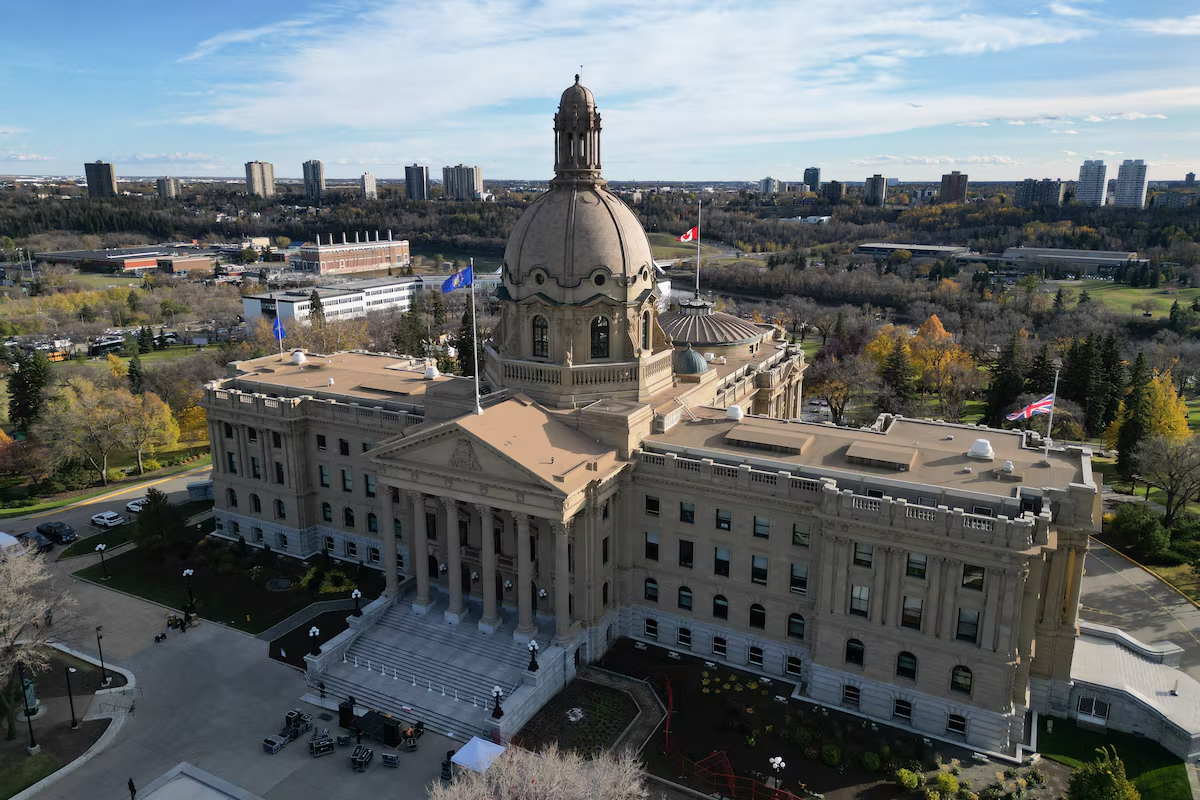
The Alberta Legislature in Edmonton. If adopted, the new electoral map would remain in place until the next scheduled redrawing in eight to 10 years.DAPHNE LEMELIN/AFP/Getty Images
Alberta Premier Danielle Smith’s government has introduced legislation that will force a vote on a proposed new electoral map that contains controversial changes to key provincial ridings and has fuelled accusations of gerrymandering.
Mickey Amery, the province’s Justice Minister, tabled a bill on Monday afternoon that, if approved, would finalize the shape of Alberta’s electoral map for the next general election, scheduled for October 2027.
The Alberta NDP has promised to file a legal challenge to the map if the bill passes, a commitment party Leader Naheed Nenshi reiterated on Monday.
“If this passes, we’re challenging it in court,” Mr. Nenshi said at a news conference.
Alberta’s new electoral map may not tilt the province, but it could help the UCP retain its majority
Smith defends Alberta electoral map against gerrymandering allegations
The new map has risen to the top of Alberta’s political agenda in recent weeks, largely because of a slate of changes it makes to ridings in Calgary and Lethbridge – regions that are tightly contested between the United Conservative Party and NDP – and Ms. Smith’s decision in April to reject a previous panel’s recommendations and restart the map-making process.
The latest proposals have been dogged by accusations of gerrymandering, the U.S.-style practice of drawing boundary lines that give an unfair advantage to the governing party.
If adopted, the new map would remain in place until the next scheduled redrawing in eight to 10 years.
Opinion: Alberta’s new electoral maps leave us with a big question
The new map, expected to be debated this week, was drawn by a five-person panel. Alberta’s system dictates that the governing party selects the chair and two panelists while the Official Opposition picks the remaining two.
A recent analysis by The Globe and Mail showed that the new map would dilute urban voters’ power in elections, and widen population disparities between city and rural ridings. If approved, the average rural riding would be nearly 11-per-cent smaller than the provincewide average of 53,722 people. Calgary and Edmonton’s riding populations, meanwhile, would be roughly 6-per-cent greater than average.
In Lethbridge, the map proposes eliminating one of the city’s two urban ridings while creating three new districts that mix the city’s suburban neighbourhoods with swaths of rural southern Alberta, where much of the UCP’s support resides.
And in Calgary, the battleground where next October’s election is likely to be won, a handful of ridings in the city’s northwest were merged with rural ridings.
Ms. Smith’s government has indicated it supports the new map, taking the first step toward implementing its changes last month by unanimously voting in favour of creating the bill tabled on Monday. (The Alberta NDP voted against the motion.)
Should the map be proclaimed into law, it will be sent to Elections Alberta so it can be implemented ahead of the next provincial election.
But it is unclear how the NDP’s legal challenge would impact that process.
Opinion: Alberta’s electoral map shows who conservatives think ‘real’ Albertans are
Mr. Nenshi has refused to divulge the NDP’s legal tactics. On Monday, he suggested that the challenge could lead to a “very quick trial on the merits of the application,” or result in an injunction that leads to “a very long court case.”
“I hate being vague on these things, but I also cannot give up our legal strategy before we’re in court, because it gives the other side an opportunity to prepare using taxpayer dollars,” Mr. Nenshi said.
Ms. Smith says she hopes the NDP’s legal challenge doesn’t come to pass, but that her government will assemble a legal team if necessary.