
Open this photo in gallery:
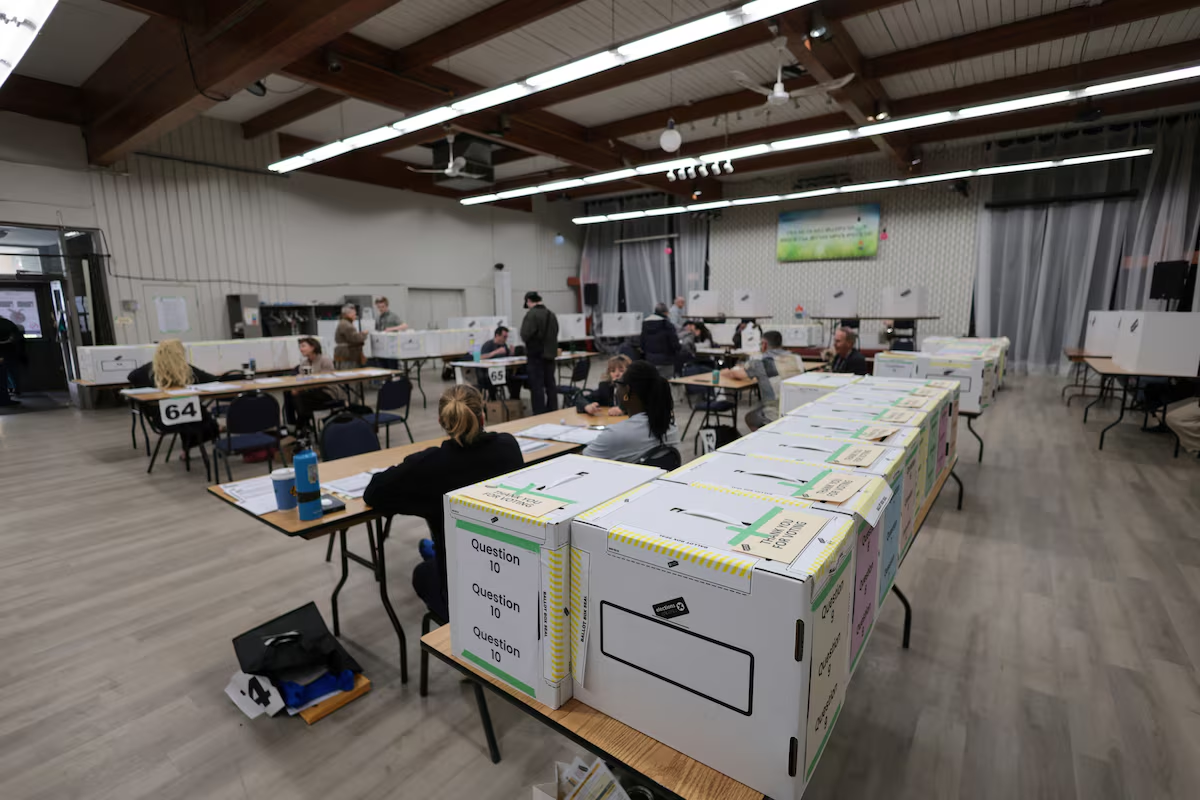
Ballot boxes are seen in a voting station in Calgary during the Alberta referendum, Oct. 19.Ahmed Zakot/Reuters
Indigenous people in Alberta turned out in massive numbers in last month’s provincial referendum, voted overwhelmingly in favour of remaining a part of Canada and fiercely rejected the other nine questions on immigration and constitutional issues, according to a Globe and Mail analysis.
The Globe looked at 61 polling stations located on First Nations reserves and Métis settlements from the Oct. 19 vote and found that Indigenous voters cast ballots nearly four times more than were cast in the same voting areas in the 2023 Alberta provincial election. Some nations saw a voter increase of 500 per cent to more than 1,200 per cent.
Nearly 95 per cent of Indigenous people voted to remain in Canada, about 20 percentage points higher than for the rest of Alberta.
“[The province] underestimated what the response was going to be from our communities, and it showed at the polls,” said Kainai Nation Chief Travis Plaited Hair.
“They had something to say, and they said it loud and clear that they were not in favour.”
The Globe’s analysis does not take into account Indigenous people who voted at stations off reserves, nor any advance polling or mail-in voting for both 2023 and the referendum.
Months before voters went to the polls, First Nations in Alberta challenged the legality of provincial separation in court, arguing that it would violate treaties with the Crown and breach the government’s duty to consult Indigenous peoples on matters affecting their rights.
Two Alberta judges ruled that First Nations must be considered in the decision to call a referendum on provincial independence. In a December decision, Court of King’s Bench Justice Colin Feasby ruled that “First Nations, as founding partners in the creation of Alberta, cannot be ignored or bypassed as Alberta contemplates its future whether that is as part of Canada or not.”
Alberta Premier Danielle Smith appealed a May court ruling that also went against her government. Days later, she called the referendum, wording the independence question in a way that sidestepped the court ruling. Albertans were asked whether the province should remain a part of Canada or begin the process for a binding referendum on independence.
Ahead of last month’s vote, a number of First Nations raised concerns that their members were not given the opportunity to vote in advance polls because of staff shortages. Some First Nations, including Kainai Nation, also known as the Blood Tribe, took part in get-out-the-vote campaigns, along with the Blackfoot Confederacy, which also includes Siksika Nation and Piikani Nation.
Kainai held an information rally the week before the referendum, including a vehicle parade from Cardston to Moses Lake, to show support for treaty rights.
“That’s what really boosted the interest in the referendum, and at the end of the day, influenced the vote too,” Mr. Plaited Hair said.
Kainai saw the number of ballots cast at its polling stations increase about 554 per cent, in comparison with the 2023 provincial election.
Siksika Nation, located about an hour east of Calgary, saw a ballot increase of about 715 per cent on referendum day.
“We know that in the past, some of our nation’s leaders and even our elders would actually discourage voting in provincial elections,” said Siksika Chief Samuel Crowfoot.
“A lot of them were told this, do not vote because it validates a system, a colonial system that we don’t necessarily have full faith and credit in.”
Matthew Wildcat, director of Indigenous Governance and Partnership at the University of Alberta, said strong opposition by First Nations to Ms. Smith’s United Conservative Party was the “number one explanation” for such high Indigenous turnout.
“The far-right political circles are very hostile to the rights and distinctiveness of Indigenous peoples,” Mr. Wildcat said.
“People came out because it was an opportunity to vote against, or to show, a political demonstration against this government and the things that they stand for.”
Mr. Wildcat is a member of Ermineskin Cree Nation, which as one of the four nations of Maskwacis saw a voter increase of about 293 per cent.
On the first half of the referendum questions, regarding immigration, 75 to 85 per cent of Indigenous people voted No compared with 42 to 48 per cent in the rest of the province.
Both Blackfoot chiefs said they believe that their members voted according to strong traditional values, adding that their nations and families extend “beyond the Canada-U.S. border.”
“Anything that has to do with immigration has the ability to affect the treaty rights,” Mr. Crowfoot said.
For question five, on proof of Canadian citizenship being needed to vote in future elections, about 79 per cent of Indigenous voters rejected the idea, versus 42 per cent in the province overall.
Mr. Wildcat said that while the idea wouldn’t necessarily hurt Indigenous people specifically, it would affect marginalized and vulnerable communities.
“Whenever a government puts additional obstacles, and they are obstacles, in the name of secure voting or whatever, it disenfranchises our people,” Mr. Crowfoot said.
Mr. Plaited Hair said not every member “has a passport, and not everyone has a provincial ID or government ID,” adding that many members carry band membership or Indian status cards.
In a statement from the Ministry of Indigenous Relations, the province said the government “will carefully consider how we work to implement the results of the referendum, including proof of citizenship.”
The government did not respond to any of The Globe’s other referendum-related questions for this story.
Mr. Crowfoot and Mr. Plaited Hair see the referendum turnout as setting the table for the next provincial election, scheduled for Oct. 18, 2027.
“I told our nation’s voters the referendum’s a warm-up,” Mr. Crowfoot said.
“They’re going to respect us, and they’re going to give us more attention now.”
Mr. Plaited Hair said not only has membership “woken up to the idea that their voice really does matter,” so has the province.
Mr. Crowfoot said he is proud that his peoples’ voices were heard and remains hopeful his members will continue to be more politically engaged.
“150 years ago, when the treaties were signed, and helped form Alberta, they were instrumental in the building of Canada, and 150 years later, our people fought on behalf of Canada to keep it united.”
Methodology
Election results don’t show whether a ballot was cast by an Indigenous voter. The Globe looked at results from polling stations on First Nations reserves and Métis settlements. These stations mostly serve people who live in those communities, but some of their voters may not be Indigenous, and they don’t capture the many Indigenous voters who live off reserve.
To identify the stations, The Globe overlaid Elections Alberta’s 2026 voting-area boundaries on the province’s map of First Nations reserves and Métis communities. A station was included if at least 75 per cent of its voting area lies within the Indigenous land. The analysis covers 61 stations and counts only election-day ballots, because Elections Alberta does not report advance votes by station.