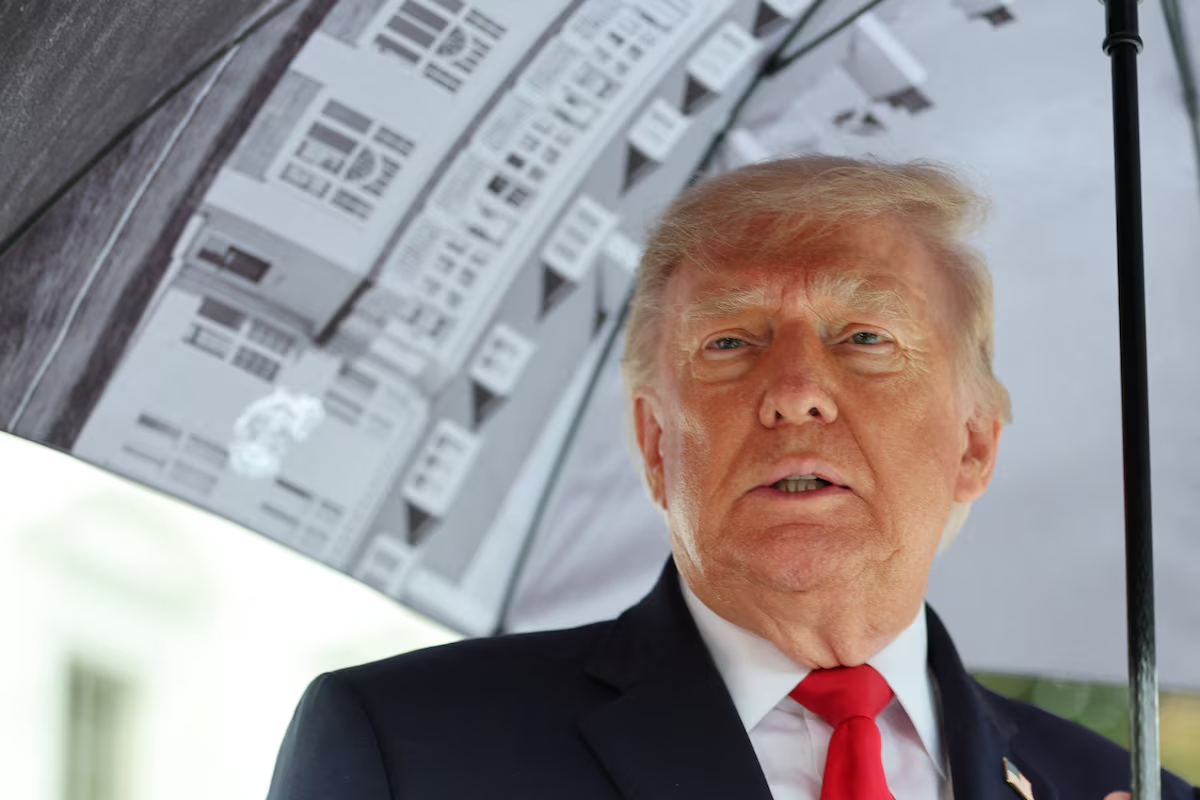

Open this photo in gallery:
If U.S. President Donald Trump, shown outside the White House on Friday, considers his war in Iran incomplete, he could renew his attacks, Eric Reguly writes.Umit Bektas/Reuters
Labelling a U.S. President who has lost Congress a lame duck is a generalization too far. Donald Trump’s domestic agenda may be hobbled, not his foreign one. He is still commander-in-chief. The foreign file will mostly remain his game. But games are won and lost and he may do more harm than good in his overseas adventures.
One file in particular – Iran, which is to say oil – is bound to grab his attention soon. The Democrats, having trounced the House and Senate Republicans in the midterm elections, will push Mr. Trump hard to end the war on Iran. He may or may not comply.
If he considers his war in Iran incomplete, or a failure, he could renew his attacks. There is a reason why two U.S. aircraft carriers remain within striking distance of Iran, with a third on its way.
The war began on Feb. 28 with unprovoked U.S.-Israeli air strikes on the country and an OPEC member in control of the Strait of Hormuz, through which a fifth of the world’s crude oil and liquefied natural gas passed on the way to global markets. Tehran responded by closing the strait. The war spread to other Persian Gulf countries, where U.S. military bases were hit.
Oil soared, taking inflation, gasoline and diesel prices – and voter resentment – up with it. Goodbye Republican control of Congress. “The reason we lost is the war,” Vice-President JD Vance said on social media the day after the election.
Robyn Urback: Republicans now begin their hard, cruel journey back to reality
If Mr. Vance is right that costly fill-up prices were to blame, it stands to reason that Mr. Trump would end the war to bring down fuel prices – and inflation – and hand the Republicans a fighting chance to win the 2028 presidential election. But reason might not enter the equation; if it did, Mr. Trump would not have started the war.
Presidents often divert attention away from the home front after their party loses the midterms, or simply because they are bored of the domestic grind and want to make an international splash to zap some glamour into their legacy. Sometimes the results make the world a better place, sometimes not.
After losing the 2014 midterms, Barack Obama wrapped up the Iran nuclear deal, the one that Mr. Trump scrapped, and opened relations with Cuba. In 2007, after Democrats took control of Congress in the midterms, George W. Bush sent the U.S. military into Iraq to try to stabilize the shattered country.
This week, oil traders and investors at first appeared to take the view that Mr. Trump would make peace with Iran or simply declare victory and ignore the whole Gulf area while he builds his White House ballroom. On Wednesday, Brent crude, the international benchmark, fell 8 per cent to about US$94 a barrel, apparently signalling that renewed attacks were at the bottom of Mr. Trump’s to-do list.
By the end of the week, oil was trending up again and broke through US$98. “How this all plays out is still highly uncertain,” said the commodities strategists at ING. “One would think Trump might want to come away with some accomplishments from this war. Does he go about that through renewed strikes or striking a deal?”
Marsha Lederman: Forget the midterm election results – Canadians should still not vacation in the United States
Hard bet to make. Certainly, some students of Mr. Trump’s behaviour aren’t betting on a benign outcome. One is David Frum, a senior editor at The Atlantic magazine who was a speechwriter for George W. Bush. In a video piece this week, he said Mr. Trump, his ego damaged by the Republican slaughter, might go rogue. “He’s going to psychically compensate by lashing out and being destructive. When the President is in pain, he breaks things … He can invade countries, he can create attacks and conflict in American society,” he said.
Just how trigger-happy he is in his post-election funk is an open question. Before the midterms, he seemed in favour of another attack on Iran, with Israel at his side, to try to ensure that Hormuz was fully open and to snuff out the remnants of Tehran’s nuclear-enrichment program. On Oct. 29, Democratic Senator Chris Murphy said he learned from an intelligence briefing about a plan to resume attacks after the election. “And while I cannot disclose any details, I can say this: The plan is insane. It will not achieve objectives and will set off a new cycle of escalation.”
Any attacks on Iranian oil infrastructure would send oil prices northbound, all the more so since Ukraine’s attacks on Russian refineries have constrained the supply of diesel fuel and other oil products. Everyone would suffer – oil is the most global of commodities. Rising oil prices could stoke another round of inflation and civil unrest; see the mass student-led protests in Paris, Milan and other European cities in recent weeks.
The question is whether Mr. Trump’s desire to hammer Iran into submission is greater than his fear of surging oil prices. Now that he is on his way out, with his domestic agenda in tatters, he may not care if the cost of a fill-up goes even higher. Serves them right for voting Democrat, he might think.