
Listen to this article
Estimated 4 minutes
The audio version of this article is generated by AI-based technology. Mispronunciations can occur. We are working with our partners to continually review and improve the results.
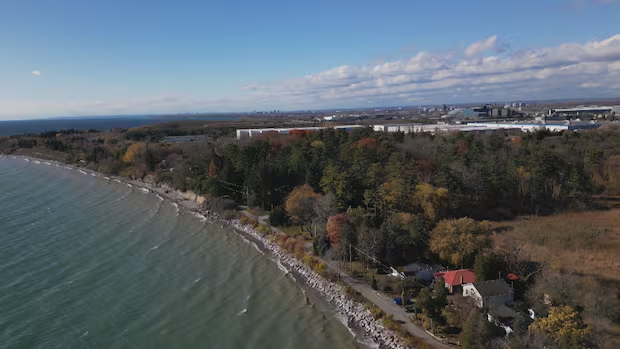
Between a Whitby steel factory and the General Motors assembly plant in Oshawa sits a sanctuary along the north shores of Lake Ontario that Andrés Jiménez Monge gets excited about, knowing it will be preserved for generations to come.
The “vital” stretch of land features white pine trees dating back about two centuries, the last remaining pine wood of that age along the lake, said Monge, executive director of conservation group Ontario Nature.
It’s also home to over 75 rare species, dozens of which are classified as “at-risk,” making it a special place for Durham Region residents seeking a nature retreat close to home, Monge said.
“Nature is for everyone and this is why this property is so important,” he said.
Now, Ontario Nature has secured the future of the site, having officially acquired 10 hectares of nature reserve known as Thickson’s Woods last week from the Thickson’s Woods Land Trust, a residents’ group that purchased the land decades ago to keep it from loggers and developers.

According to Andrés Jiménez Monge, white pine trees found within Thickson’s Woods date back anywhere between 150 to 250 years, and are the oldest of their kind remaining along the shores of Lake Ontario. (Paul Borkwood/CBC News)
Being under the stewardship of Ontario Nature “guarantees” the land will be shielded from urban development “in perpetuity,” he said.
“When we think about these spaces, every single hectare matters.”
A legacy of local conservation
The history of protecting Thickson’s Woods dates back to 1983, when local residents joined forces to prevent commercial loggers from clearing the forest. That group eventually formed the Thickson’s Woods Land Trust.
In the time since, the space has been transformed into a small trailhead that also connects to the waterfront trail along Lake Ontario.
After four decades of stewardship, many of those volunteers have either moved, passed away or grown too old to care for it, according to Joanne Brown, who was a director on the land trust board before Ontario Nature acquired the land.
“We felt that in the really long term, we needed help,” Brown said.

Joanne Brown, who was a director with the Thickson’s Woods Land Trust before it was dissolved, said the group was searching for another organization to help preserve the land when it found the ‘best’ partner in Ontario Nature. (Submitted by Joanne Brown)
In trying to find a new owner, she said it became evident that Ontario Nature was the “best partner” to ensure the land wouldn’t be handed over to developers.
With its acquisition, Thickson’s Woods becomes Ontario Nature’s 27th nature reserve across the province.
Brown said she feels encouraged the group has the ability to ensure nature enthusiasts can continue visiting the space.
“It really is a community space where people can go and realize the value of having natural heritage right at their back door,” she added, touting its ease of access by car or public transit.
A ‘haven’ for at-risk wildlife: ecologist
Despite its relatively small footprint, the reserve harbours “remarkable” biodiversity, according to James Kamstra, a retired ecologist who spent years volunteering to preserve the woods.
Kamstra noted that over 1,200 different species of moths have been discovered there, and that its location on the lakeshore makes it a critical stopover point for migratory birds and pollinators.
“Animals that migrate need places where they can stop and feed and fuel up. Thickson’s Woods provides that sort of function,” he said.

James Kamstra said the wooded area known as Thickson’s Woods provides a vital haven for migrating birds from northern Ontario to find food, adding that there’s very few spaces like it in southern Ontario. (Submitted by James Kamstra)
Kamstra called the woods an important “haven” for many of those species, with fewer green spaces for them to migrate to.
Over time, he said the pressures of development across southern Ontario have contributed to a decline in bird populations.
With development in cities also making it more difficult to find green spaces in urban environments, Kamstra said it’s critical that conservation efforts are made.
That’s a sentiment that Monge said he also believes in.
“Whatever we build, is a lot better if it has nature up front,” he added. “A strong Canada, a strong Ontario, puts nature first, because that’s what makes us strong.”