
Listen to this article
Estimated 3 minutes
The audio version of this article is generated by AI-based technology. Mispronunciations can occur. We are working with our partners to continually review and improve the results.
The federal government has tabled new legislation that excludes people suffering solely from mental illness from qualifying for medically assisted death.
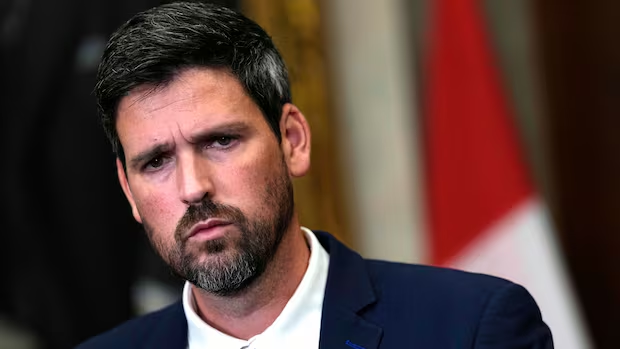
Justice Minister Sean Fraser said earlier this month that Ottawa decided not to move forward with plans to expand MAID access “in circumstances where mental illness is the sole basis.”
“While there is not a perfect consensus on this issue, we believe this is the correct approach at this particular time,” he said on Oct. 7.
The legislation tabled Tuesday would amend the Criminal Code to “clarify that a person cannot receive medical assistance in dying on the basis of a mental illness.”
It also would allow people to make what’s known as an “advance request” for medically assisted death before losing the capacity to consent due to their health condition.
But the legislation outlines specific criteria that must be met, including being in “an advanced state of irreversible decline in capability” and “experiencing enduring and intolerable physical or psychological suffering that cannot be relieved through reasonable means.”
In a written statement, Fraser said Ottawa would work with provinces and territories to implement the legislation, “with rigorous safeguards to protect people and ensure the decision remains voluntary and free from external pressure.”
WATCH | Canada shuts door on MAID for mental illness:
Canada shuts door on medical assistance in dying for mental illness
Justice Minister Sean Fraser announced the government will not move forward with allowing medical assistance in dying (MAID) for those suffering solely from mental illness, angering some MAID advocates, but pleasing many in the medical community.
Fraser and federal Health Minister Marjorie Michel will hold a news conference on Tuesday afternoon to discuss the legislation.
Maddison McKee, a spokesperson for the Alberta government, said the province would “carefully review the proposed [federal] changes and consider what further consultation may be needed in Alberta.”
“Our priority will continue to be protecting vulnerable Albertans and ensuring appropriate safeguards are in place around consent and patient safety,” McKee said.
Ottawa’s plan drew mixed reaction
When Fraser announced Ottawa’s plans, Dying with Dignity Canada — a group that advocates for access to MAID — said it was a “profoundly disappointing day.”
“Preventing a group of people from having the same access to a legal medical procedure as the rest of the population simply because of their diagnosis violates Charter rights. It is stigmatizing and unconstitutional,” CEO Helen Long said in a written statement.
Inclusion Canada, an organization that supports people with intellectual disabilities, welcomed the mental illness exclusion, however, saying the government had recognized that “people with mental illness need treatment and support.”
WATCH | Some advocates disappointed by mental illness exclusion:
Advocates disappointed after Ottawa extends MAID exclusion for mental illness
Helen Long, CEO of Dying with Dignity Canada, which advocates for assisted-dying rules, shares her reaction to the federal government extending the MAID exclusion to those suffering solely from mental illness. She says given the number of delays already with the legislation, it is not a total surprise.
The group also raised concerns about advance requests for MAID. “Consent at the time is the most basic protection a person has. Parliament should not take it away,” Inclusion Canada CEO Krista Carr said on Oct. 7.
Canada passed MAID legislation in 2016, but the Superior Court of Quebec struck the law down in 2019 because it was limited to those whose deaths were “reasonably foreseeable.”
Parliament passed Bill C-7 in 2021 to align with the court’s ruling. A planned expansion of medically assisted death to people suffering only from mental illness was pushed back several times to allow for further study.
In June, a special parliamentary committee recommended that people suffering solely from mental illness be excluded.