
Good morning. A dramatic shift in British Columbia has reshaped the province’s political landscape, raising questions about what comes next for both the Conservatives and the NDP.
More on that below, plus a crucial test of Mark Carney’s relationship with First Nations leaders ahead of the federal budget, and a new poll suggesting Canadians are warming to immigration again as Ottawa prepares to set new targets.
Open this photo in gallery:
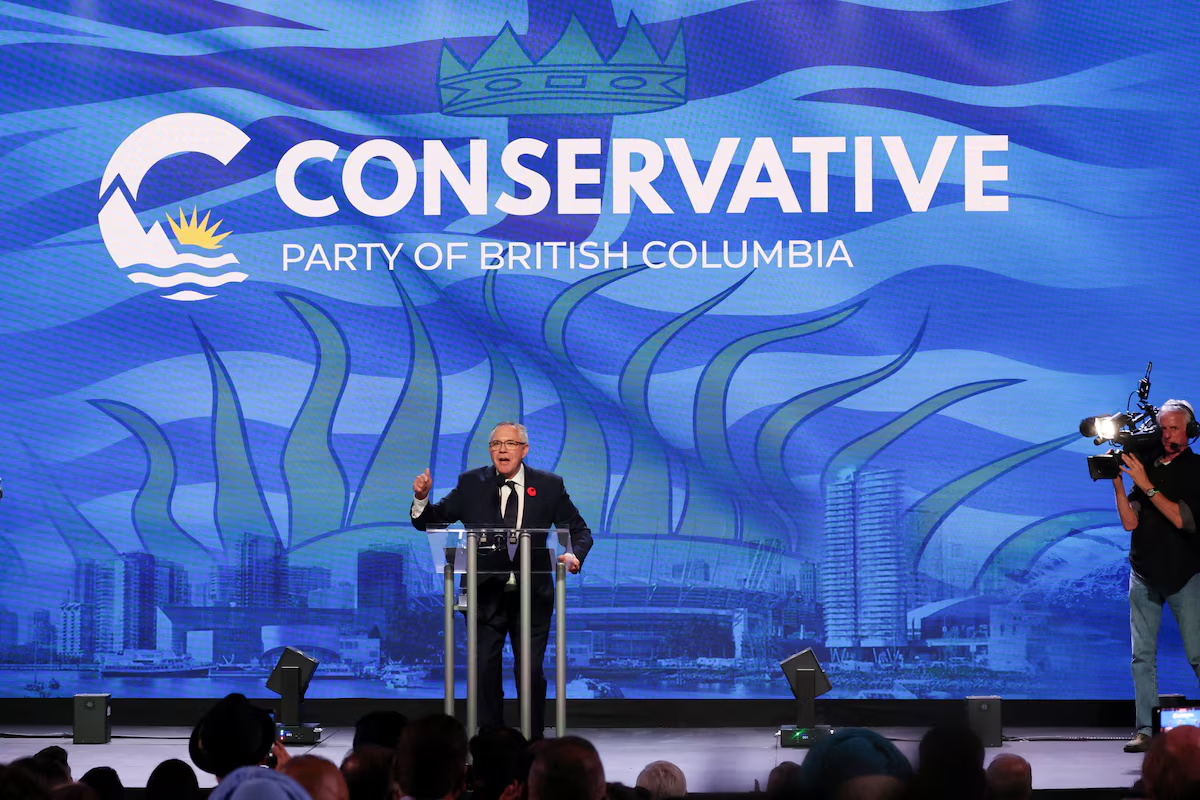
BC Conservative interim Leader Lorne Doerkson speaks on stage during provincial election night in Vancouver, on Saturday.Chris Helgren/Reuters
TOP STORIES
B.C. Conservatives sweep to power
Fresh off a decisive election victory, British Columbia’s incoming Conservative premier, Lorne Doerkson, is moving quickly to outline his priorities, including a review of the province’s finances, the Pacific Link pipeline and the repeal of Indigenous rights legislation.
The results: With 99 per cent of polls reporting, the Conservatives had won 64 seats, compared with 27 for the NDP and two for the Greens. The victory marks a remarkable turnaround for a party that was nearly derailed by months of infighting, defections and controversy.
What went wrong: NDP Premier David Eby had hoped to capitalize on a fractured opposition and secure a stronger mandate. Instead, the Conservatives regrouped, leaving the NDP with one of its worst defeats in recent history. Eby accepted responsibility for the result in his concession speech.
What’s next: Doerkson said his government will launch an independent review of B.C.’s finances, citing the province’s $14-billion deficit, and work with Alberta and Prime Minister Mark Carney to advance the Pacific Link pipeline. He also plans to repeal B.C.’s Declaration on the Rights of Indigenous Peoples Act, setting up a potential clash with Indigenous leaders.
Sign up for Morning Update:
Reading this online? Start your morning with context and insight on the day’s biggest stories, in your inbox every weekday.
Open this photo in gallery:
AFN National Chief Cindy Woodhouse Nepinak with Prime Minister Mark Carney at the AFN Special Chiefs Assembly in Ottawa, last year.Adrian Wyld/The Canadian Press
Carney faces First Nations test
Prime Minister Mark Carney and Canada’s premiers are set to meet Monday for a historic gathering focused exclusively on First Nations issues, with Indigenous leaders calling it a key test of Ottawa’s commitment to addressing long-standing concerns.
What’s at stake: Assembly of First Nations National Chief Cindy Woodhouse Nepinak says the meeting, the first of its kind, comes as First Nations push for new funding commitments ahead of the Nov. 5 federal budget. The AFN has also raised concerns about Ottawa’s efforts to fast-track major projects approvals.
The bigger picture: With Indigenous support crucial to many of Carney’s major infrastructure ambitions, the talks could help shape relations between Ottawa and First Nations leaders.
Open this photo in gallery:
New Canadians line up after taking an oath of citizenship at the CNE in Toronto in August.Sammy Kogan/The Globe and Mail
Canadians warm to immigration again
Canadian attitudes toward immigration are shifting, with a new Environics Institute poll showing fewer people believe the country is accepting too many newcomers, just as Ottawa prepares to set immigration targets for the next three years.
The numbers: The proportion of Canadians who believe immigration levels are too high has fallen from 58 per cent in 2024 to 48 per cent, according to the poll. Canadians are now evenly divided on the issue, with 48 per cent disagreeing that immigration is excessive.
The pressure: Immigration Minister Lena Metlege Diab is facing calls to increase newcomer targets to address labour shortages in construction, cybersecurity and other sectors critical to Ottawa’s economic ambitions.
Menopause and dementia risk
Women account for nearly two-thirds of Canadians living with dementia, and researchers are investigating whether menopause could help explain why.
The findings: New research from Toronto’s Sunnybrook Research Institute has identified biological changes during menopause that may be linked to cognitive decline later in life. Researchers found higher levels of inflammation in the blood of postmenopausal women, offering potential clues about women’s increased risk of Alzheimer’s disease.
Why it matters: Scientists hope understanding these changes could help identify women at greater risk and lead to new strategies for preventing dementia.
The Take
I grew up around people who could feel a storm coming in their bones, name the native plants around them, dowse for groundwater and read meaning in a change of wind. I inherited some of that knowledge, but less than the generation before me. As fewer people grow up close to the land, we lose not only this knowledge but a way of understanding what sustains us.
As his 89-year-old grandfather prepares to retire, photographer and writer Kyler Zeleny reflects on the impending end of his family’s century-long farming tradition and the disappearance of a way of life that helped shape Canada.
The Shot
Open this photo in gallery:
Women share a laugh at the Witches Walk in Coldwater, Ont., earlier this month. Coldwater has just over 1,100 residents, but the sleepy, historic village attracts thousands of visitors every year through its cosplay events — including a steampunk festival, a fairy festival, and the popular Witches Walk.Laura Proctor/The Globe and Mail
Pointed hats, bubbling cauldrons and thousands of costumed visitors take over Coldwater, Ont., for its annual Witches Walk. But beyond the Halloween festivities, the event offers women the freedom to be whoever they want, as photographer Laura Proctor captured.
The Wrap
What else we’re following
At home: After a record-low turnout in 2022, Toronto heads to the polls Monday amid a tight mayoral race.
Abroad: Brazil’s President Luiz Inácio Lula da Silva has won a fourth term with 51.8 per cent of vote, defeating Flávio Bolsonaro, who has refused to concede and called for the results to be annulled.
U.S. politics: Former U.S. president Barack Obama criticized Donald Trump’s tariffs on Canadian goods at a Democratic campaign rally in Detroit, warning that the trade war is driving up prices as the U.S. midterm elections approach.
Fake reviews: Bogus online ratings are distorting competition and putting consumers at risk, according to a new Canadian report. Researchers are calling for tougher regulations as fake-review brokers flourish and AI makes fraudulent ratings harder to detect.
Safer vaping: Toronto-based Greentank, created by the grandsons of Shoppers Drug Mart founder Murray Koffler, has developed vaping technology it says dramatically reduces harmful emissions. Big Tobacco is taking notice.
Champagne wars: French winemakers are fighting to protect the Champagne name from misuse on products ranging from perfumes to toilet paper. A dedicated legal team works with 70 lawyers worldwide to defend the prestigious label.