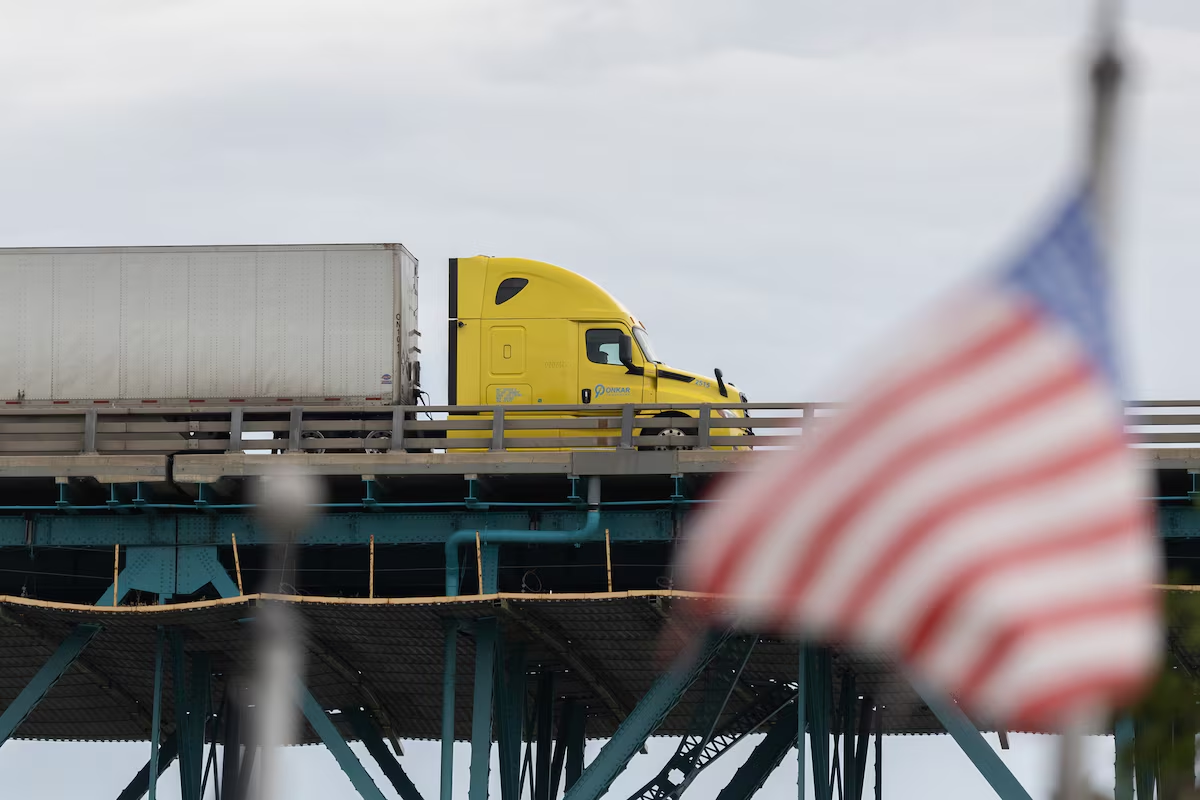

Open this photo in gallery:
A transport truck crosses the Ambassador Bridge into the U.S., in Windsor, Ont., this summer. The Trump administration has imposed Section 338 tariffs on Canada, citing discriminatory trade practices.Dax Melmer/The Canadian Press
U.S. food importer Gellert Global Group on Tuesday sued to stop the Trump administration’s latest tariffs on imports from Canada, saying that the duties represent another attempt to claim an unfettered presidential tariff power that has been roundly rejected in court.
Republican President Donald Trump imposed 50-per-cent tariffs on a wide range of Canadian imports over the summer in response to what his administration called Canada’s discriminatory treatment of U.S.-made cars, alcohol and dairy goods.
In imposing the tariffs, Trump invoked Section 338 of the Tariff Act of 1930, marking the law’s first known usage in nearly a century of existence.
The lawsuit, filed by the legal non-profit Liberty Justice Center on behalf of the importer Gellert in the US Court of International Trade in New York, says that Trump has used shifting legal rationales and invoked rarely used US laws in a persistent effort to claim authority over tariff power that the US Constitution assigns to Congress.
“No president should have the power to pull a dormant statute off the shelf and use it to impose sweeping tariffs or import bans without the limits Congress required,” said Sara Albrecht, chairman and CEO of the Liberty Justice Center.
The White House did not immediately respond to a request for comment.
The lawsuit marks the fourth time a wide-ranging tariff policy has been challenged in court.
The U.S. Supreme Court in February ruled against most of the tariffs Trump imposed in 2025, but the Trump administration has continued to issue wide-ranging tariffs that have been subject to legal challenges by US states and businesses.
The U.S. trade court has previously ruled against a temporary 10-per-cent global tariff imposed by the Trump administration after its Supreme Court loss, and it is currently weighing the legality of a third round of global tariffs imposed in a purported effort to combat forced labor in international trade.
The plaintiff in the current lawsuit, Gellert Global Group, is a New Jersey-based food importer with US$1.7-billion in annual revenue. It imports Canadian cheeses that have been subjected to a 50-per-cent tariff, and it seeks to represent a class of businesses that are similarly impacted by the tariffs.
The challenged tariffs were imposed under Section 338 of the 1930 Smoot-Hawley Tariff Act, and they target a wide range of Canadian imports including wine, furniture, dairy products, cement, clothing, fishing rods and hockey equipment.
The new lawsuit argues that Section 338 has been overwritten by later tariff laws, including the Trade Act that Trump used to impose the forced labor tariffs earlier in 2026. Every statute that authorizes a US president to impose tariffs does so with strict limitations that the Trump administration has repeatedly ignored, the suit claims.