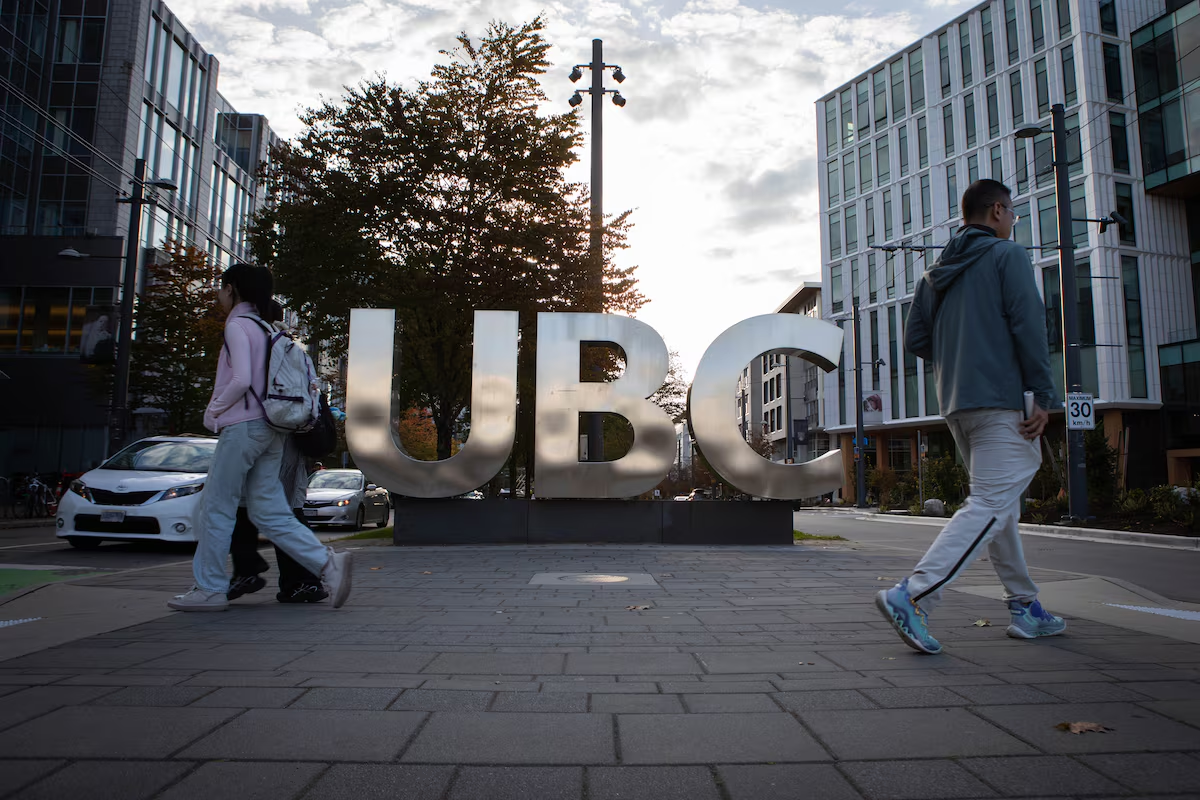

Open this photo in gallery:
Students walk through the University of British Columbia’s Vancouver campus on Sept. 24.Justine Beaulieu-Poudrier/The Globe and Mail
Postsecondary institutions across British Columbia have improved their handling of sexual-misconduct complaints since two high-profile cases at the University of British Columbia in 2015, but systemic gaps remain, experts and advocates say.
UBC’s actions have been at the centre of testimony in recent weeks in a defamation case brought by bestselling author Steven Galloway. He was suspended in 2015 and later fired after being accused of sexual assault and sexual harassment by a former creative writing student with whom he had a two-year relationship. Around the same time, a PhD student in the history department faced separate allegations from his fellow classmates.
A retired judge hired by UBC after Mr. Galloway’s suspension said she could not, on a balance of probabilities, substantiate the sexual and physical assault allegations, but found he had sexually harassed his former student. He was dismissed in June 2016 for “a record of misconduct that resulted in an irreparable breach of the trust.”
Mr. Galloway was never charged with an offence. He filed the defamation lawsuit in 2018 against his accuser – known as A.B. because of a publication ban on her identity – and three other women whom he alleges went on social media to repeat her allegations. In the defamation trial, A.B. is no longer maintaining Mr. Galloway sexually and physically assaulted her – just that she reported those allegations to the university.
Janine Benedet, a UBC law professor whose research focuses on the justice system’s response to sexual violence against women, chaired an expert panel in 2016 examining how the university could improve how it handles these complaints. She says it is a gargantuan task to craft policies that respect the various workplace and privacy laws governing a host of roles with power over students: coaches, residence advisers, teaching assistants and professors.
The largest sea change from that nascent #MeToo era, many experts agree, was a provincial law passed in 2017, mandating all postsecondary institutions create standalone offices to handle sexual-misconduct complaints that involve anyone studying or working at the school.
In terms of the two cases from 2015, before the law came into effect, witnesses testified that professors in the history and creative writing programs asked grad students to gather details about the allegations from those in their classes and report back.
Since the 2019 fiscal year, UBC’s Sexual Violence Prevention and Response Office at the school’s Vancouver campus provided support to an average of roughly 250 clients each year. Last fiscal year, it received 226 disclosures of incidents of sexual or gender-based violence, according to its annual reports posted online.
UBC was facing growing pressure on sexual assault complaints process as Galloway allegations surfaced
The SVPRO also forwarded two “institutional reports” to the standalone Investigations Office last fiscal year. Such reports are created when more than one disclosure is made against a single person.
UBC’s Investigations Office receives complaints from students, faculty and staff across both campuses and is also referred cases from other agencies at the school. The IO has investigated an average of 47 sexual-misconduct complaints during each of the past five fiscal years, according to its latest annual report.
The IO closed 20 cases during its last fiscal year, finding a breach of the school’s sexual-misconduct policy in 15 of them.
Open this photo in gallery:
Steven Galloway leaves B.C. Supreme Court during a lunch break at his defamation lawsuit in Vancouver on Oct. 6.DARRYL DYCK/The Canadian Press
Ophelia Kehila, director of the Sexual Assault Support Centre funded by UBC’s student union, said they have seen demand for the centre’s services increase significantly over the past three years, which they noted has no relationship with the university.
The centre helped 308 new people last fiscal year, with 10 per cent of all clients saying they were seeking this form of peer support after first approaching the SVPRO.
Mx. Kehila said in a statement that many survivors who come to the centre would rather report to police than the university’s IO.
University spokesperson Thandi Fletcher in a statement touted the creation of the SVPRO and IO as major improvements in the school’s approach to sexual violence over the past decade, noting they prioritize “procedural fairness and a trauma-informed approach.”
Former UBC arts dean testifies about his role in Galloway removal
The statement added that UBC policy bars a professor from having sexual relationships with students they supervise if one “has influence over the student’s current or future academic activities, working conditions or career advancement.”
Someone at the university in a supervisory role or in a position of influence may have a consensual relationship with a student if it began before this power imbalance, but it must be disclosed to administrators, the statement said. Last year, UBC introduced mandatory training for faculty and staff on preventing and responding to sexual misconduct that includes a section on prohibited relationships, Ms. Fletcher said.
Ninu Kang, executive director of the Ending Violence Association of B.C., said that too often, despite reporting sexual assault through UBC’s official channels, some students find themselves having to rearrange their lives in order to cope. The association is in the midst of crafting new investigative guidelines for the province’s 25 postsecondary institutions.
“In some instances, students are still having to make decisions about whether they drop the course or drop out of something because the alternative is that they will be facing the accused,” Ms. Kang said.
Morgyn Chandler, a Vancouver lawyer who frequently represents sexual-assault survivors in civil suits, also said that the onus is on the survivor to remove themselves from a harmful situation after they register a complaint.
She said several of her clients have reported sexual violence to the university and, from her perspective, have been disappointed.
Statistics Canada data shows only a fraction of survivors ever go a step further to make a police complaint.
Over the decade that ended last year, the University RCMP detachment reported an annual average of nearly 18 common sexual-assault cases, according to Statscan. The campus detachment solved roughly a third of these total cases by charging a suspect – slightly below the provincial RCMP average in that decade for such cases.
Dr. Benedet says the timelines of the criminal justice system often don’t line up with the lives of students, many of whom want to move on from their trauma and graduate.