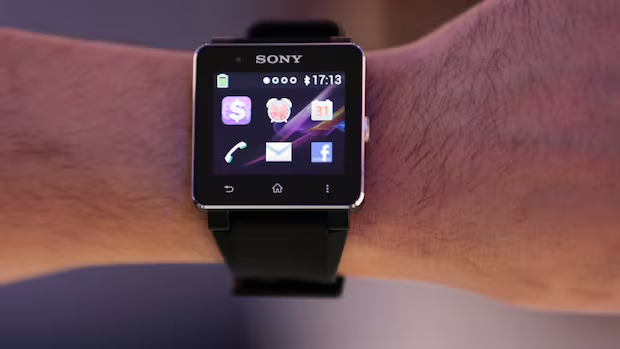
Smart glasses, smart watches and other wearable technologies are now included in the ban on cellphones in schools that has been in place since September 2024, says the Manitoba government.
Education Minister Tracy Schmidt sent a directive to school leaders last week, telling them to include the devices in their cellphone ban.
“As technology evolves, so must our guidelines to ensure students are learning in healthy, safe environments that support their education and well-being,” Schmidt said in a statement sent to the CBC.
The intent of the original cellphone ban was “to reduce distractions in classrooms and minimize the harmful impacts associated with social media and online platforms,” said the Nov. 17 letter, which was sent to all school division superintendents as well as principals of independent schools that receive public funding.
Students increasingly have access to a range of personal devices that give them access to messaging, social media, internet browsing, photography and recording, artificial intelligence tools, or other cellphone-like functions, Schmidt’s letter said.

Meta smart glasses have built-in artificial intelligence, cameras, speakerphones, microphones and touch controls. (Shane Fowler/CBC)
The directive was issued one week after Hanover School Division became the first in the province to ban smart glasses in its schools.
A letter sent to parents by the division in southeast Manitoba cited privacy implications because “they can record audio and video without others readily knowing.”
A Canadian media literacy expert said Manitoba is on the right track, but she would like to see rules established on a federal level.
“What we don’t want to end up with is a sort of patchwork of 13 different provinces and territories trying to regulate this in a sort of different shade of grey, if you will, around the same kind of technological challenge,” said Kara Brisson-Boivin, director of research at Mediasmarts, a digital media literacy advocacy group based in Ottawa.
Meta, one of several makers of AI glasses, says on its website that its product includes an LED light that blinks to alert others the wearer is taking a picture or recording video, and the glasses will automatically disable the camera if they detect the capture light was covered or tampered with.
“That’s difficult to recognize, especially when we’re talking about children and youth. We have to teach a lot of privacy-forward practices that are increasingly difficult to do, with especially younger children,” Brisson-Boivin said.

Wearable devices that ‘allow access to messaging, social media, internet browsing, photography, audio or video recording, artificial intelligence tools, or other cellphone-like functions’ can create the same distractions as cellphones, Manitoba Education Minister Tracy Schmidt says. (Steffi Loos/The Associated Press)
The subject of the recording also has to notice the light, and online criticism says the LEDs are small and easy to miss in direct sunlight and even bright indoor lighting, from the side or in crowded spaces.
A smartwatch is essentially a wearable computer that can, depending on the device, pair with a smartphone or work on its own via cellular data.
‘Not as much to do’ on smart watch: student
Some students who spoke to CBC on Tuesday including watches in the ban said they couldn’t understand why.
“There’s not as much to do on it, and it’s pretty easy to see if someone’s just staring at their watch,” said Logan Hassett, 14, who doesn’t have a smart watch because and doesn’t feel he needs one, since he has a cellphone.
Kaitlynn Seavers bought one for her 10-year-old son. She admits it can be a distraction, but thinks a ban goes too far, saying it’s important for parents to “just teach your kids” when they should or shouldn’t use one.
“I think they can be useful,” she added.
WATCH | Cellphone ban extends to smart tech like glasses, watches, province says:
Manitoba directs school divisions to ban more smart devices
Manitoba banned cellphone use in classrooms in 2024, but the province is now telling school divisions wearable tech, like smart glasses and watches, isn’t allowed either. The move comes after the Hanover School Division recently banned smart glasses in its schools.
Tracy Cosser, assistant director of the Manitoba Child Care Association, however, called the tech crackdown “a really good idea.”
“We know that parents want to be connected to their children throughout the day,” but devices that can take video and images infringe on privacy, said Cosser.
“I think it is really important that those things are banned to just keep everyone safe.”
While Brisson-Boivin appreciates Manitoba’s efforts around wearable tech, she feels policing it shouldn’t fall on the shoulders of school staff.
“Educators are already so overwrought and overrun with all of their day-to-day challenges that placing an additional challenge of managing new tech … is really difficult to do,” she said.
She’s also not convinced a blanket long-term ban is the right way to go.
The drawbacks to the tech are clear but consideration needs to be given to those who rely on it, Brisson-Boivin said.
Students with visual impairments and hearing impairments could be aided by it, “but we don’t know enough yet about the potential benefits,” she said.
“It makes good sense to want to slow down the integration of new forms of technology, to be able to do it in a way that feels controlled, that we sort of study the benefits as well as the harms.”
Taking advantage of any potential benefits must be done with the proper protections in place, she said.
“Manitoba is taking important steps, but I think that we need to have a broader conversation across the country about the role and the place of wearable technology,” she said.
“AI, like any other technology, is a tool, and tools can be used to hone our skills, but we don’t want those tools to be used to replace our skills.