
Open this photo in gallery:
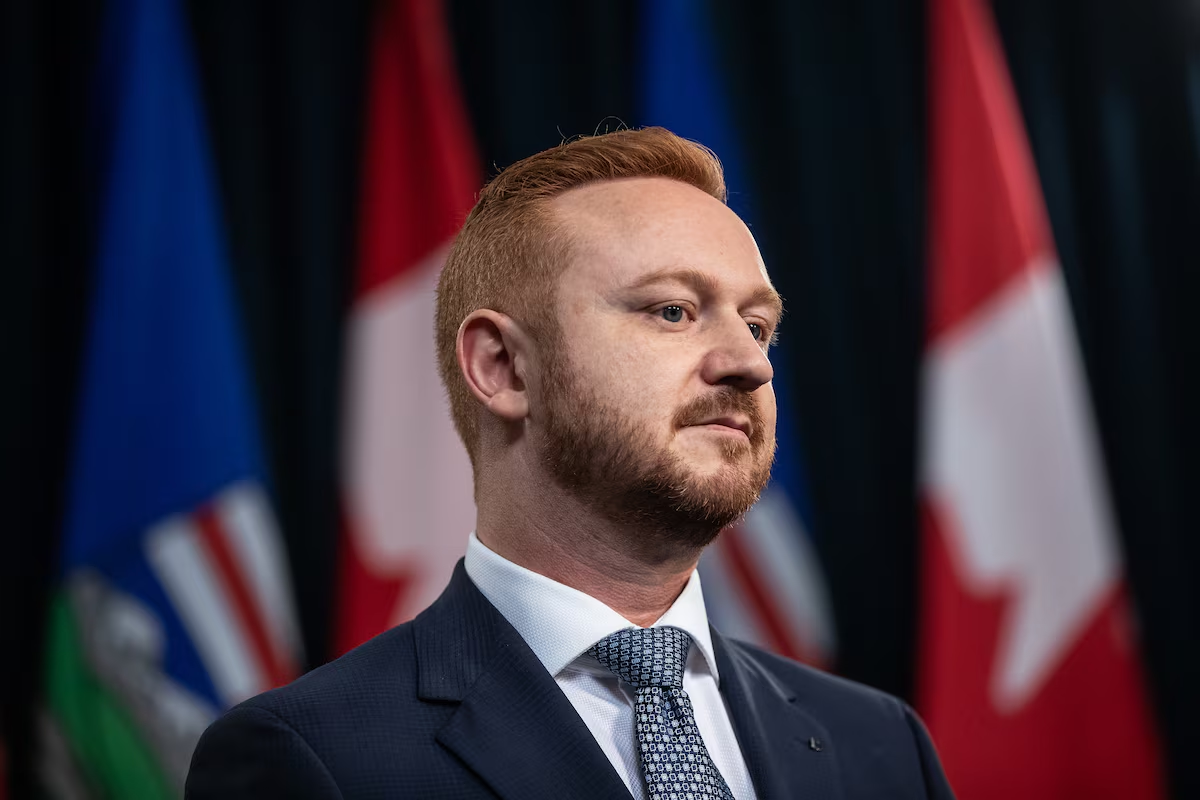
Alberta Minister of Justice Mickey Amery in April 2025. The minister said new criteria to determine whether a death is sent to public inquiry would ‘narrow the mandatory wide net that is currently cast.’JASON FRANSON/The Canadian Press
The Alberta government is proposing changes to provincial law that would eliminate mandatory public fatality inquiries for people who die in prison or police custody, a move the province says aims to clear a backlog of investigations.
The bill, tabled Monday afternoon in the Alberta Legislature, proposes establishing new criteria that would determine whether a death is sent for public inquiry, a change provincial Justice Minister Mickey Amery said would allow “remarkable efficiencies” to help grieving families get answers into the circumstances of their loved ones’ deaths.
“What this is suggesting is that we narrow the mandatory wide net that is currently cast,” Mr. Amery told reporters at a news conference.
The new legislation was tabled on the same day that Alberta’s police watchdog announced that manslaughter charges have been laid against three officers with the Calgary Police Service after a 42-year-old Indigenous man died after an encounter with police in a hotel lobby.
A fatality inquiry has not been called in that case.
The changes Mr. Amery unveiled on Monday were included with an unrelated set of proposed amendments to other Alberta legislation, including new restrictions on which political parties can access the provincial voters list.
The proposed updates to the province’s Fatality Inquiries Act would give the Chief Medical Examiner more information to help reach conclusions about an individual’s death and narrow the circumstances under which deaths would be investigated by a judge, Mr. Amery said.
Fatality inquiries are non-criminal court proceedings that are investigated by a judge, most commonly after a death in custody, in child welfare or in a workplace. They are intended to provide insight into how similar deaths can be prevented. Earlier this year, for example, the Alberta government ordered a public inquiry into the death of Prashant Sreekumar, a 44-year-old father of three who died while waiting for eight hours in an Edmonton emergency room.
Currently, public inquiries are mandatory when a person dies in jail or in police custody, regardless of whether an investigation would yield new death-prevention recommendations.
If the new amendments pass, the province would instead require public inquiries only where “they would best serve the public interest.”
Certain deaths are often explained without needing a public inquiry, Mr. Amery said, but they are nevertheless subject to a lengthy investigation that can take longer than a decade to complete. He pointed to a person’s history of terminal illness or addiction as examples of circumstances that may not require a public inquiry.
“Oftentimes the feedback that we’re receiving is that some of these are so obvious, despite the recommendation that they proceed – that there are no conclusions because they already know what the conclusions are going to be.”
The proposed legislation says the Chief Medical Examiner would be equipped with more personal and health information to guide their decision whether to initiate a public inquiry.
“We think that that change alone is going to be able to achieve remarkable efficiencies in how they make their conclusions and how they report to families,” Mr. Amery said.
Separately, on Monday, the Alberta Serious Incident Response Team (ASIRT), the independent police-oversight agency, said three Calgary officers had been arrested and charged with manslaughter in the case of a man who died in 2024 after hotel staff called police asking to remove him from the lobby.
The 42-year-old man, Jon Wells, was tackled to the ground after he resisted an officer trying to grab him, ASIRT said. He was then punched in the head, restrained and sedated, the watchdog said. Emergency crews found him unresponsive and he was declared dead a short while later.
ASIRT, in a statement to The Globe and Mail, said it’s not involved in convening a fatality inquiry. It said that decision rests with the Justice Minister.
Open this photo in gallery:
Ontario Premier Doug Ford takes to the stage at an event to promote the production of Ford’s Super Duty trucks in Oakville, Ont., on Friday.Chris Young/The Canadian Press
In Ontario, Premier Doug Ford’s government is proposing to scrap the requirement for an inquest into the cases of any inmate who dies from non-natural causes.
His government, also managing a backlog of cases, has argued that annual reviews of correctional facilities would avoid retraumatizing families while better identifying systemic issues and providing more timely recommendations.
But the Ontario government has faced substantial pushback on the proposed rule change, partly after facing criticism for not consulting people whose loved ones had died in jail. Critics have also panned the idea as a broader attempt to erode scrutiny of correctional institutions that could lead to more deaths.
The number of inmates who’ve died in provincial custody in Ontario has been increasing over the past 15 years, rising to 41 in 2025 from 16 in 2010, according to the coroner’s officer. (The numbers include natural deaths, drug overdoses and suicides. Most people in provincial custody are awaiting trial.)
Ontario hasn’t moved forward with the proposal yet. On Monday, a spokesperson for the Office of the Chief Coroner said it’s still exploring methods to review non-natural deaths that occur while a person is in custody, but it doesn’t have a timeline on when the province plans to introduce proposed amendments to its legislation.
With files from Jill Mahoney