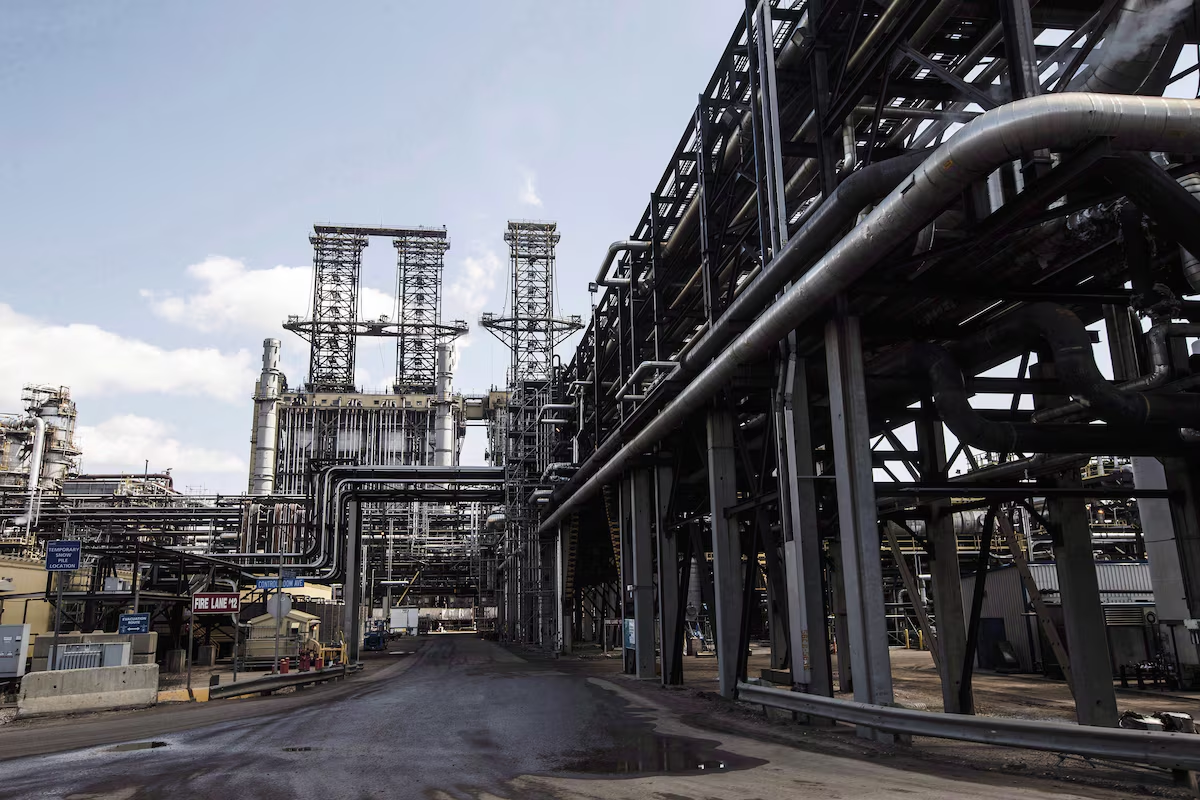

Open this photo in gallery:
Alberta First Nations and environmental groups are urging the federal government to review Suncor’s project.JASON FRANSON/The Canadian Press
A Suncor Energy Inc. SU-T plan to release treated oil sands water into the Athabasca River has drawn the ire of Indigenous nations and environmental groups who say Ottawa must thoroughly review the project to prevent human and environmental harm.
The Alberta Energy Regulator has ruled that the project doesn’t need an environmental review. But at a time when Canada is looking to amp up its energy production, critics warn that the ecological implications of the plan must be studied with a fine-tooth comb to avoid setting a dangerous precedent.
The issue of what to do with the water in oil sands tailings ponds has dogged the industry for decades. But releasing treated water from oil sands mines into fish-bearing waterways – as Suncor has proposed – is prohibited under the current federal Fisheries Act.
Alberta’s Smith unveils new oil sands royalty regime
A Crown-Indigenous working group Ottawa established in 2021 is considering if and how to develop oil sands-specific regulations that would open the door to proposals like Suncor’s. As of yet, none have been drafted.
Mines store most of the water they use, as well as precipitation from rain and snow, in massive tailings ponds. As production increases and water continues to fall onto the sites, the ponds expand, creating spill and seepage risks, and endangering wildlife.
This is an industry-wide problem. With the end of some mines’ lives drawing ever-closer – Suncor’s Base Plant, for example, is expected to reach the end of production in the mid-2030s – the challenge of what to do with the water to meet legal clean-up obligations has become more urgent.
Suncor’s proposal includes the construction of a water treatment plant at its Base Plant mine. The plant would use nanofiltration technology to treat water that has been used in the oil sands production process before discharging it into the Athabasca River, according to a project summary the company submitted to the Alberta Energy Regulator.
Water that has been used in oil sands processing, known as OSPW, contains various substances that can be toxic in the environment, including naphthenic acids, hydrocarbons and trace metals such as lead and iron.
Northern Alberta communities are worried about whether the water treatment plan is enough to mitigate the potential harms, and reluctant to take Suncor’s word for it.
Open this photo in gallery:
Suncor’s proposal includes the construction of a water treatment plant at its Base Plant mine near the Athabasca River.Todd Korol/Reuters
Mikisew Cree First Nation, Athabasca Chipewyan First Nation, Fort Chipewyan Métis Nation and Fort McKay Métis Nation, along with the environmental group Canadian Parks and Wilderness Society, recently wrote letters to the federal government urging a thorough review of the project under the Impact Assessment Act.
Amy Falkner, press secretary for Environment Minister Julie Dabrusin, said in an e-mail that a decision on whether an IAA review will go ahead is slated for December.
Meanwhile, she said, Ottawa is working with Indigenous groups, the Alberta and Northwest Territories governments, industry and other stakeholders “to identify approaches to manage the build up of oil sands mine water in tailings ponds,” including their potential release into the Athabasca River, which crosses the provincial-territorial border.
In their letters to Ottawa, the nations outlined their concerns that releasing treated water poses human health risks and would harm fish, other aquatic species and migratory birds, thereby affecting their treaty rights, including hunting and fishing.
They also say that approving Suncor’s plan to release treated water into the river would set a dangerous precedent.
The company’s plan “is not simply another water treatment facility within an existing oil sands operation,” wrote Sebastien Fekete, the director of government and industry relations for Mikisew Cree First Nation. Rather, “it represents a fundamental change” in how treated oil sands water is managed.
If the project is approved, he wrote, “the remaining operators will undoubtedly follow suit with their own proposals to dump OSPW into the Athabasca River.”
Suncor plans to pump up to 12 million cubic metres of treated water (roughly 12 billion litres) into the river each year for the next two decades, with operations targeted to begin in late 2030.
New energy policies could spur expansion of oil sands operations, ConocoPhillips says
Company spokesperson Christine Randall said in an e-mail that Suncor has studied water treatment technologies for more than 20 years and, in 2025, began a large-scale demonstration using mine water.
“Preliminary results reflect our confidence that advanced membrane treatment, as part of an integrated treatment process, can effectively treat oil sands mine water and support safe release to the river in a manner that protects the environment and human health. As part of a future water treatment plant regulatory application, we will further demonstrate this,” Ms. Randall wrote.
But Allan Adam, Chief of Athabasca Chipewyan First Nation, wrote in his letter to Ottawa that “there is no proof” that the treatment technology proposed by Suncor “will be sufficient to remediate the OSPW to the point where it does not cause adverse effects.”
Without being involved in a “rigorous review and assessment of the technology,” he wrote, community members “have reason to be skeptical of industry assurances.”
(The First Nation took the Alberta Energy Regulator to court in 2024 after the regulator failed to notify the community for almost a year that water tainted with toxins was seeping from Imperial Oil Ltd.’s Kearl oil sands project into public lands and waterways.)
Then there’s the prospect of interprovincial harm. The Athabasca River flows from Alberta to the Northwest Territories, where it continues through various tributaries and lakes, eventually reaching the Arctic Ocean.
More than two dozen communities, most of them Indigenous, live downstream from the oil sands, Mr. Fekete wrote. Many have treaties that guarantee unimpaired local water quality.
“None of this can be adequately addressed by Alberta’s regulatory processes and requires a federal impact assessment,” he wrote.
In an e-mail to The Globe and Mail, the Alberta Energy Regulator said it informed Suncor on July 16 that no provincial environmental impact assessment would be required for the project. However, it also told Suncor that there may be regulatory requirements under other energy legislation, the regulator added.
Jason Unger, executive director of the Environmental Law Centre in Edmonton, said Ottawa “needs to step up” and assess the project. Doing so would ensure that the proposed plant and filtration technology can be publicly assessed, and that the federal government meets its obligation to honour treaties, he said.
“There’s not been a ton of transparency in this overall process of treat and release. So I think, in terms of a lot of the First Nations asking for this, it’s a very valid and needed approach,” Mr. Unger said in an interview.
Fisheries Act regulations allow other mines in Canada – including nickel, gold and iron ore – to release treated tailings into waterways under strict environmental requirements, but there are no such rules for the oil sands.
The Mining Association of Canada started advocating for regulations in 2011. Pierre Gratton, the group’s chief executive, said in an interview that if Alberta and the federal government are serious about growing oil production and building a new pipeline to the West Coast, they must figure out what to do with tailings ponds.
Keeping water on site in perpetuity is not a viable option for oil sands operators and will stymy their legal obligations to clean up and reclaim mines, Mr. Gratton said.
“If you want continued production, you also need to solve this problem. You can’t just do one without doing the other.”