
Open this photo in gallery:
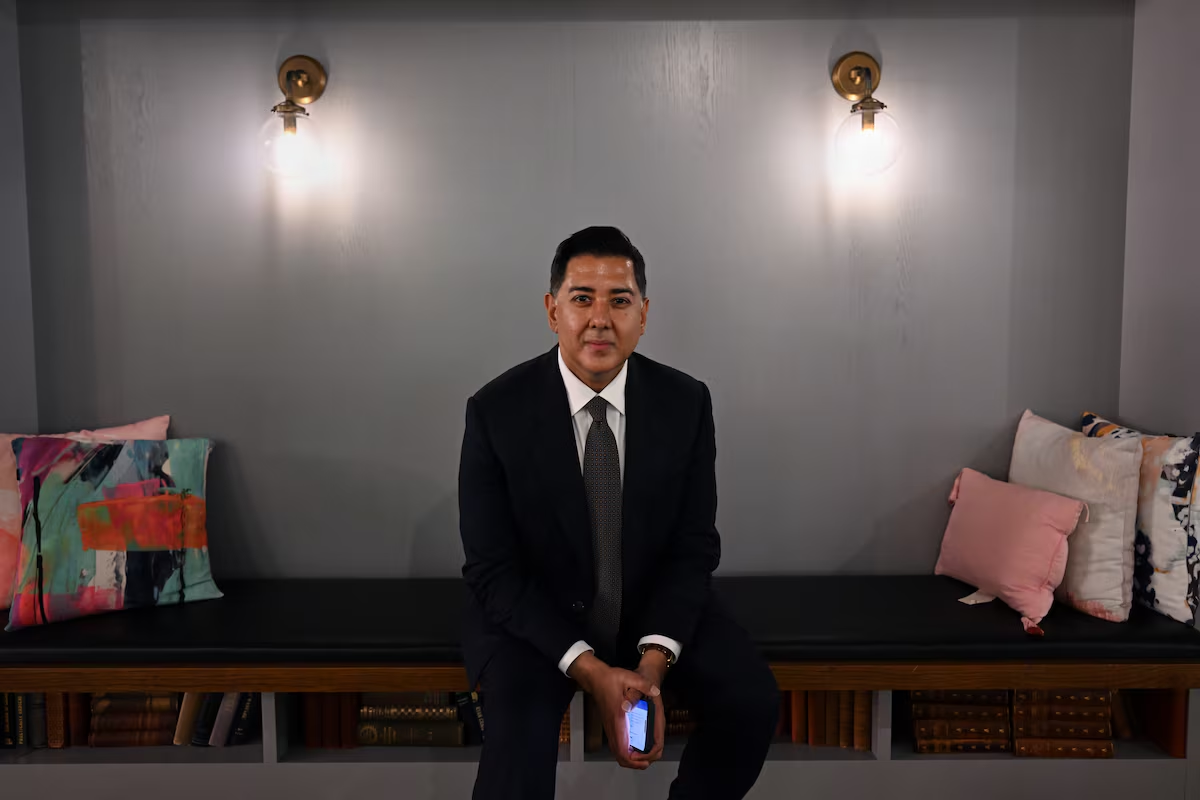
Imran Ahmed, head of the Center for Countering Digital Hate, has helped pass stringent digital safety regulation in the U.K., the EU, Australia and the U.S.Carol Guzy/The Globe and Mail
Imran Ahmed has been railing against Big Tech for the better part of a decade. His world view looks something like this: social media platforms are akin to factory farms where hate and disinformation are harvested and distributed for profit. Consumers of this content, a large percentage of whom are children and young people, are more likely to radicalize, consider suicide, obsess about body image, exercise self-harm and otherwise indulge in anti-social behaviour. Platform owners, having amassed oligarchic levels of wealth and power, mostly exist beyond the reach of governments, Mr. Ahmed believes.
Mr. Ahmed, a British-born U.S. resident based in Washington, has also spent the better part of a decade doing something about it. He is the founder and CEO of the Center for Countering Digital Harm (CCDH), a U.K. research and advocacy group dedicated to what he calls “platform accountability” – the ability for legislation to hold tech companies responsible for problematic content on their sites, along with the algorithms used to promote and monetize it. The CCDH has helped pass stringent digital safety regulation in the U.K., the EU, Australia, New Jersey and New York State.
Big Tech doesn’t much like the attention. “Anyone know who is supporting this rat?” Elon Musk said on X of Mr. Ahmed in 2023 shortly before the Musk-owned company launched a lawsuit against the centre. A Meta executive blasted a key CCDH report on misinformation for saying Facebook was the planet’s go-to bullhorn for anti-vax misinformation.
In late 2025, U.S. Secretary of State Marco Rubio denied U.S. visas to Mr. Ahmed, as well as former EU Commissioner for Internal Market Thierry Breton, and other European tech regulation advocates, alleging they “led organized efforts to coerce American platforms to punish American viewpoints they oppose.” A judge blocked Mr. Ahmed’s detention and potential deportation, though he can’t leave the U.S. for fear of not being let back in.
Social-media bill forces companies to label AI content, harmful material pushed by bot farms
Now, Mr. Ahmed and the CCDH are bringing the fight to Canada. In October, the centre opened an office in Ottawa – its first outside of Europe and the U.S. Funded by Ronald S. Roadburg Foundation, a Vancouver-based charity, the Canadian arm of the centre aims to produce country-specific research on the harms of social media and AI chatbots. Mr. Ahmed, who has given evidence in front of Canadian lawmakers before, is once again raring to bring his succinct, infinitely quotable indignation to parliament.
“This is about power and consent. I did not consent to a world in which someone will decide for me what my child believes. I did not consent to a system in which my child will be told that his body is disgusting by an algorithm written by some weird dude in Silicon Valley,” he said in an interview.
Open this photo in gallery:
Although Mr. Ahmed is currently unable to leave the U.S., that’s not stopping him from pushing the CCDH’s agenda in Canada.Carol Guzy/The Globe and Mail
Mr. Ahmed’s timing isn’t coincidental. The Liberal government recently tabled Bill C-34, the Safe Social Media Act, the last of several legislative attempts to rein in Big Tech platforms in the country. Among other provisions, the Safe Social Media Act would prohibit access to social media for anyone under the age of 16 and create a digital safety commission with enforcement and auditing powers to ensure Big Tech obeys the law. It would also legislate guardrails on AI, holding OpenAI, Grok, Google and the like responsible should their chatbots engage in sycophancy, encouraging delusions, suicide ideation, or other harmful behaviour.
The Safe Social Media act is part of the Carney government’s push for Canadian sovereignty – a third-way, middle-power approach that pushes back against the twin tech hegemonies of the U.S. and China. In compelling the government to oversee tech companies, the bill is proposing precisely the opposite of the U.S.’s cocktail of deregulation and self-policing. In short, it is the red flag that the Trump administration has railed against for the last two years.
It begs the question: will it help anyone to have someone as loud as Imran Ahmed waving it?
Mr. Ahmed was born in Manchester into a Pashtun Afghani household. In 2016, at the height of the Brexit debate, he was working as a political adviser for Labour MP and shadow foreign secretary Hilary Benn, when a white supremacist murdered Mr. Ahmed’s close friend, Labour MP Jo Cox. What incensed Mr. Ahmed was the extent to which Ms. Cox’s murderer had been radicalized online – and how his internet search history existed in an echo chamber of antisemitic hate.
Founded in 2018, the CCDH was born of Mr. Ahmed’s pain. Its research on online trolls, anti-vax misinformation, U.S. election denialism and neo-Nazism has a common theme: By controlling what people consume online, social media has globalized misinformation, polarization and misanthropy for profit. One study, the Disinformation Dozen, found that just 12 people – including future Secretary of Health and Human Services Robert F. Kennedy Jr. – were responsible for two-thirds of the anti-vaccine content on Facebook and Twitter. Referencing the report, President Joe Biden said Facebook was “killing people.”
Opinion: Ban social media for young people? Good luck with that
The zeitgeisty nature of the CCDH’s reports, coupled with titles that might have been ripped from the covers of thriller novels – Fake Friend, Deadly by Design, X-rated EU – has ensured a certain virality to its research. As undersecretary of state for tech and the digital economy in 2022, British MP Damian Collins spearheaded the passage of the U.K.’s Digital Safety Act. As the hearings progressed, Mr. Collins remembers seeing more and more stakeholders showing up with CCDH research on hand.
“A lot of that work was done by CCDH, and was made available to parliamentarians. It was a really excellent counter to the kind of briefings MPs were getting from tech companies,” said Collins, who now sits on the CCDH’s U.K. board. “We had challenges from freedom of expression groups around whether this was going to suppress free speech online. That was resisted because people were more focused on the known harms, and I think CCDH played a really important role in raising awareness of the problems and why we needed legislation to tackle it. So I think it would have been much harder to pass the bill without their work.”
Mr. Musk’s X sued the CCDH in 2023, alleging it unlawfully accessed X data and used purposefully skewed data sets to create a “faulty” narrative regarding the type and amount of harmful content on the site. A judge dismissed the case the following year. X has since appealed.
During an interview, Mr. Ahmed took evident pride in the public scrap with the world’s richest man. He also defends his sharp-elbows approach, noting the CCDH has never had to issue a correction or retraction in its research.
“I think in time [the CCDH] will be seen as the patriots who created a more democratic, sustainable, prosperous and universally accepted consensus on how we use technology [and] how it functions in our society,” he said.
Open this photo in gallery:
Legislation – like Canada’s recently tabled Bill C-34, the Safe Social Media Act – is not only necessary, but sensible, Mr. Ahmed says.Carol Guzy/The Globe and Mail
There is plenty for Big Tech to hate in Canada’s Safe Social Media Act. For one, the bill imposes on platforms a “duty to act responsibly,” minimizing users’ exposure to “harmful content,” something the companies have long rejected. Meta and TikTok have said age prohibitions are largely unworkable and easily circumvented.
It would also hold AI companies liable for whatever their chatbots emit to users, and obliges them to be transparent about their reporting standards in crisis situations. The federal government has criticized OpenAI for its handling of the assailant in the Tumbler Ridge shooting in February, who used ChatGPT to plan the attack. In facilitating the ability to produce viral content, Mr. Ahmed said AI is itself a near-perfect bullhorn for misinformation and hatred. “It reduces the cost of production and distribution to zero,” he said.
(The Globe and Mail is part of a coalition of news publishers that is suing OpenAI in Ontario court for unauthorized use of copyrighted materials.)
Tumbler Ridge families argue for OpenAI lawsuits to be heard in San Francisco
At the same time, the Safe Social Media Act isn’t an outright ban on social media. Rather, it allows companies to access the (very lucrative) under-16 demographic should they demonstrate “sufficient safeguards” on their platforms. As well, the bill doesn’t attempt to criminalize certain types of speech. The Liberal government’s previous attempt to do so in 2024 alarmed Conservatives, constitutionalists and free speech advocates alike.
Such legislation isn’t only necessary, but sensible, Mr. Ahmed said. “Sometimes in moments of clarity, when the ketamine clouds clear, even Elon Musk has said that we need to have minimum standards in order to make sure that we’ve got better platforms, not platforms that basically compete for who can cut the most corners, who can have the least safety possible,” he said.
That said, the CCDH doesn’t think the Safe Social Media Act goes far enough. It wants the law to hold tech executives personally responsible should their company fall short of safety protocols, and is seeking stronger, escalating penalties for companies that break the law. It also wants shorter safety-by-design timelines and for researchers to have access to platform data.
Because of Mr. Ahmed’s current inability to leave the U.S., the task of pushing CCDH’s agenda here falls to Canada senior manager Nicole Fournier-Sylvester. The former manager of the Canada Centre for Community Engagement and Prevention of Violence, a federal agency which leads the country’s anti-radicalization efforts, Ms. Fournier-Sylvester will also produce Canada-specific research into tech companies – including research into ChatGPT’s teen accounts, which promise age-specific protections against potentially harmful content.
“The CCDH allows for more of a public voice. I felt ready to take on more of a combative tone with Big Tech,” Ms. Fournier-Sylvester said. “There’s this sort of learned helplessness around Big Tech, and I love that instead of the doomer idea that the world is ending, we’re framing it in a much more empowering way.”
Open this photo in gallery:
Mr. Ahmed’s CCDH wants Canada to hold tech executives personally responsible should their company fall short of safety protocols.Carol Guzy/The Globe and Mail
The Ronald S. Roadburg Foundation invested in CCDH’s expansion to Canada in 2026. A private charity founded in 2021, it has supported a wide range of non-profit organizations, including the David Suzuki Foundation, the Indigenous Stewardship Fund and several Jewish charities.
Elana Bloomfield began at the foundation in November 2023, about a month after the Oct. 7 Hamas attack on Israel. She watched as online hate began to proliferate “in all directions” in the wake of the attack, while the Trump administration seemed reluctant to do anything about it. In Mr. Ahmed, she saw something that was missing in Canada: a loud voice to channel the collective rage against social media’s excesses.
“The idea around how American Big Tech is controlling our lives is really riling people up,” Ms. Bloomfield said. “I think people are really angry, and I think hearing someone be angry and pushing for a change is actually quite resonant.”
Opinion: A social media ban does not solve the real problem festering in our society
Mr. Ahmed said he likes the Safe Social Media Act, in part because it follows the CCDH’s belief that tech companies should be held responsible for what is published on its sites, or emitted by its AI chatbots. Mostly, though, he likes the precedent it sets: a robust, restrictive law governing social media platforms, launched by America’s neighbour and globally celebrated middle power. It will spur similar efforts in the U.S., he added. “The American people would love to see the protections of C-34 in their own country, and they show that through their voices, their actions, and their votes again,” Mr. Ahmed said.
Opposition to the Safe Social Media Act is mounting. Conservative shadow minister Leslyn Lewis, who wasn’t made available for an interview, expressed worries about government intervention in the lives of parents, while Conservative MP Andrew Lawton called it “digital censorship bureaucracy.” Others still worry about the timing as well as content. “Canada is in this trade war with the Trump administration, which is mercurial and often quite juvenile about these things, so is this really a good time to create more limits on social media companies?” said Josh Dehaas of the Canadian Constitution Foundation.
Mr. Ahmed thinks so, if only because Big Tech is scared of the Canadian legislation, and is relishing the impending fight. “This is the last gasp of people who know that they are at the end of the age of unaccountability,” he said. “It has ended. The age of complete unaccountability has ended.”