
Open this photo in gallery:
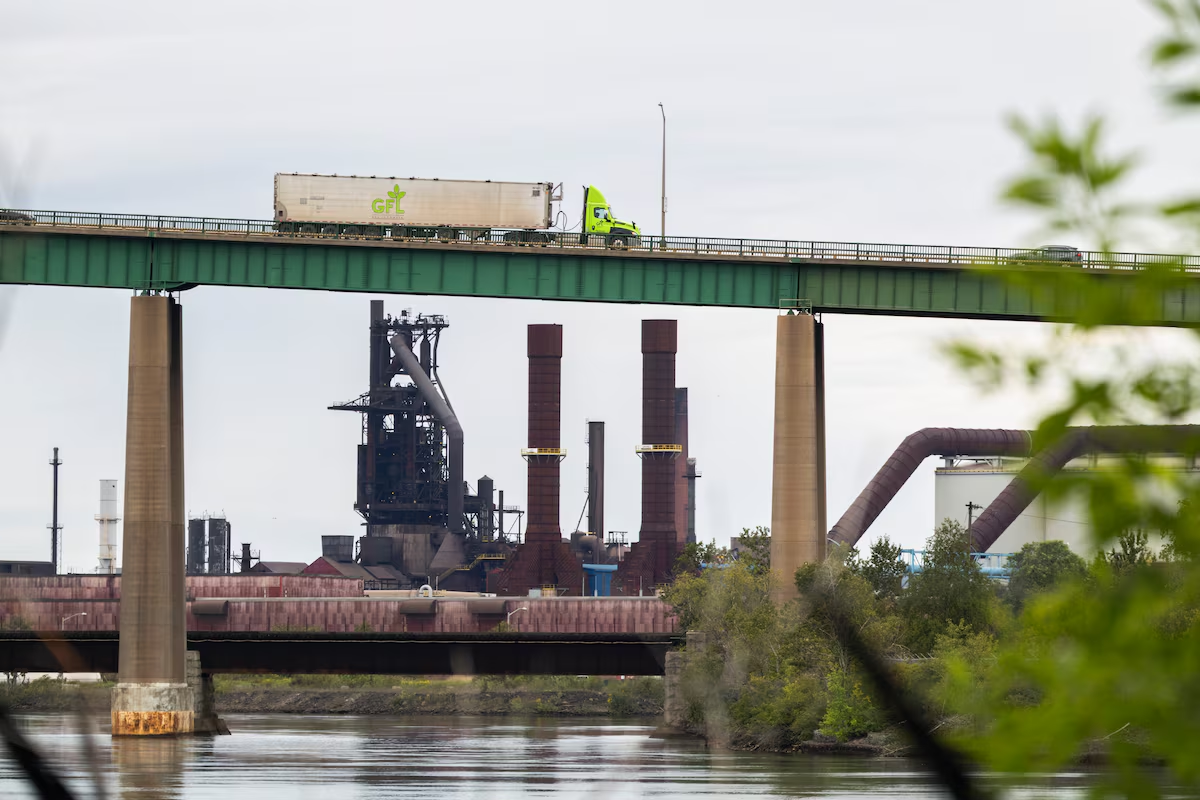
A transport truck drives over the Sault Ste. Marie International Bridge from the U.S. toward Canada in September. Ontario says a new port in the city will fill a gap in province’s trade infrastructure.Nick Iwanyshyn/The Canadian Press
Ontario and the federal government say they’re committing $250-million to help build a new port in Sault Ste. Marie on the north shore of the Saint Marys River.
The province says the project will see the construction of two docking berths, a transload yard to transfer cargo from ships to rail, and other infrastructure to move goods between northern and southern Ontario, Quebec and overseas markets.
Ottawa is providing $125-million through the Trade Diversification Corridors Fund, a $5-billion fund aimed at doubling non-U.S. exports, while the province makes up the difference through a repayable financing loan.
In a news release, the province says the new port will serve as a gateway in the Great Lakes and support mining, steelmaking and critical mineral development in northern Ontario, including the Ring of Fire region.
The Hamilton-Oshawa Port Authority leads development of the project, which aims to be online by 2029 and reach full capacity by 2031.
The port authority signed a partnership last year with Sault Ste. Marie to advance the transportation hub and the city committed $15-million to the project in July.
The federal government says the port fills a vital gap in Ontario’s trade infrastructure, and is set to be the region’s first public, multi-user marine port between Thunder Bay and southern Ontario.
In a news release, Ottawa says the port is expected to be able to move more than 3.5 million metric tonnes of cargo annually once fully operational.
Tony Keller: Why Trump’s midterm defeat could open the door to ending his trade war against Canada
Premier Doug Ford is framing the project as a way to expand markets for Ontario businesses as the United States has become a less-reliable trading partner.
“With U.S. tariffs threatening Canadian jobs and industries, there has never been a more important time to build for the future and invest in infrastructure that will help Canadian businesses diversify,” Ford wrote in a statement.
Federal transport minister Steven MacKinnon says the project will “reinforce Canada’s position as a reliable and competitive trading nation.”